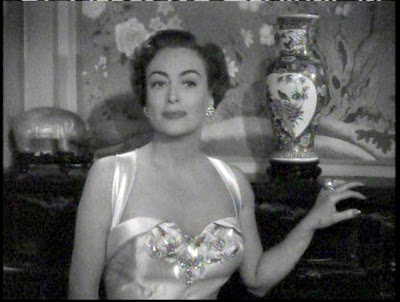
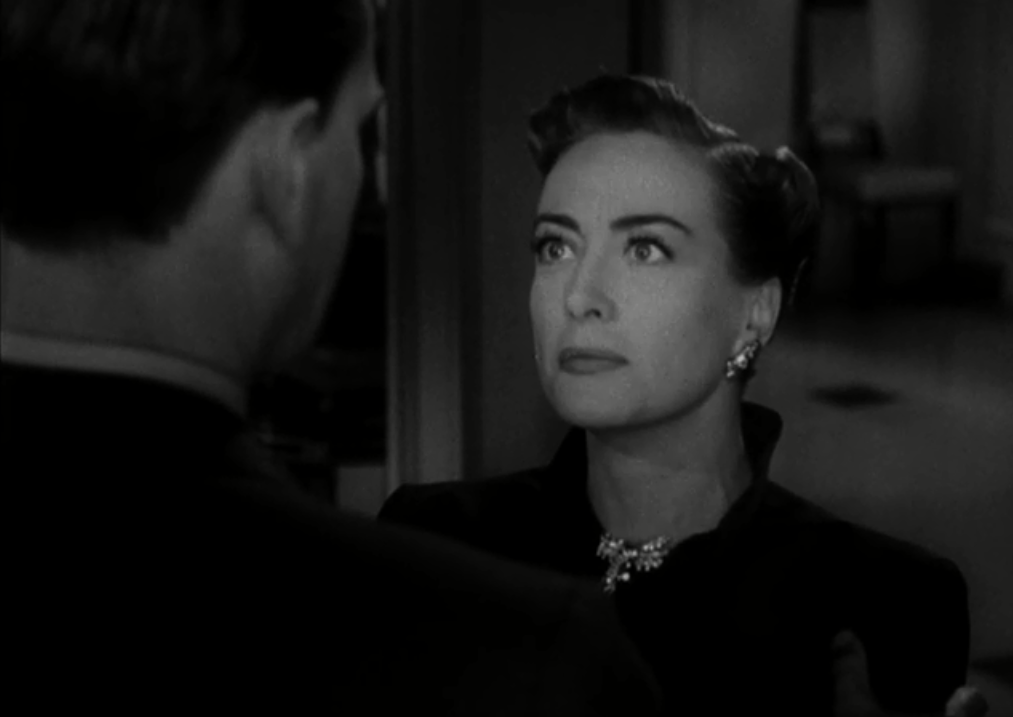
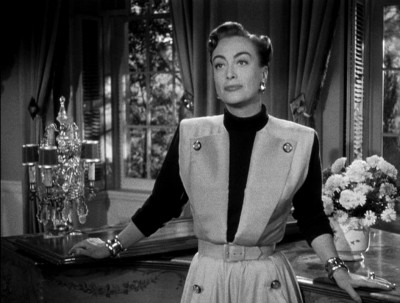
HARRIET CRAIG lashes out “I refuse to tolerate such insolence from a servant!” Lady, I know how you feel. Based on George Kelly’s Pulitzer winning 1925 play “Craig’s Wife”, filmed first as a silent, then again in 1936, the 1950 version directed by Vincent Sherman is an 84-minute pip, with a dynamic performance from Joan Crawford as the title virago, a spouse from hell. *
“I think I understand you now. You hated your father, and because of him, you hate me. You hate and distrust everybody. You’re at war with the whole world. You’d never feel safe with anybody until you’d crushed them.”
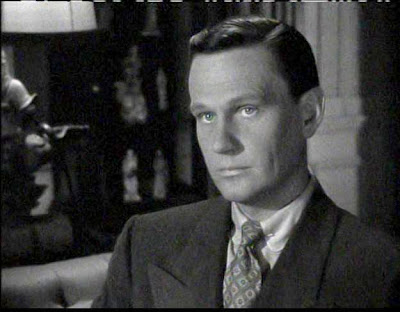
‘Walter Craig’ (Wendell Corey) is a pleasant, unassuming fellow who’s inherited a plush suburban home with a devoted landlady and a maid, is liked by his neighbors and respected at his unglamorous but comfortable job at an electronics firm. He dotes on his wife, but affection isn’t enough for ‘Harriet’ (Crawford) who is a master at manipulation, unsettled by the slightest deviation from her rules concerning behavior, neatness, social standing, almost everything. Sooner or later, everyone she interacts with has to reckon on the cost.
WALTER: “You don’t know what you’re missing. Wives may be a little extra trouble now and then, but they’re mighty handy gadgets to have around the house.” BILLY: “Well, I’ll tell ya, Walt, I like running water in my house, too, but I want to be darned sure I can turn it off when I want to.” Sounds like guy bravado snark, but you have to know Mrs. Craig: Harriet could boost Taliban recruitment.
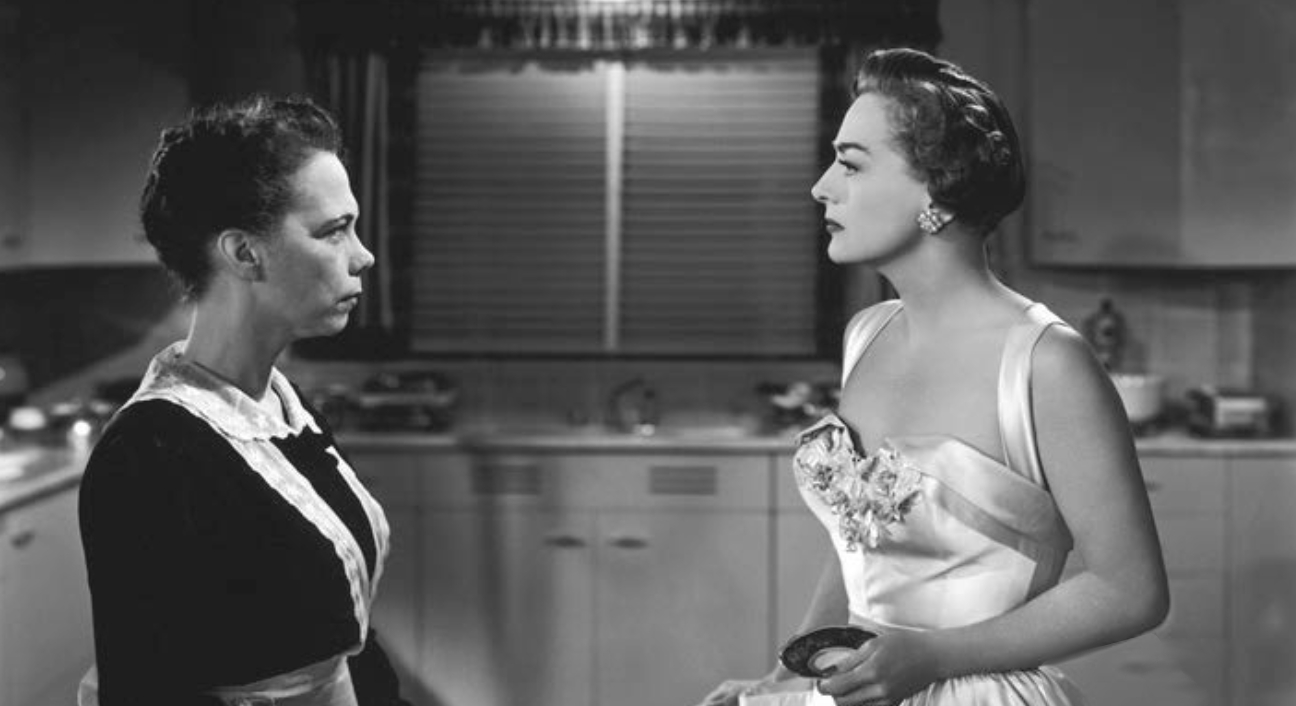
Survivor to the hilt, Crawford excels; after her career was revitalized by Mildred Pierce and an Oscar, she was on a roll for over a decade, and this study in neurotica domesticus Americanas is one of her best. Corey has one of his better roles, and is particularly strong in the finale. Watching this cat-claw melodrama rings reminder bells of individuals and relationships you’ve known or witnessed, those hemophilic arrangement-traps where one partner controls another to the suffocation point, erecting barriers of social isolation either out of insecurity, paranoia, jealousy or vindictiveness. Sorry fill in name, did we leave anything out? Oh, right…self-pity, self-righteousness, sexual inhibition, susceptibility to misinformation. Attention competition from friends, work, pets, books, music, breathing…
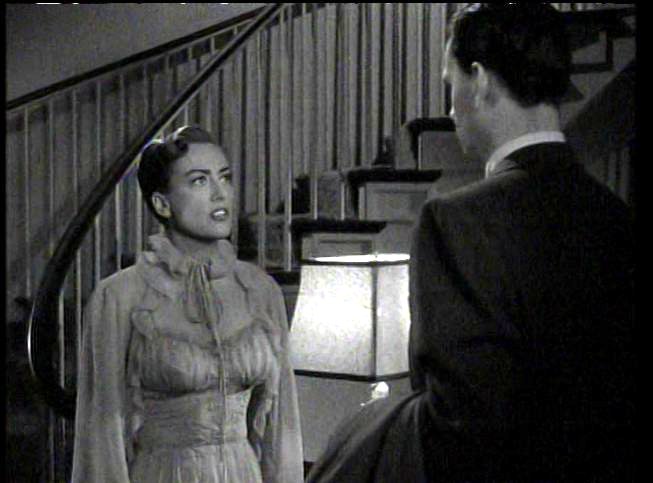
HARRIET: “But I don’t mean just economic security. I mean emotional security. The assurance that you can be absolutely certain of your husband at all times, without any fears and without any doubts.” CLARE: “But you trust Walter, don’t you?” HARRIET: “So long as I know exactly what he’s doing, yes. But if he does anything I think might lead to trouble, I find a way to put a stop to it. You see, no man’s born ready for marriage; he has to be trained.” CLARE: “Have you done that with Walter?” HARRIET: “Well of course I have.” CLARE: “Doesn’t he mind?” HARRIET: “You don’t think I’d let him know, do you? There’s some things you just don’t tell men.”
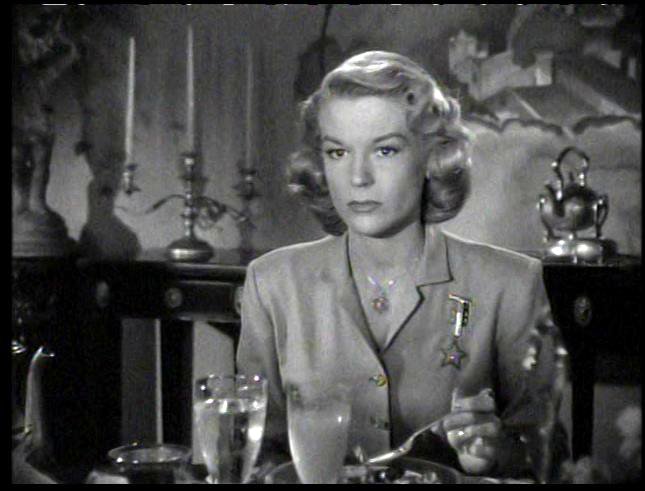
K. T. Stevens, 1919-1994
About the only debit is that occasionally George Duning’s score is too on-the-nose cutesy. Joseph Walker’s crisp black & white cinematography is a noir-inflected plus. The excellent script was the work of Anne Froelick (finked on & blacklisted a few years later) and James Gunn (Lady Of Burlesque, Affair In Trinidad).
Good work in support from K.T. Stevens (trusting, cruelly deceived cousin ‘Clare’) Lucille Watson (the boss’s cut-nonsense wife, who sizes up Empress Craig fairly quickly), Allyn Joslyn (Walter’s jocular best friend who Harriet can’t abide–vice versa), William Bishop (another target of male-paralyzing venom), Viola Roache (loyal housekeeper trying to hold her tongue), Raymond Greenleaf, Ellen Corby (bullied maid), Fiona O’Shiel and Pat Mitchell. Box office was $3,100,000, #103 in 1950.
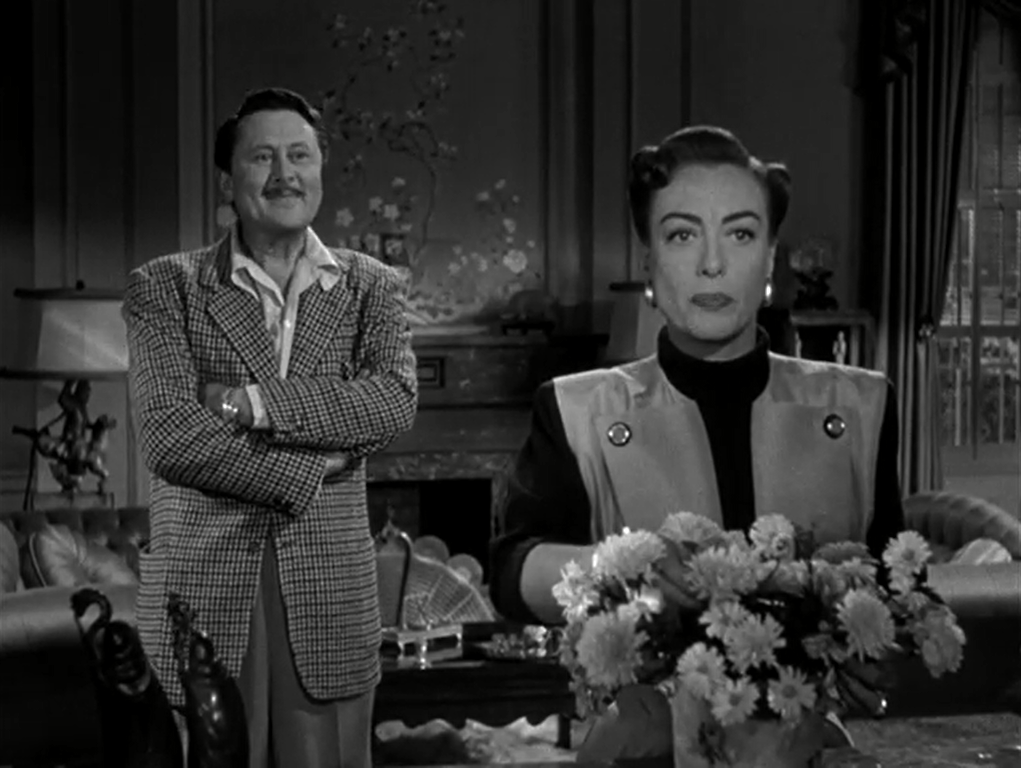
* Also in ’50, Crawford and director Sherman fared well with the unwell—and 34 places ahead at the ticket booths—via the ripe dandy The Damned Don’t Cry. Lovers for a while as well as collaborators, they did one more together the next year, the political comedy-drama Goodbye, My Fancy.
Sherman:” I had heard so many stories about her, and I thought she’d be very demanding, overpowering and overwhelming. But Joan was very much down to earth, very simple, unpretentious and very smart about filmmaking. ”
 Movies ala Mark