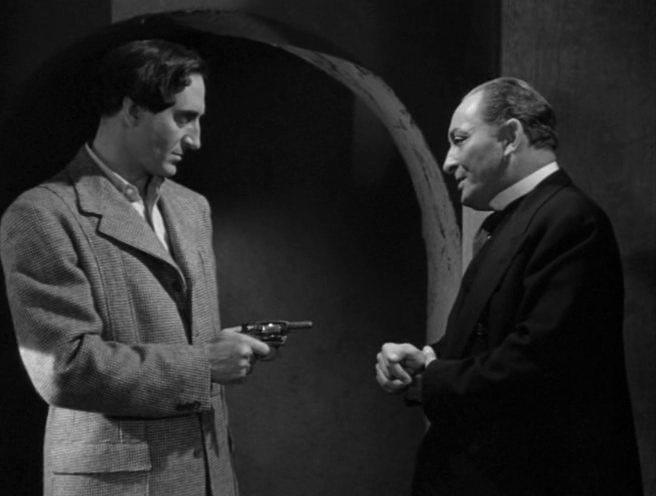
SHERLOCK HOLMES AND THE SECRET WEAPON was based on “The Adventure Of The Dancing Men”, a Holmes short story Arthur Conan Doyle put out in 1903, reputedly one of his favorites. But by the time the movie debuted on Christmas Day, 1942 the ‘based on’ part consisted only plucking a stick-figure code from the story and making up everything else around it, not least the four decade update to World War Two. The fourth in the Rathbone-Bruce run, and the second of a quartet set during war, it was also the first directed by Roy William Neill, who would go to call “Action” and “Cut!” in the remaining ten in the series.
With the war raging (and not yet going all that well for the battered Allies) those dastardly Jerries want to get their Heiling hands on the advanced bomb site developed by a Swiss scientist who brings it to England to use in a good cause (tell that to the German civilians). Holmes (Basil Rathbone) and Watson (Nigel Bruce) try to protect ‘Dr. Franz Tobel’, but they run afoul of criminal mastermind and traitor-on-demand ‘Professor Moriarty’ (Lionel Atwill), who along with kiting the gizmo and selling it to The Hun is keen to personally kill nemesis Holmes even if he’ll miss their acidic repartee.
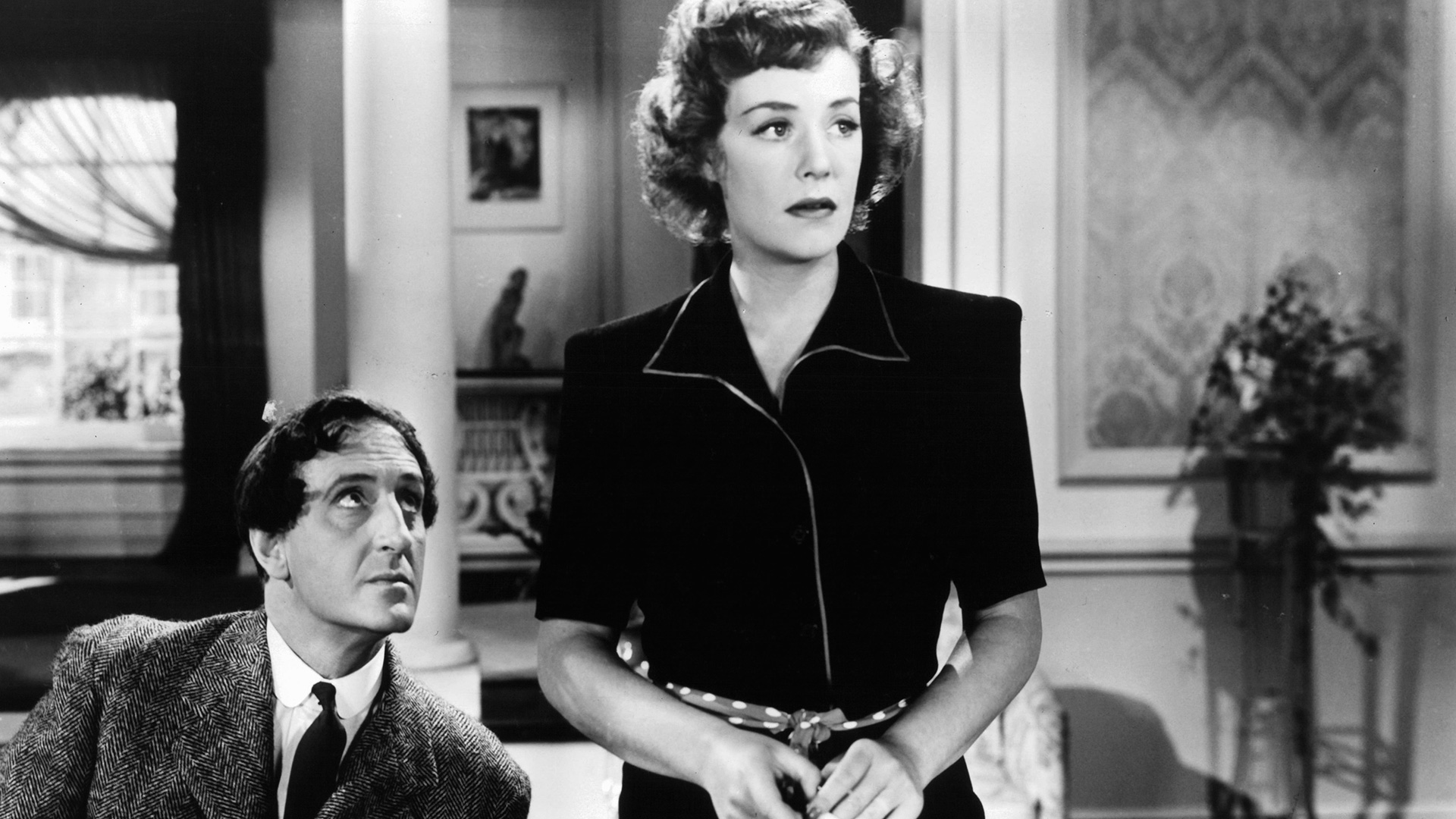
Look anywhere but at his hair
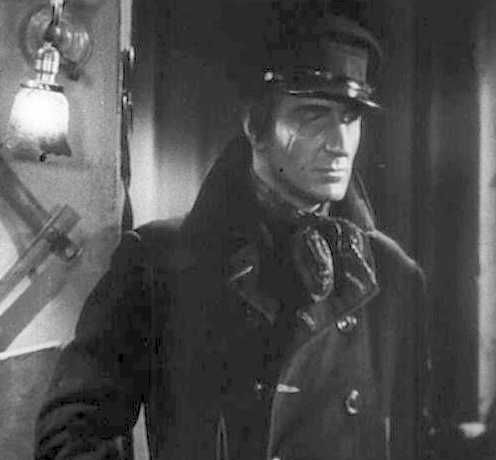
Rathbone (equipped with a truly goofy hairstyle) gets to play it up with Holmes adopting disguises as an elderly German bookseller, a lascar sailor named ‘Ram Singh’, and a Swiss chemist. Bruce handles the bumbling comedy biz, and Atwill does nicely as evil-to-the-core (yet studiously polite) Moriarty. A debit is the creakingly bad job as inventor Tobel from William Post Jr. (he later became a drama teacher, go figure).
The $200,000 budget didn’t allow for much scope or detail, but Neill and his crew worked to able effect with camera angles, lighting and pacing, keeping it brief at 68 minutes. 140th place for the year sounds low, but with a gross of $1,700,000 beating the cost eight times over, Universal was more than happy to churn out another.
With Dennis Hoey (making his bow as ‘Inspector Lestrade’; he’d do the Scotland Yard representative five more times), Kaaren Verne (German emigre who fled the Nazis in ’38–she later married Peter Lorre), Mary Gordon (series regular as ‘Mrs. Hudson’, housekeeper; she appeared in 16 movies that year), Paul Fix, Harry Cording, Rudolph Anders and Whit Bissell (yes, he was young once, 33, as a Bobbie, his second part, uncredited).

Lionel Atwill, 1885-1946
 Movies ala Mark