
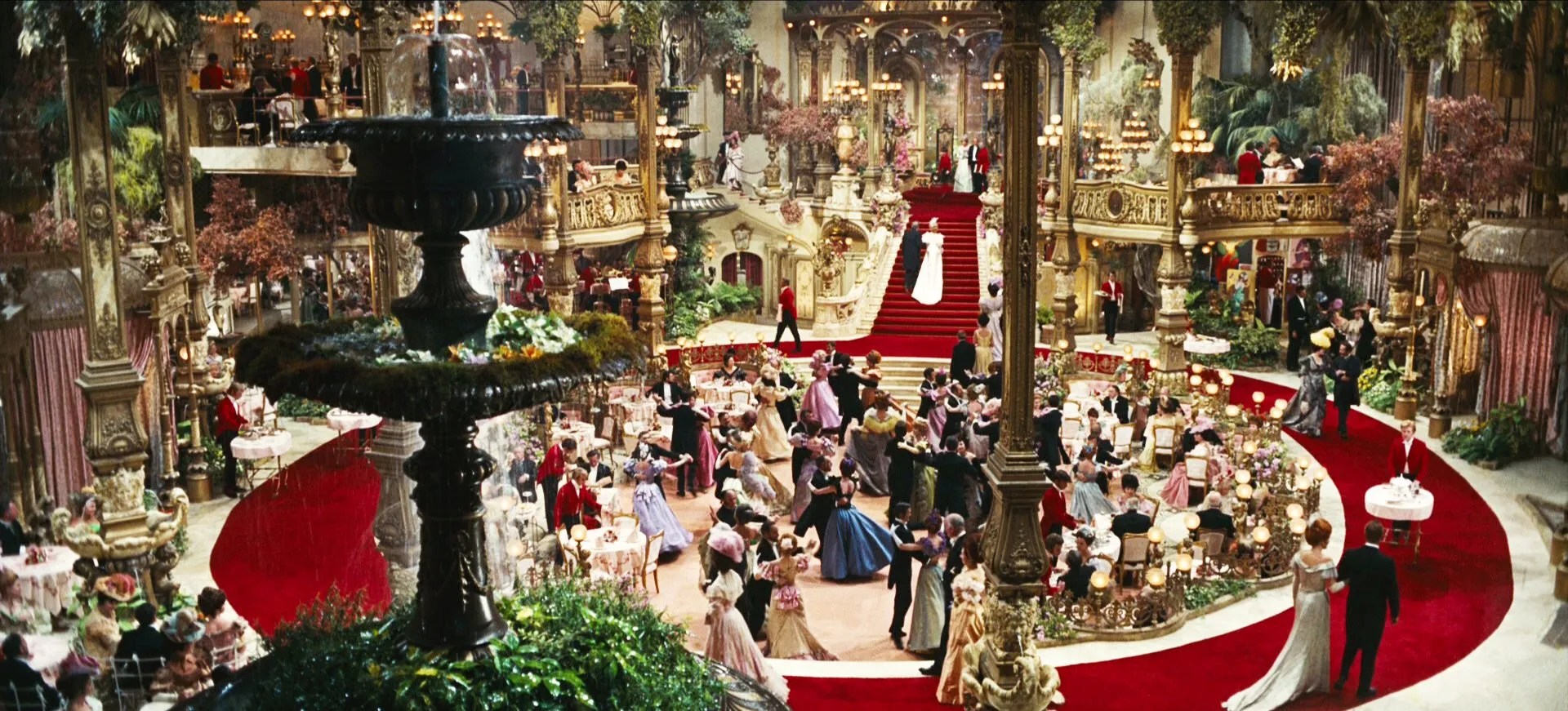
HELLO, DOLLY!, a leviathan musical from 1969, unlimbered 148 minutes of big crowd scenes, elaborate sets, colorful costumes and brassy song & dance numbers. The horrendous cost ($23,335,000, topped only by Cleopatra) bled enough red ink to nearly submerge 20th Century Fox, already bailing bilge from the instant dinosaurs Doctor Dolittle (1967) and Star! (1968) and a slate of budget-bloated audience-avoiding misreads like Justine and Staircase. As with Dr. Dolittle and Star!, intense studio lobbying ginned up undeserved Academy Award attention to hopefully goose receipts and shuffle blame. Bolstered by new star Barbra Streisand’s hit Funny Girl, popular co-star Walter Matthau’s in The Odd Couple and a publicity campaign you could see and hear from the Moon, it did make enough to wallow into the year’s #5 spot and eventually collected $43,400,000. But unless you’re a Streisand disciple—and she wasn’t nuts about it, either—it’s a blimp, a beached whale. *
Thornton Wilder’s 1954 play “The Matchmaker” begat the 1958 movie of that name with Shirley Booth. Six years later a musical version debuted as the play “Hello, Dolly!” with Carol Channing, slamming down a record 2,844 performances. Then Louis Armstrong had a #1 hit with the title tune in 1964: he appears in the movie to join Babs with the signature number, easily the best in the array—and the only one you can hum or sing along with.
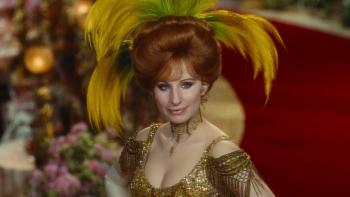
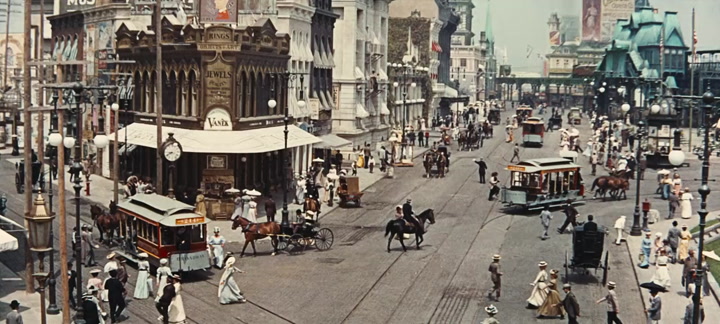
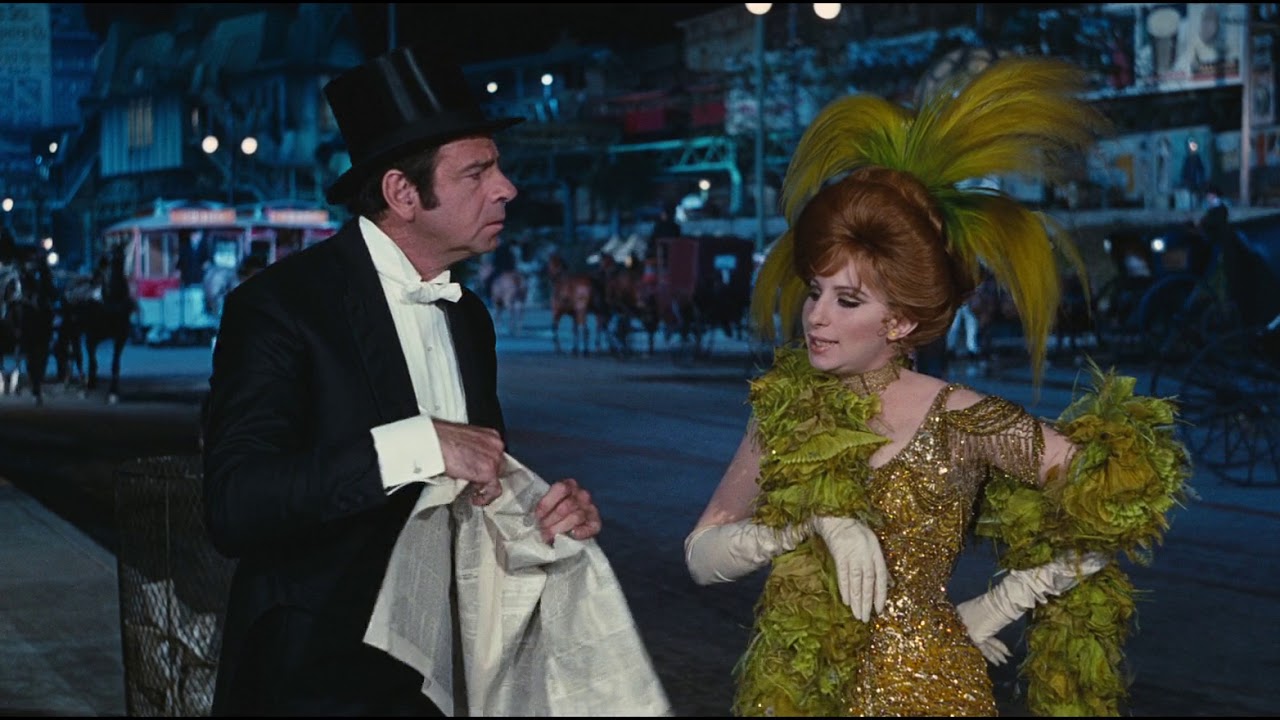
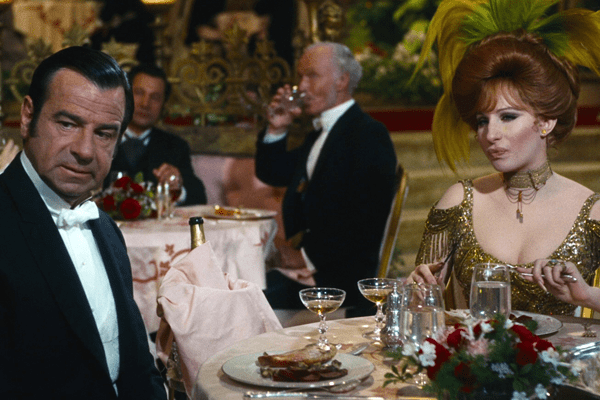
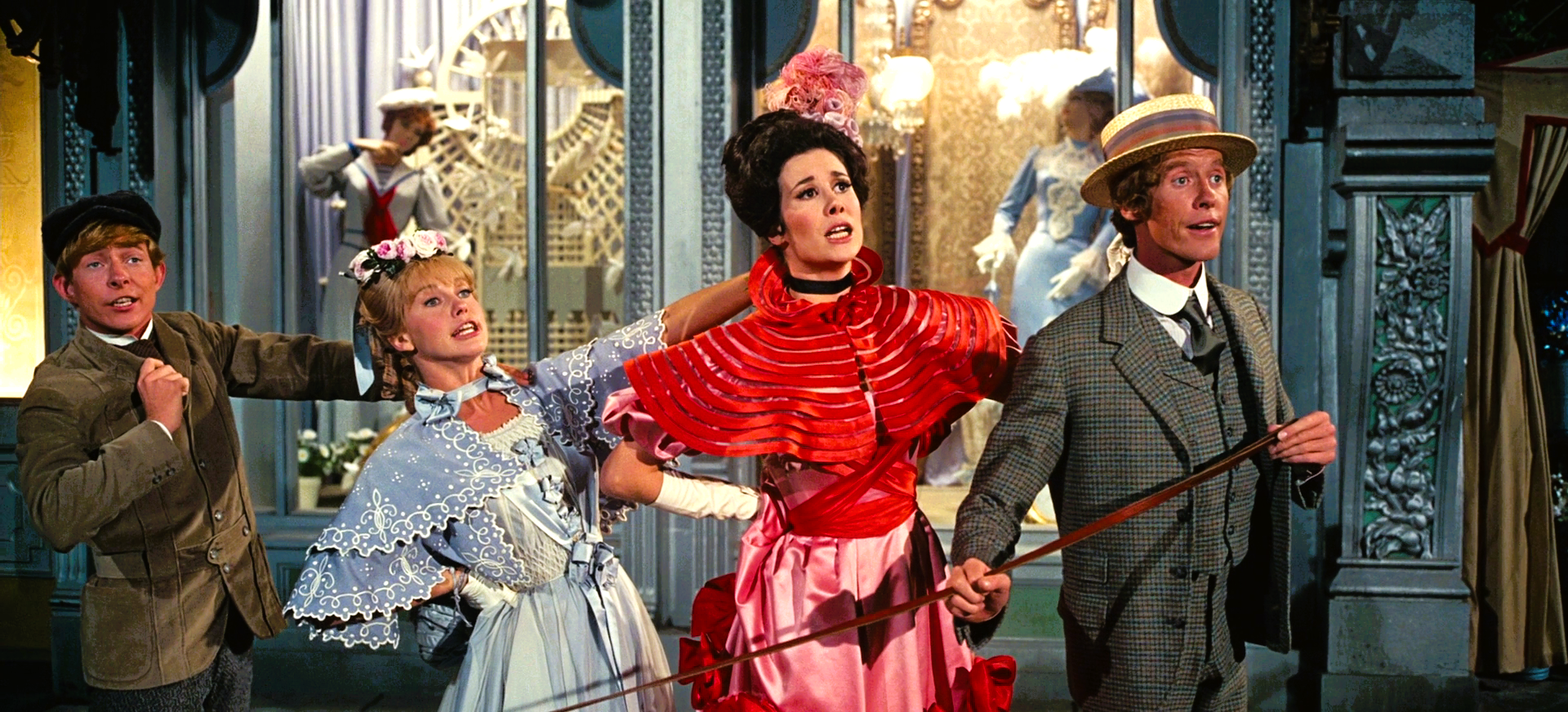
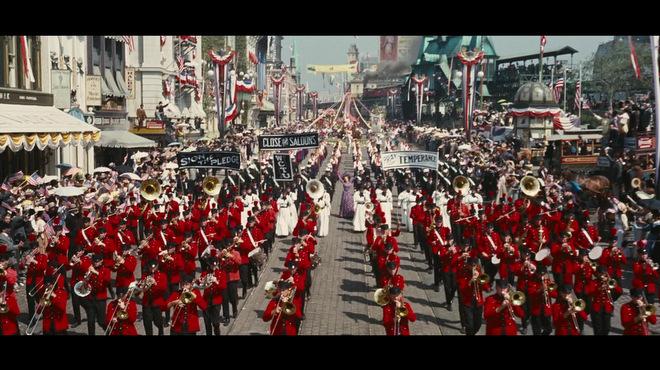
New York, 1890. Matchmaker ‘Dolly Levi’ (Streisand) tries to set up matrimony for wealthy ‘Horace Vandergelder’ (Matthau) and milliner ‘Irene Malloy’ (Marianne McAndrew, 26, feature debut). But plans go in different directions due to the presence of Horace’s dorkish clerks ‘Cornelius Hackl’ (Michael Crawford, 26) and ‘Barnaby Tucker’ (Danny Lockin, 25 looking 16), and ‘Minnie Fay’ (E.J. Peaker, 26, feature debut), Irene’s giggly friend. The much too broadly played fluff is wrapped around more than a dozen songs, including “Before The Parade Passes By” and the title favorite. Dancing up the kazoo, but the choreography designed by Michael Kidd relies so heavily on platoons of guys flail-kicking their heels up it comes off like Mel Brook’s swish parody in Blazing Saddles. Ernest Lehman, no slouch, wrote the screenplay and also was the producer. Coming off a successful 1967 comedy, A Guide For The Married Man, Gene Kelly took on the direction. Clashes between the stars, the director and other personnel made for a trouble-plagued shoot, and the budget went ballistic. The big parade scene has 5,000 extras filling up the streets on a huge set of old New York; recreating sixty buildings, the set alone costing $2,225,000. That one five-minute sequence chewed up $500,000. Yet, vast as it is, little impact registers from all the hoopla. Strain wins out: Matthau bellows too much, Streisand overplays cuteness (Dolly never seems anything like a flesh & blood person), and the chief quartet of supporting players ham past the curing stage. The show, aimed to be exhilarating, is instead exhausting.
The Academy Awards, always ready to faint over something from Broadway that has songs in it, and under bombardment from Fox artillery, gave it three wins—Art Direction, Musical Scoring and Sound—and nominations for Best Picture, Cinematography, Film Editing and Costume Design. The first two wins and the last nomination are acceptable: the others a joke.**
With Judy Knaiz (hard to take as Dolly’s obnoxious friend ‘Gussie’), Tommy Tune, Joyce Ames, David Hurst, Fritz Feld, J. Pat O’Malley, Scatman Crothers, Billy Benedict, Billy Curtis, William Fawcett, Eddie Quillan,Tucker Smith (‘Ice’ from West Side Story) and Georgina Spelvin (yes, from The Devil in Miss Jones).
* It takes money to lose money—of the 107 movies Fox released from 1960 to 1969, only 42 made a profit.
In the play, Dolly’s middle-aged. Streisand was 25 when the shoot began, 27 by the time it was released. Matthau was 22 years older. That they did not get along during the endless shoot is most famously recorded by grumped-out Walter’s telling her she “had no more talent than a butterfly’s fart”. Yowza, Oscar, that’s hardly the case, but it’s no secret that her appeal to the rank & file runs the gamut from adoration to antagonism. She emerged from this megaton okay, as did Matthau, but cinema luck eluded their supporting castmates. Crawford excelled on the stage, but flopped in subsequent films. Both McAndrew and perky Peaker also faded quickly. The tragic case was Lockin, savagely murdered in 1977. The just-met man who killed him got a four-year sentence and went on to live another 29 years.
** “Why not?”—-the Oscars Credibility Gap, 1969 Edition—a Best Picture nomination? Idiocy, outdone only by the one accorded Dr. Dolittle two years earlier. The Pic nom, and those that Dolly hello’d for Cinematography and Film Editing, plus its win for Sound, should, if there was any justice north of Agua Verde, have gone to The Wild Bunch. Put it this way: grinding teeth thru the gargantuan waste and indulgent gaucherie of Hello, Dolly! is enough for those not enchanted to lock & load some Peckinpah and crank up the volume on the shotguns.
 Movies ala Mark