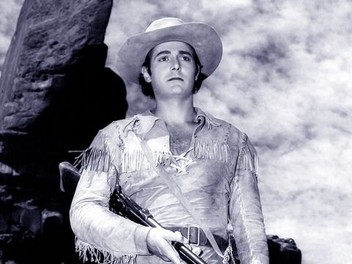
KIT CARSON, the famed/infamous mountain man, only lived to be 58 but packed enough exploration, adventure and action into that short span for a dozen movies. Once venerated, later condemned, he at the very least deserved a better motion picture treatment than the one he got in 1940, a well-mounted, handsomely shot, poorly written and badly acted 97 minutes worth of nonsense. Directed by George B. Seitz (eleven Andy Hardy pix), written by George Bruce, its copious fightin’ scenes no doubt pleased little kids of the day—unless you were a little kid who happened to be Native American, a section of the population with a much less favorable view of Mr. Carson. Apart from having some accurate character names (John C. Fremont, José Castro, Jim Bridger, John Sutter) and the correct time frame, as history it’s hogwash, and archaic as drama. Western aficionados and fans of a couple of the actors will put up with it for completionists sake and to tick off credits; most others will skedaddle before ten minutes have gone by. The action sequences (Arthur Rosson, 2nd unit director) and desert scenery are impressive, the rest hard to swallow.

In the mid 1840’s trapper, scout and Indian fighter Carson (Jon Hall) and boisterous pals ‘Ape’ (Ward Bond) and ‘Lopez’ (Harold Huber) escape from a Shoshone ambush and make their way to Fort Bridger, a far-flung outpost in what is now Wyoming. There they join up with a wagon train headed to California (then held by Mexico) under the command and protection of ambitious US Army Captain John Fremont (Dana Andrews). Since the script carries the standard interjection of a romance element, there’s Lynn Bari as ‘Dolores Murphy’, a fictional someone for Carson and Fremont to fuss over between battles.

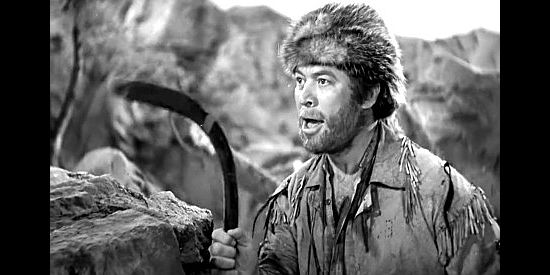
After a key part in John Ford’s 1937 biggie The Hurricane, Hall, 25, hadn’t been cast for three years until he landed three leads in 1940 (this opus, feeble comedy Sailor’s Lady and the goofy adventure South Of Pago Pago, the last of note only for the presence of ill-fated Frances Farmer). None were big hits (Kit Carson‘s gross of $1,600,000 ranked 131st) but they were enough to bump him into a run of escapist features that lasted for years. He’s frankly awful here, like a high school drama student doing an impression of Randolph Scott. Second-billed Bari, 20, had been getting scads of parts since she started in her mid-teens—in 1935 alone racking up 23 credits—but she has little to work with in this paycheck. It was the debut year for Andrews, 31; he’s all right. Ever-dependable lug Bond, 36, has the best part and he plays it big; for some absurd reason Ape has a boomerang to whizz at attackers.
Extensive location shooting was done in Utah, in Monument Valley (not quite yet the proprietary fiefdom of John Ford) and around Kanab and Kayenta. Good work from the sound effects team, stuntmen, costumers. Too bad about the cheeseball script and Hall’s non-event Kit: you might tag along with Jon for some highballs off Sunset & Wilshire but crossing the Rockies and the Sierras is a destiny better manifested with a guy’s guide named Gary, Errol or Spencer.
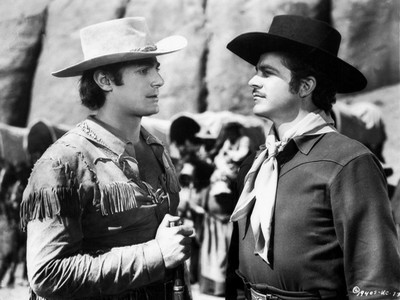
With Clayton Moore (nine years before masking up as ‘The Lone Ranger’), Raymond Hatton (as Jim Bridger), C. Henry Gordon (as José Castro), Charles Stevens, Stanley Andrews, Iron Eyes Cody and Jay Silverheels (nine years before joining Moore as ‘Tonto’).
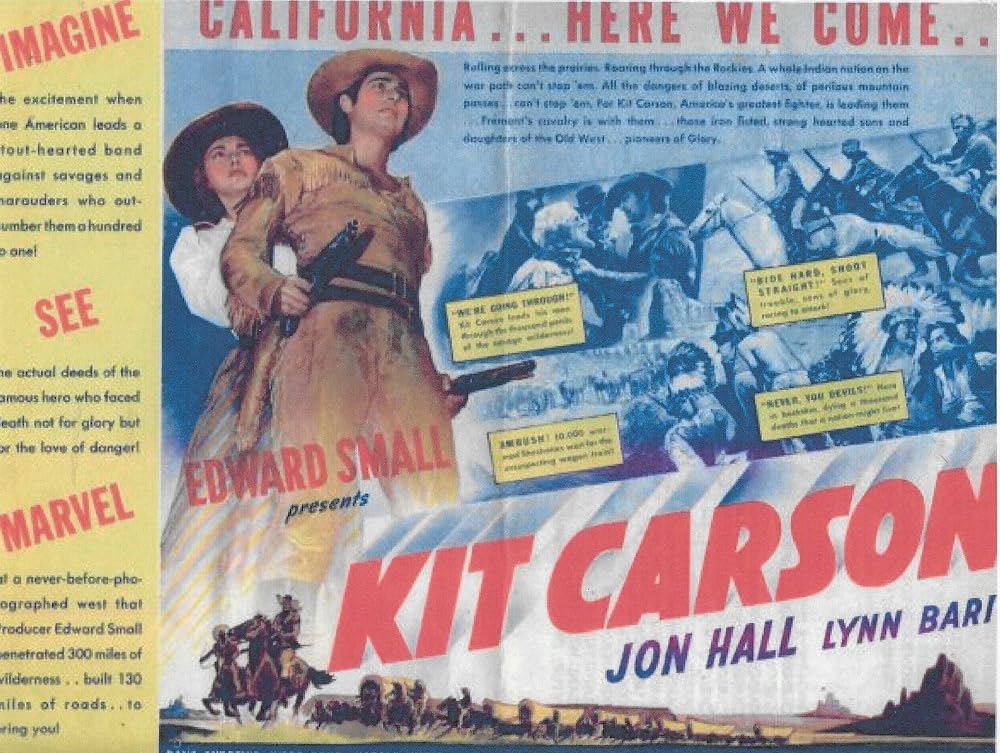
Click to enlarge and reap the blurbing
 Movies ala Mark