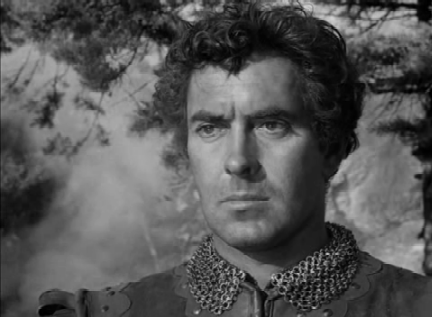
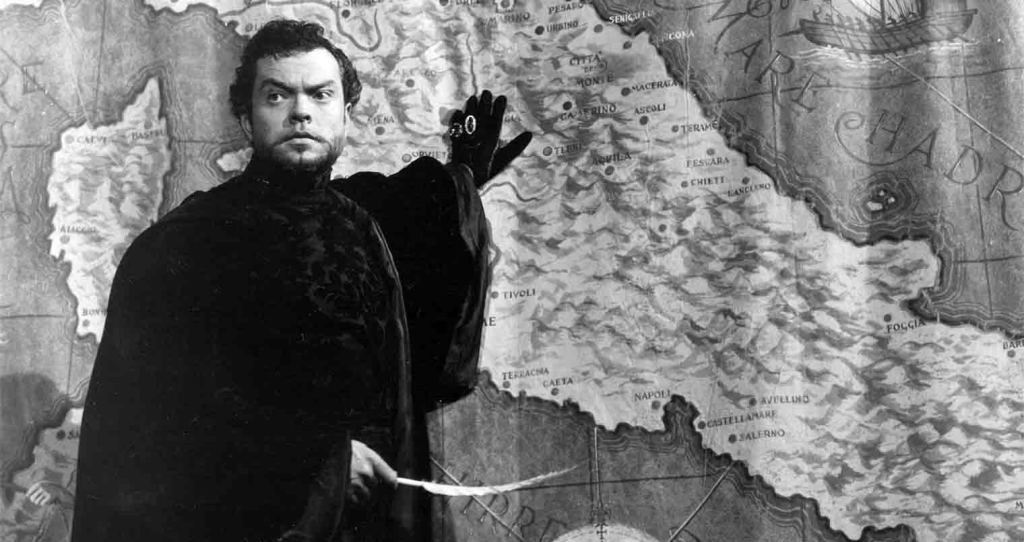
PRINCE OF FOXES runs circles of deception in Medieval Italy in this superior fact & fiction historical drama from 1949, lavishly produced by 20th-Century Fox on authentic Italian locations. The studio’s reigning leading man, Tyrone Power, knocks back another of his excellent period adventures, flanked by a still-reasonably fit Orson Welles, enjoying himself to a malevolent tee as Cesare Borgia. Consistent hit maker Henry King directed the script Milton Krims adapted from Samuel Shellabargers 433-page 1947 bestseller (his previous epic Captain From Castile starred Ty in the screen version). It’s a wit-laced screenplay, and Welles chipped in as well for a goodly amount of rewrites.
“It is my belief that everything, even death, can be turned into profit.”
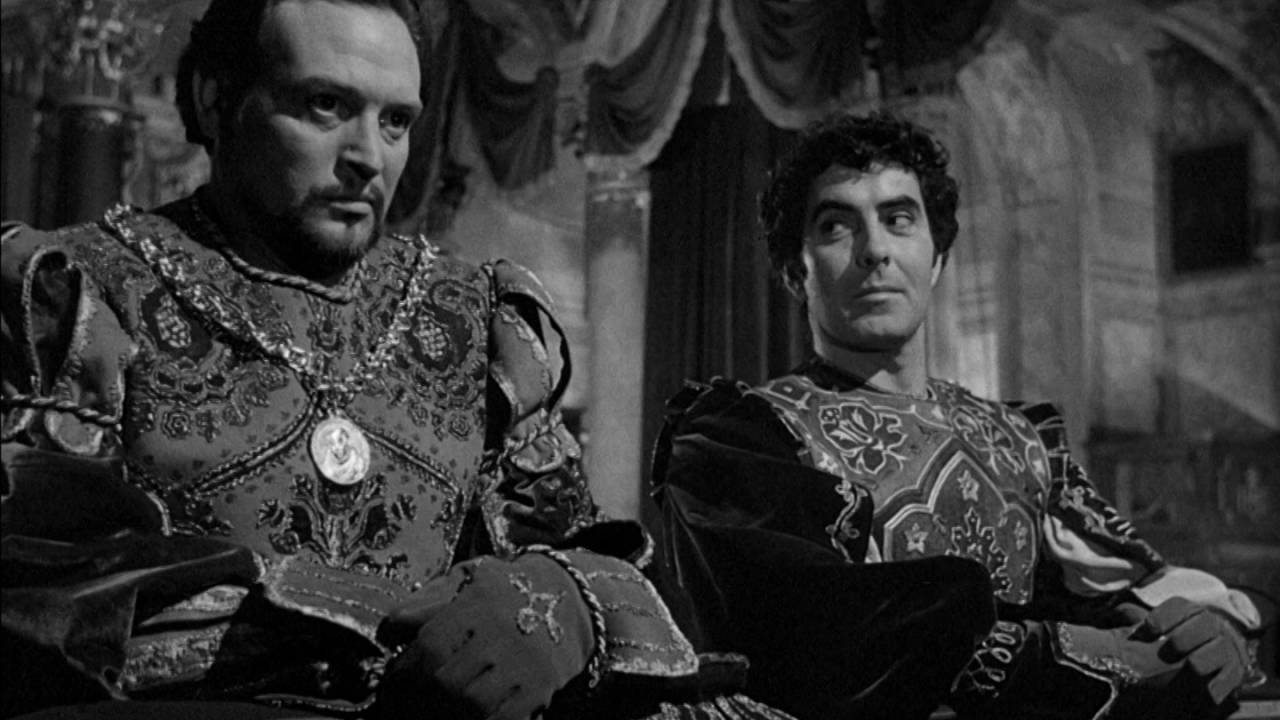 1500. Turning Italia’s patchwork of feuding states into his own subservient kingdom is the goal of power-crazed Cesare Borgia, who will use any means at hand to get what he wants. His lineup of conquests requires a special sort of rogue agent, one who must “be as quick at deceit as a fox. He must have the grace of a dancer; the wrist of an assassin. He must have little regard for good faith, yet by his astuteness, be able to confuse men’s minds. He must have confidence in himself, yet not let that confidence render him incautious. He must charm as a snake charms a bird, yet he must make no friends, except those who can be of use to him and, for the same reason, although he may make use of love, he must not love.” Sounds like a pick for a crucial government position.
Borgia selects ‘Andrea Orsini’ (Power), ambitious minor nobleman, skilled soldier, talented painter and no slouch at the art of seduction. Orsini’s mission eventually takes him to the fortress city Citta del Monte, and it is there that his loyalty to Borgia is put to the supreme test.
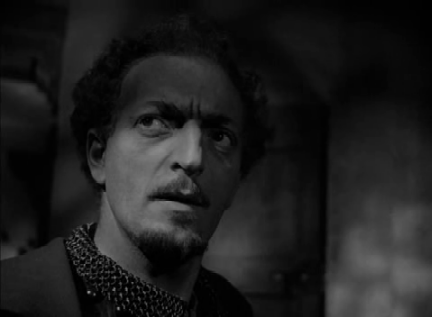
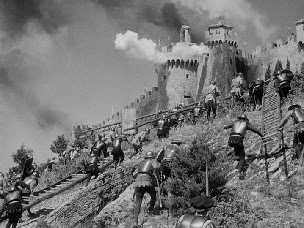
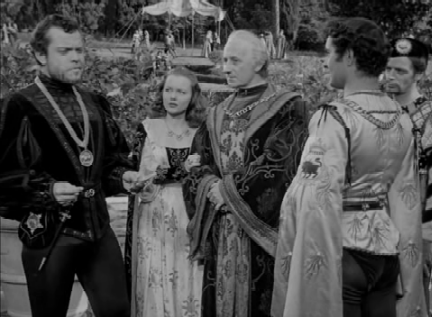 It was the seventh of ten winners Henry King would share with Power, 34, who’s in fine form as the multifaceted, eventually morally conflicted Orsini. Welles, 33 (also nailing The Third Man that year), is deliciously devious as the ego-driven Borgia; this and The Third Man had him still in good physical condition, his ballooning into corpulence waddling on the horizon. Wandra Hendrix, 20, (then wed to Audie Murphy) is okay as the main woo-object ‘Camilla Varano’; Italian star Marina Berti is vibrant as Borgia’s sister Lucrezia (24, Berti would later have a small but affecting role in the colossal Quo Vadis). Katina Paxinou adds a dash of her earthy vigor as Orsini’s mother. Two standout supporting performances come from the dependably intense Everett Sloane, keen as a hornet doing the happily treacherous assistant/minder to Orsini, and Felix Aylmer, as the elderly Count married to the much younger Camilla; erudite as ever, of his 178 credits this was probably the hardiest role the dignified veteran ever had. He even participates in one of the two mid-sized but brutal (for the day) battle sequences. Bring forth that boiling oil! Sloane is key to one of the more gruesome bits of business in shows from the era, a demonstration of eye-gouging, a shuddering display of fealty to the sadistic Borgia, done at court in front of an audience. Ah, the glory days of the Renaissance.
Alfred Newman provides a zestful score. The striking locations: San Marino, Siena, Florence, San Gimignano, Castel del Monte, Venice, Terracina. Yet for budgetary reasons the decision was made (later regretted) to shoot in black & white, denying a good deal of appreciation of not merely the sites, but also the elaborate costuming (Vittorio Nino Novarese) and art direction. Nonetheless, ace cinematographer Leon Shamroy works wonders with his lighting. His skill and the Costume Design received Oscar nominations.
Brought forth to the tune of at least $4,500,000 (according to Time Magazine), the US gross of $6,900,000 placed 26th (just after The Third Man), among 1949’s varied and impressive crop. With Leslie Bradley, Eduardo Ciannelli and Eugene Deckers. 107 minutes.
 Movies ala Mark