
DÉSIRÉE Clary (1777-1860) was Queen of Sweden & Norway for a quarter-century, but before that, at the age of 18, she was briefly engaged to an ambitious French artillery officer named Napoleon Bonaparte. Historians parsed the Before, During & After of her romances and reign, but peasants-in-the-street knew her from a successful novel (translated into 25 different languages) by Annemarie Selinko. From that source and with cut & paste factoids, Daniel Taradash crafted his script for the 1954 movie adaptation, directed by Henry Koster.
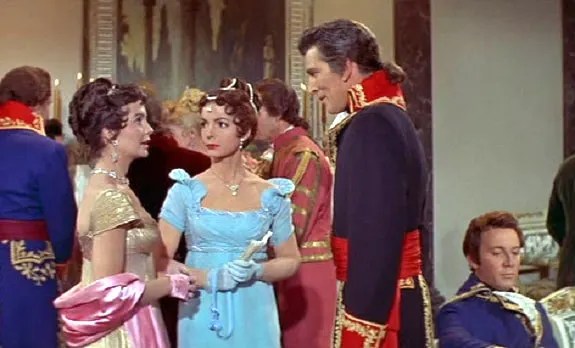
It is our sacred duty to instill into all the European peoples our great idea of liberty, equality, and fraternity. And if necessary, with the help of cannon.” That’s Napoleon puffing forth, but cannon are notably absent from the action-free storyline, 110 minutes occupied instead with volleys of only marginally engaging chatter.
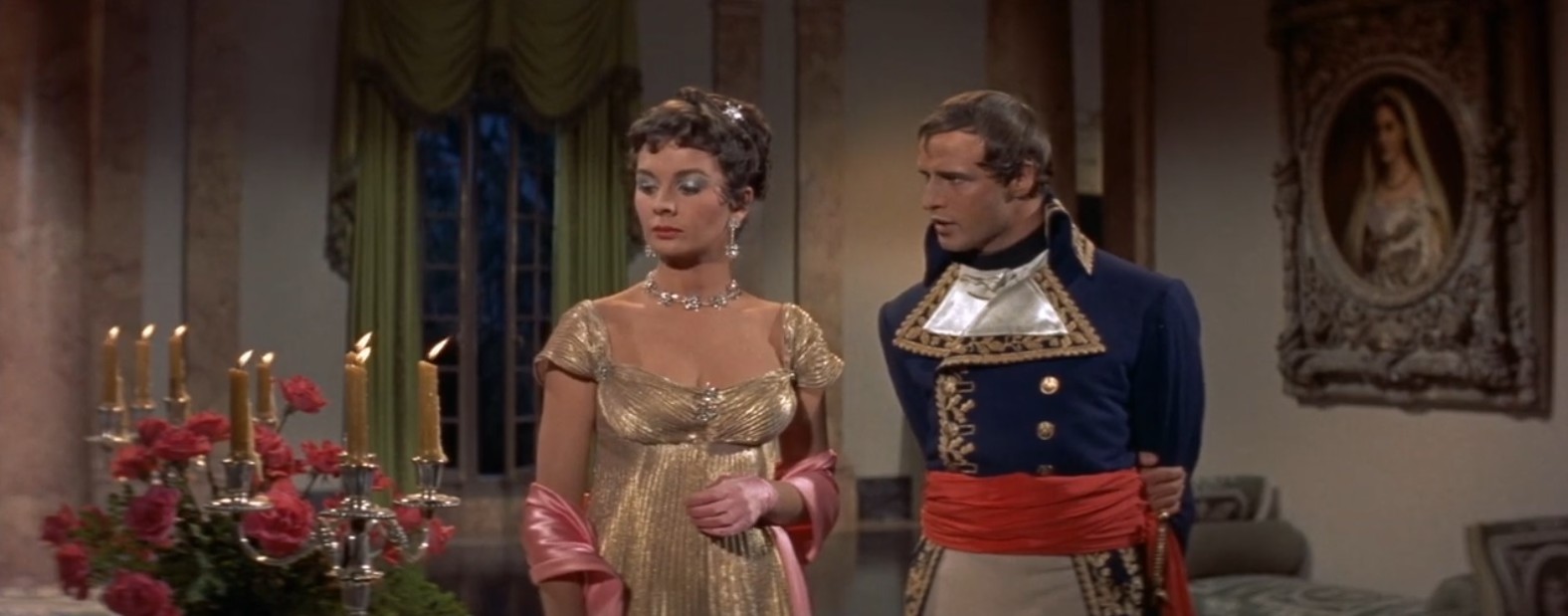
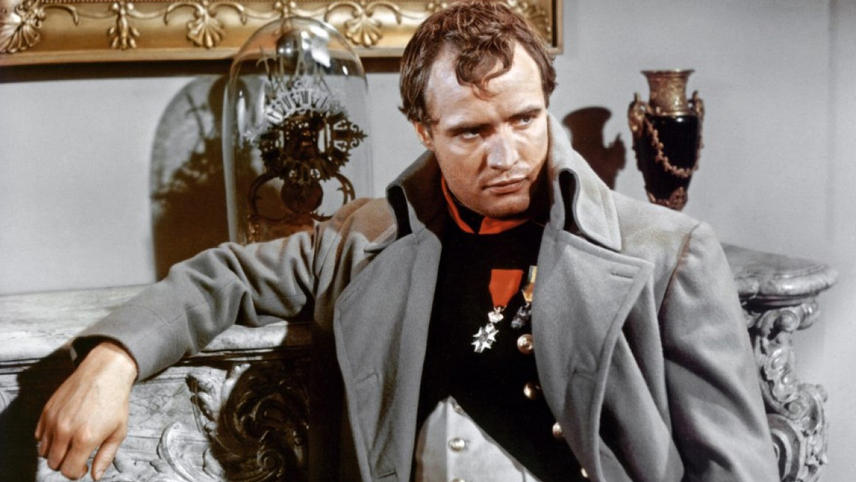
Marseilles, 1794. Two daughters of a silk merchant are introduced to a pair of brothers, the Corsican-born Bonaparte’s, soldiers in the army of Revolutionary France. Julie (Elizabeth Sellars) falls for Joseph (Cameron Mitchell) while Napoleon (Marlon Brando) wastes no time seducing more naive Désirée (Jean Simmons). Her time as fiancée ends in abrupt and public humiliation when coldly calculating, endlessly ambitious Napoleon chooses to wed Joséphine de Beauharnais (Merle Oberon), wealthier and more socially connected. A few years later, one of Napoleon’s most skillful generals, Jean-Baptiste Bernadotte (Michael Rennie) marries Désirée. Over the ensuing 15 years, as Napoleon brings war to much of Europe, the Bernadottes find themselves at odds with the continent’s most powerful ruler.
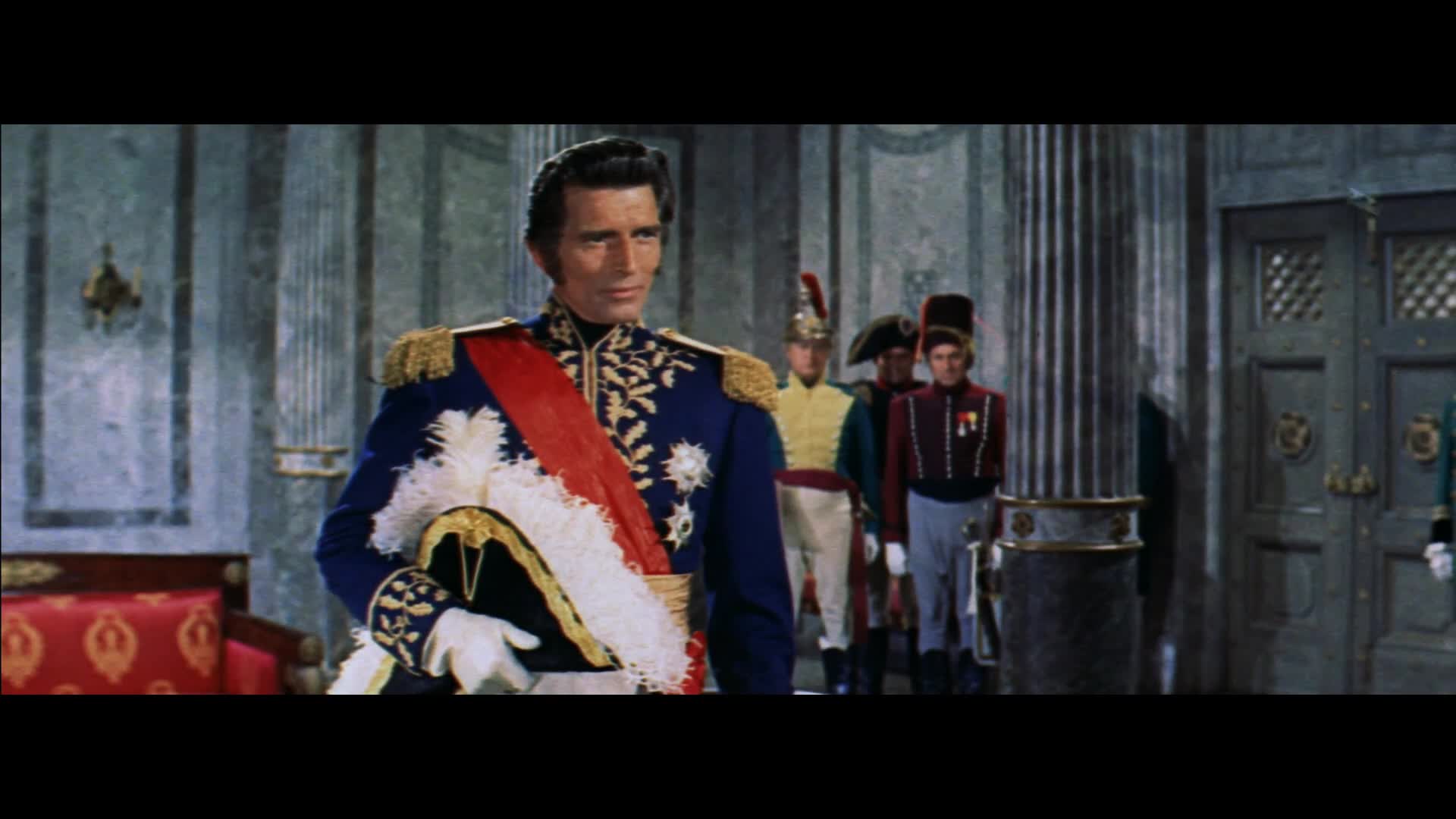
The pedestrian first half drags; as it goes along the shifting alliances and deteriorating relationships provide somewhat more interest. Simmons is fine but the character of the rather simple Désirée isn’t anywhere as compelling as the script pretends. Sellars is always a pleasure, Mitchell has next to nothing to do, courtly Rennie adds gravitas and bearing. Oberon has some good moments as the used & discarded Josephine. Brando was obligated by contract to take the role after making a costly fuss of turning down the lead in another, bigger Fox epic being made, The Egyptian. His disinterested Emperor comes off as a series of moody poses; he called his performance “the most shaming of my life” (presumably muttered before he desecrated The Island Of Dr. Moreau).
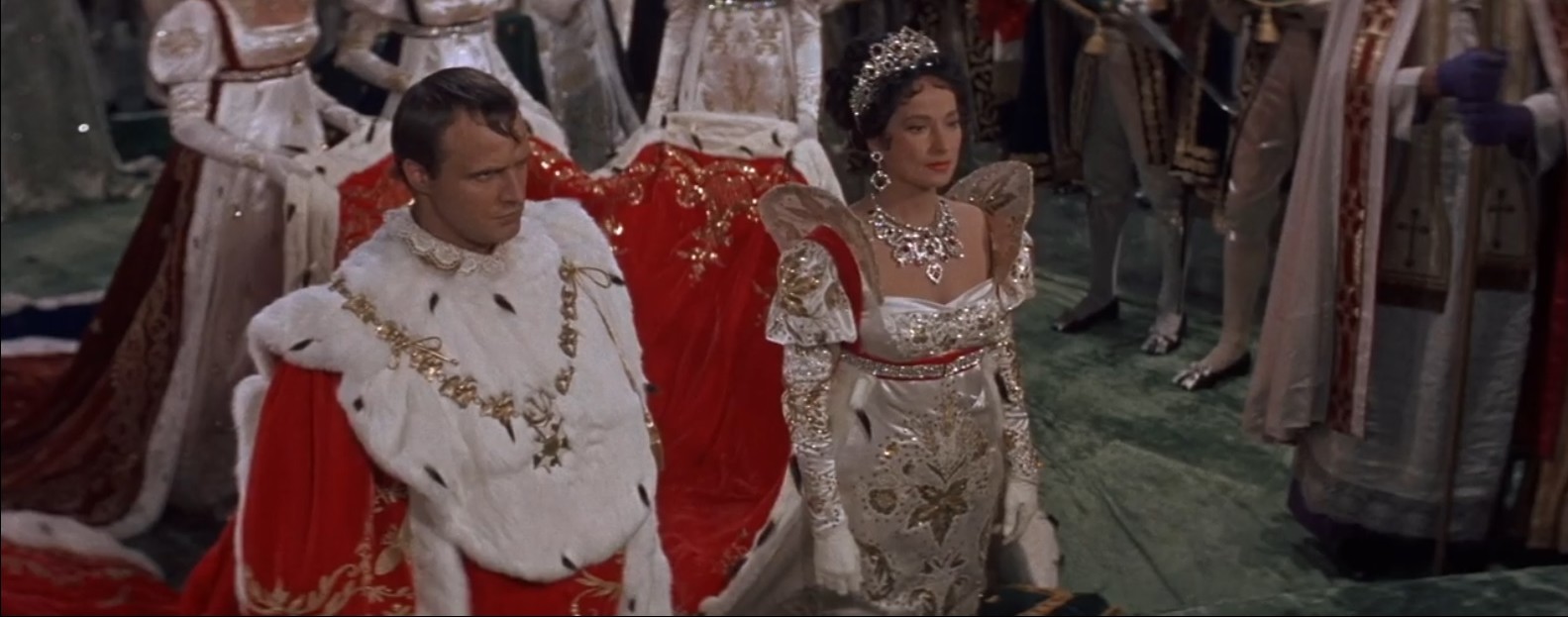
Unsurprisingly, the too clean Art Direction and too facile Costume Design drew Oscar nominations. Alex North’s overly insistent score is balanced by Milton R. Krasner’s attractive cinematography. Made for $2,720,000, its gross of $12,900,000 polled 15th for the year, outperforming Brando’s iconic On The Waterfront by a good $900,000, while The Egyptian (Simmons one of the stars) equaled the take of the Bonaparte saga. Maligned at the time, that movie holds up much better today then the courtly crawl of Désirée & Co.

In wardrobe: Cathleen Nesbitt, Evelyn Vardem, Alan Napier, Isobel Elsom, John Hoyt (as a catty Talleyrand), Richard Deacon (debut, 31), Carolyn Jones (23, injecting welcome flair in a brief scene as a silly aristocrat).
 Movies ala Mark