
1969 is summoned in a pat and predictable yet sincere, excellently acted, frequently moving 1988 drama about two families caught up in and forever changed by events in that wild final year of an extraordinary decade. Ernest Thompson had scored a big win some years earlier writing On Golden Pond; this time out he directed as well, working with fresh young talent—Kiefer Sutherland, Robert Downey Jr. and Winona Ryder—and proven vets Bruce Dern, Joanna Cassidy and Mariette Hartley. As demanded by movies set during the period, a memory-sparking soundtrack of classic songs is well-integrated.
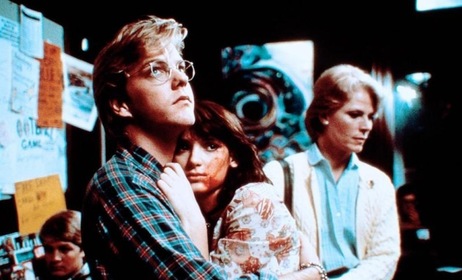
Childhood friends and neighbors in their small Maryland town, ‘Scott Denny’ (Sutherland, 21) and ‘Ralph Carr’ (Downey, 22) go home from college on Easter Break. They’re in school in large part to use student status to avoid the draft that’s churning up fresh fodder for the voracious meat grinder of the Vietnam War. Scott has serious issues with the conflict (like not wanting to kill or die for it, go figure) but perpetual loose cannon Ralph has so little self-control he may end up not on the Dean’s List but either on a casualty count or prison roster. Scott’s brother has already gone, and tension over their sons relative choices threatens the marital ties of ‘Cliff’ (Dern, 51) and ‘Jessie’ (Hartley, 47). Ralph’s widowed mother ‘Ev’ (Cassidy, 42) consoles herself with booze and daughter ‘Beth’ (Ryder, 16), like Scott, is fiercely against the atrocity in SE Asia.
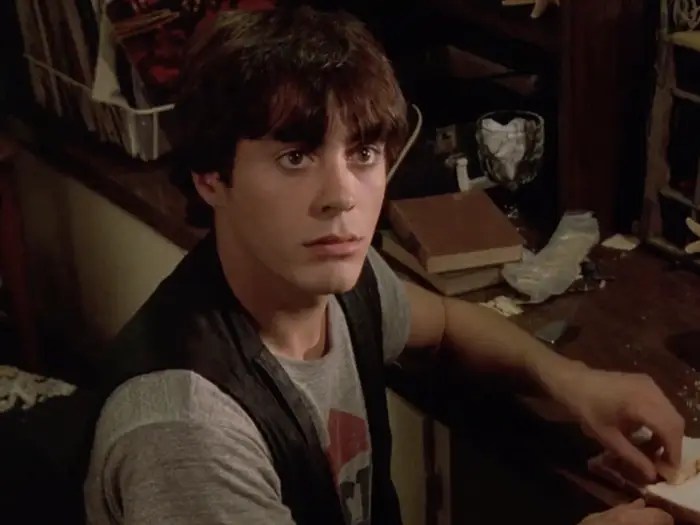
Though some notes are too on the nose, and the two guys may be (no, are) right about the wrongness of the war machine and America’s Grand Canyon of apathy, they’re also smug, careless and selfish (comporting with reality) leaving most of the sentiment—and best scenes—going to the baffled parents. Sutherland and Downey knew excess on their own terms (they’d been room-mates) and watching Downey waste himself is a, uh, sobering—exercise in mirror-meets-man (a huge win for all that he left that behind). Ryder and Cassidy are solid, but Dern and Hartley take top honors: this is one of her very best performances and it’s always a surprise when Dern plays someone who can evoke sympathy; he excels here. A couple resonant moments deserve note. One is a quick shot that could stand & deliver for the time period—a theater marquee showing True Grit currently playing, while on the ‘coming next’ panel is Easy Rider. The other comes when Ryder makes a heartfelt speech, telling a crowd of adults and students that “There’s something wrong in America. I don’t know what it is. There’s something wrong when everybody’s mad at everybody else. There’s something wrong when you don’t understand what our country’s doing.” Fast-forward to the USA! USA! of 2025.

Reviews at the time were polite, but the public didn’t bite, 118th place at the box office was a lost cause with a $5,979,000 gross against a cost of $7,000,000. Some modern-day reviews get oddly hurtful, as if the little human-scale movie doesn’t solve the era for them. Gotta luv the new breed of snarks who magically seem to understand that time better than the people who actually lived thru parts of it. More than the 30s, 40s and 50s, and certainly more than everything since, the 60s (really 1964-1975) seems to bring the bitter from couch historians who “know” how it “was”. Get the hell over yourselves–or better yet, try what a large part of a generation you now mock did: actually do more than panty-twist bitch about fascism. Fight, shut up or get the hell out of the way: we have met the enemy and they are us.

With Christopher Wynne, Keller Kuhn and Mert Hatfield. 95 minutes.
 Movies ala Mark