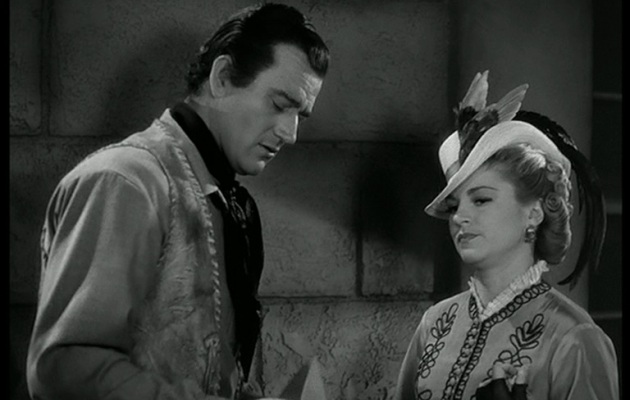
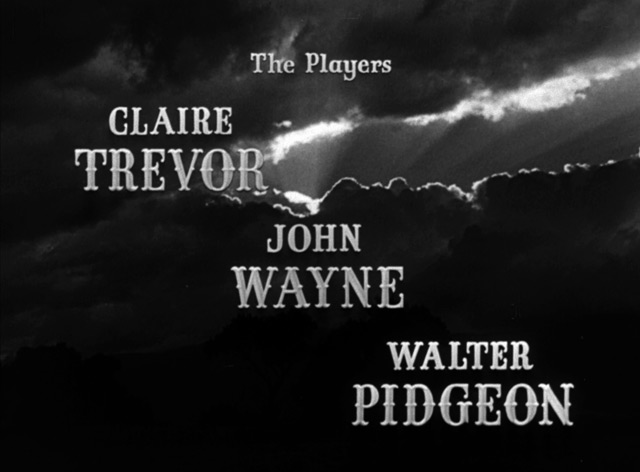
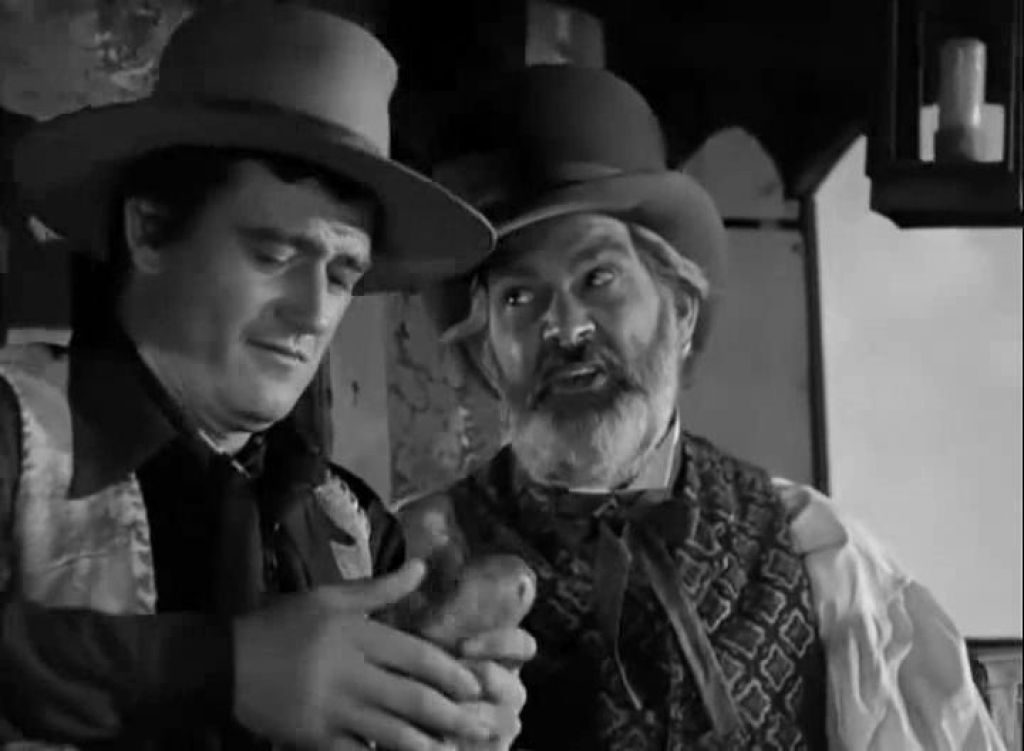
DARK COMMAND rode in as one of four movies the reborn star John Wayne made in 1940, freed from a decade in the B-flick doldrums after his tasking mentor John Ford put him aboard 1939’s Stagecoach. Claire Trevor, his lively co-star from that classic (and their ’39 place-holder Allegheny Uprising) was back, first-billed in this Republic Pictures production, with dependable Walter Pidgeon, borrowed from MGM, rounding out the leads. In the second-tier: Roy Rogers, 28 (as ‘Fletch McCloud’ yet) and Gabby Hayes in one of 15 times he worked with Wayne, one of forty-four (!) with the ever-amiable Mr. Rogers. The stunt team gets a workout. History gets a workover.
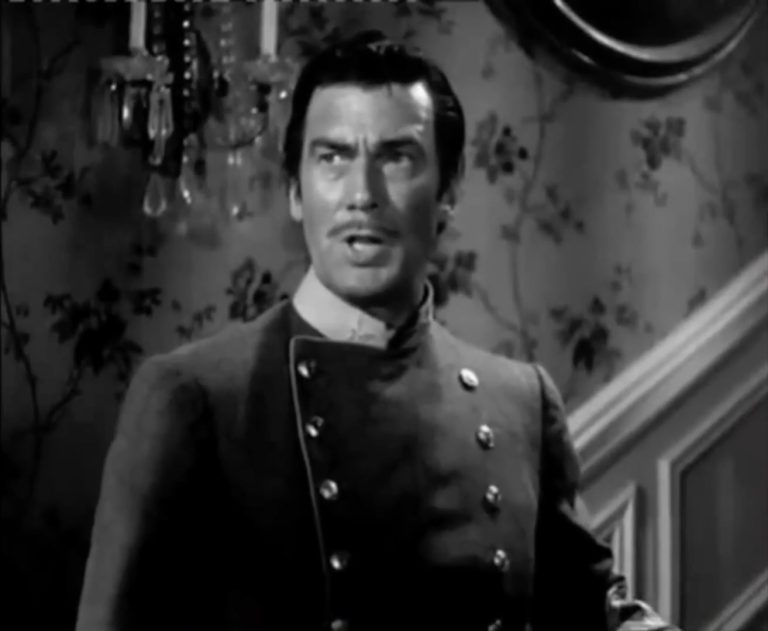
Kansas, 1859. As tensions grow between North & South, the fertile plains of Kansas were watered with blood as its pending statehood was up for grabs. Genial but no-pushover, Texan drifter ‘Bob Seton’ (Wayne) runs for marshal of the city of Lawrence. He wins, beating out ambitious schoolteacher ‘Will Cantrell’ (Pidgeon). They both favor feisty ‘Mary McCloud’ (Trevor) but when the fuming Civil War finally erupts, differences become loyalties, and the lines so drawn, when crossed, produce a crop of woe. Heck, that purplish hazy summary is as viable as the script, which turns the bitterness of ‘Bloody Kansas’ into a well-heeled, accuracy-oblivious action flick adorned with romance, humor and a good deal of shootin’. Howdy, folks.
Studio honchos picked sides over the ‘rights’ to the War Between The States—Republic’s chieftain Herbert J. Yates must’ve wanted to show off in the wake of mogul David O. Selznick’s burning of Atlanta in Gone With The Wind. The normally frugal (as in tightwad) Yates allotted this opus what was for Republic a generous $750,000. A good deal of that shows up not just in the hefty amount of extras and horseflesh but in the fiery fate of Lawrence, its immolation staged for the big finale. The script, hedging (as in dodging a ricochet) bets to avoid censure below the Mason-Dixon line (Jim Crow days and attitudes in effect) has the historical character of Confederate guerrilla leader/outlaw/war criminal William Quantrill (1837-1865) softened into Pidgeon’s half-civil/half-deranged Cantrell. The merciless raid on Lawrence (August 21, 1863) where Quantrill and his 450 men slaughtered 170 citizens and torched the town is cine-sanitized into a 50/50 pitched battle. That made hay for the stuntmen and pyrotechnic crews while leaving history smokin’ in the outhouse.
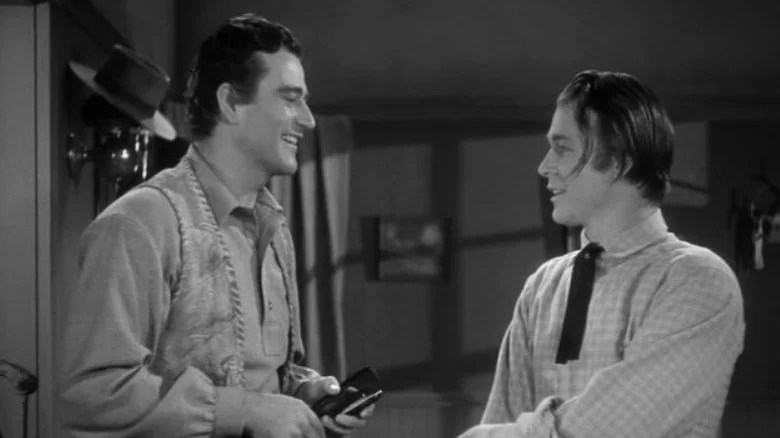
Raoul Walsh directed, so it moves apace. The likable actors are game, the stunts are risky, the sum total mainly of check-it-off-the-list interest for fans of the stars.
Writers: Grover Jones (Souls At Sea, The Shepherd Of The Hills), F. Hugh Herbert (Margie, Sitting Pretty), Lionel Houser (The Girl From Mexico, Christmas In Connecticut) from a novel by the prodigious W.R. Burnett (Little Caesar, Scarface, Wake Island, The Great Escape). Wayne’s stunt double Cliff Lyons, working here under the legendary Yakima Canutt, later did the spectacular 2nd-unit battle action on Duke’s The Alamo. Two Academy Award nominations were cinched, Music Score and Art Direction. 94 minutes of olden days hokum snagged 1940’s spot #95 with a gross of $2,100,000.
Hardies in support: Porter Hall, Marjorie Main (as Pidgeon’s ‘Ma’, though she was only seven years older), Joseph Sawyer, J. Farrell McDonald and Trevor Bardette.
* Action ace Raoul Walsh had directed untied freshman Wayne’s grand-scale intro of The Big Trail, back in 1930. A decade on, having learned a few tricks on the job, The Duke’s other 1940 entrees were father figure Ford’s superb The Long Voyage Home, the amusing Seven Sinners (with Wayne fling Marlene Dietrich, though it was more her fling than his) and the offbeat, overlooked Three Faces West. The reliable Walter Pidgeon was being worked like an MGM dog that year (It’s A Date, The House Across The Bay, Phantom Raiders, Sky Murder, Flight Command). He’d move up to the front rank next year with Ford’s classic How Green Was My Valley. Trevor’s only 1940 payday came from Dark Command.
For a much better take on the 1850’s-60’s woes of The Sunflower State, seek out 1999’s Ride With The Devil. Then chase with the rousing The Outlaw Josey Wales. Add the fiction fightin’ of The Jayhawkers!, the amusing absurdity of Santa Fe Trail and the lower-keyed Seven Angry Men.
 Movies ala Mark