
NIGHT TRAIN TO MUNICH, a well-regarded British-made espionage thriller, arrived in England’s theaters in late July of 1940. World War Two had ‘officially’ started the previous September. This morale mission, directed by Carol Reed, landed a month after the debacle/escape of Dunkirk and two before ‘the Blitz’ got underway. The story is set a year earlier in Czechoslovakia, one of Germany’s unnerving but bloodless conquests before the bombs and bullets were unleashed. That accounts for the lighter tone—adventure, humor and romance figure in—that would be left behind as the war news got ever bleaker. The witty script by Sydney Gilliat and Frank Launder basically reworks the one they did for 1938’s Hitchcock hit The Lady Vanishes, and three major cast members from that film are present as well. With the entrance of Japan and the United States a year and a half in the future, this escapist outing joined a select handful of excellent 1940 releases (The Great Dictator, Foreign Correspondent, The Mortal Storm, The Long Voyage Home) that moved the involvement needle ever closer to “time’s up!”
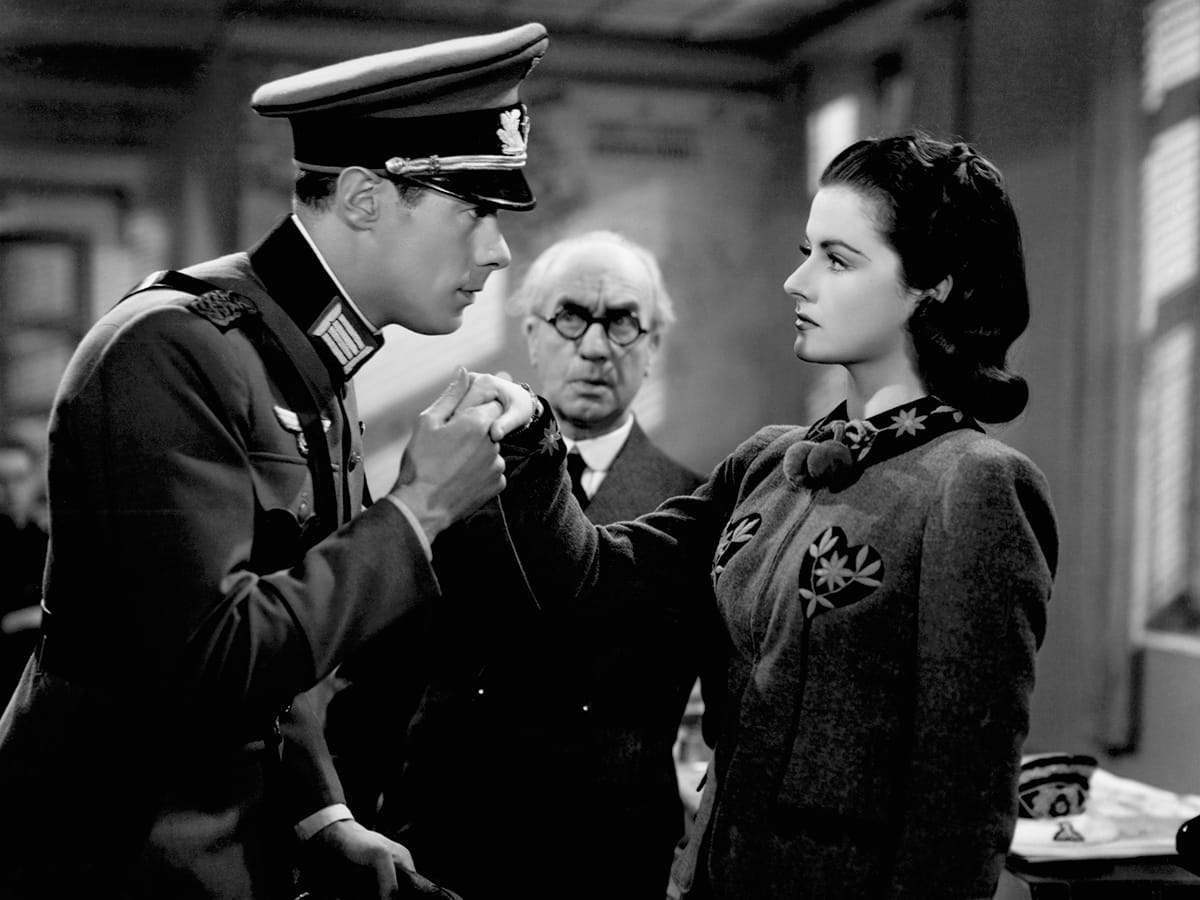
When Hitler’s forces grab Czechoslovakia (England & France dithering), a Czech scientist who’s designed a new type of armor plate, is spirited away to Britain. His daughter, caught and placed in a concentration camp, is ‘rescued’ by another prisoner and they manage (convenience helps a lot in this type of tale) make it to England. When her savior turns out to be a Nazi spy who kidnaps her and her father back to Germany, British Intelligence sends in a daring volunteer, posing as a German officer and engineer, to try and get them back again to England. Shadowed by the suspicious Nazi agent, during the flight-ruse they encounter a pair of proto-British gentlemen who are unlucky enough to be visiting Germany (then still at peace with Britain) at the time. As it would eventually look for the men of The Great Escape, the Swiss border seems like the best option.
Emerging as a star, 32-year-old Rex Harrison plays the good spy, Austrian exile Paul Henreid (billed as Paul von Henreid), also 32, is the bad spy, so it’s not merely a contest of opposing nationalities and belief systems but a duel of urbane acting styles. Though first-billed, 23-year old Margaret Lockwood (she’d already worked for director Reed six times) has less to do than the guys, her character takes a back seat in the second half of the show. She had been the ‘lady’ of The Lady Vanishes, and also along from the earlier film are scene-stealers Basil Radford and Naunton Wayne: their dry sendup of eccentric Brit types was so popular that they did eight more films together.
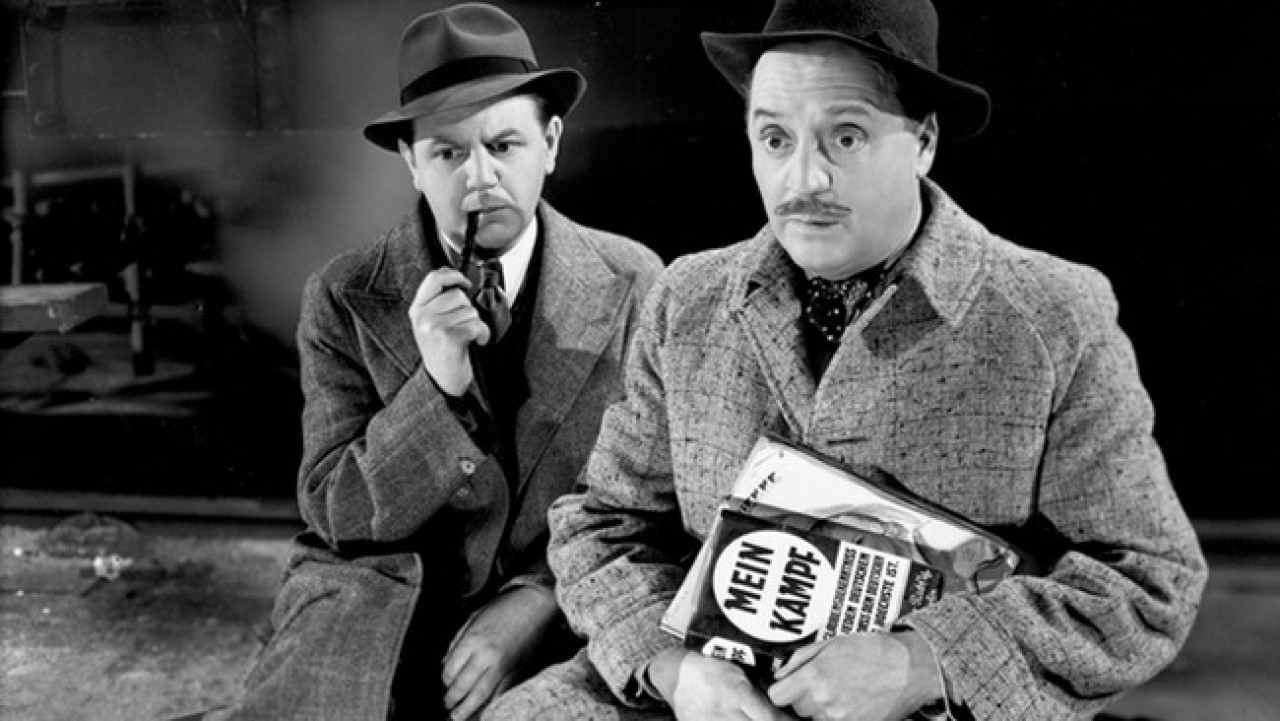
Cheeky and fun, if decidedly hard to swallow as anything more than a 95-minute diversion from gloomy reality (Harrison’s six-shot revolver somehow gets off two dozen rounds in the finale gunfight), and with wartime budgetary restrictions obvious in the sets and backdrops, the movie succeeds thanks to the byplay in the script, the appeal of the cast and Reed’s skillful direction. *
ANNA: “You know, if a woman ever loved you like you love yourself, it would be one of the great romances of history!” GUS: “As I’m unlikely to think of an adequate reply to that, I think we ought to drink a toast.”
Also in the cast are Felix Aylmer, Irene Handl (amusing as a brusquely officious ‘Germanic’ train station master), Roland Culver, Raymond Huntley, Torin Thatcher, John Wengraf (casually sadistic concentration camp doctor) and Hugh Griffith (28,unbilled, feature debut). When shipped to the States at the tail end of ’40, it grossed $1,000,000, placing 167th for the year.
* A muse from director Reed: “The most important purpose of the commercial filmmaker is to produce entertainment [that] will draw the largest possible number of the paying public into the cinema, and keep them there. You could gather a large number of people together to gaze at a two-headed dog, especially if you had a man with a loud enough voice announcing it; but the number of times people can be induced to pay money to see the dog is strictly limited; the wise showman provides also a bearded lady and a living skeleton–all, be it emphasized, strictly genuine. The public may be gullible, but there is a limit to its credulity.”
He had me with “gaze at a two-headed dog”.
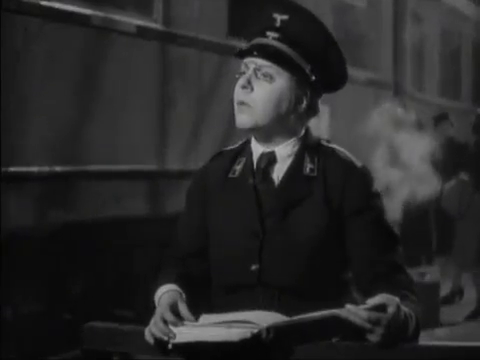
Irene Handl, 1901-1987
 Movies ala Mark