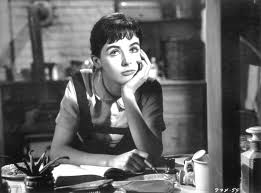
THE DIARY OF ANNE FRANK, directed and produced by George Stevens, contains in its screenplay a line 15-year-old Annelies Marie Frank penned on April 4, 1944 in her diary, “I want to go on living even after I’m dead.” Ten months later she was dead, murdered through forced labor, malnutrition and disease, along with her sister, in Bergen-Belsen concentration camp. Her mother perished in Auschwitz. Her father survived. Eight decades later, Anne lives on, through her words in “The Diary Of A Young Girl”, published in 1947, eventually translated into seven languages and treated over a dozen times for film and television, with Stevens’ meticulous and moving 1959 version the best known. Despite critical praise and Academy Award peer recognition, it wasn’t a box office success, the grim subject matter, foregone conclusion and length (a minute shy of three hours) too daunting to draw mass audiences. As with innumerable highly regarded movies, Stevens intimate epic later drew some predictable carping over several choices in the treatment, but a few snipes from self-appointed purists fail to tarnish undeniable craftsmanship, universal import and cumulative emotional impact. *

Nazi-occupied Holland, 1942-44. Hiding in the attic of an Amsterdam spice factory are two Jewish families. The Franks—father Otto (Joseph Schildkraut), mother Edith (Gusti Huber), daughter Margot (Diane Baker, debut) and younger sister Anne (Millie Perkins (debut)—share their cramped haven with the Van Daams—Petronella (Shelley Winters) and Hans (Lou Jacobi) and their teenage son Peter (Richard Beymer). They’re eventually joined by Albert Dusssel (Ed Wynn), a crabby dentist. Faint hope and desperate fortitude battle sapping boredom and growing despair; clashing attitudes, fraying nerves and sullen bickering contest dignity, spirit and longing.
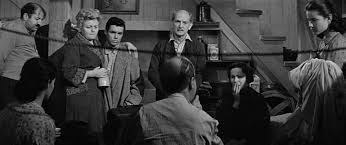
Frances Goodrich and Albert Hackett’s well-balanced script was adapted from their Pulitzer-winning play, and Stevens’ humanist handling doesn’t let any ‘what’s-it-all-mean?’ speeches, flamboyant histrionics or cloying sentiment intrude on the elemental microcosm drama of a handful of ordinary people trapped in a murder machine that swept up millions. Superbly lensed by William C. Mellor (who shot A Place In The Sun and Giant for Stevens), sensitively scored by Alfred Newman, the claustrophobia and ever-present tension become characters along with the performers.

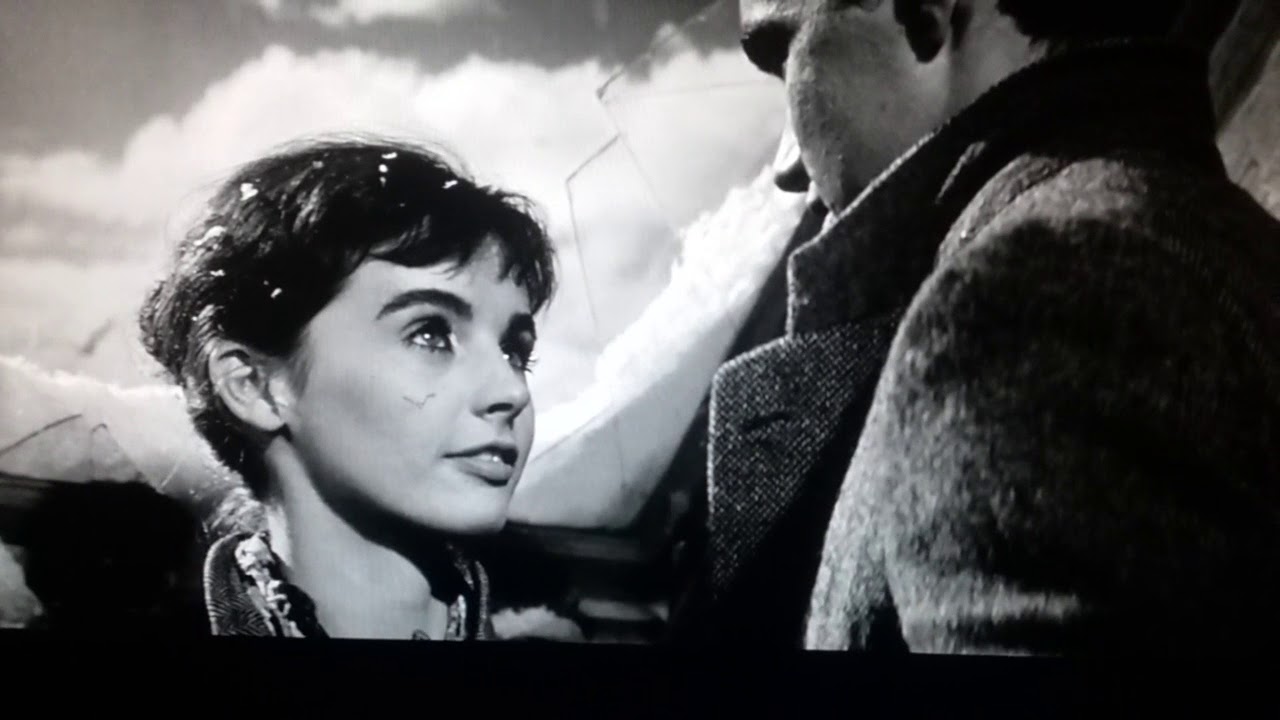
Though at 22 she had years on her teen-aged heroine, Perkins glowingly convinces as the maturing-under-duress chronicler. Though we’re usually not enamored with the also debuting Baker (two years younger than Perkins but playing her older sibling) she’s quietly effective, as is Huber; they get the lesser amounts of coverage in the group. Jacobi’s pitiful whiner is well-measured, and Beymer, 20, has one of his better roles, Stevens’ guidance keeping him from over-earnestness. Schildkraut (like Jacobi and Huber reprising his stage role) is a model of patient thoughtfulness. Strong impressions credit Winters—who’d aced one her top jobs in the director’s A Place In The Sun—excelling as the fearful Petronella, taking an Oscar for Supporting Actress (no serious competition that year), and 72-year-old Wynn surprises in one of his few dramatic turns, his passive-aggressive defeatist compares with his fine work in the little seen 1956 drama The Great Man.

Along with Winters, Academy Awards justifiably went to the Cinematography and the Art Direction. Nominations came for Best Picture, Director, Supporting Actor (Wynn), Music Score and Costume Design. The gross of $6,600,000, 38th place for the year, was a loss against a cost of $3,800,000. The usual metric requires a return of 2.5 to 1 when prints and advertising are factored: the production therefore needed $9,500,000 to break even. Money long gone, the work remains.
With Douglas Spencer and Dodie Heath.

* Anne’s story has been told in a dozen made-for-TV versions and as of 2024 in one more feature, Das Tagebuch der Anne Frank (Anne Frank’s diary), from Germany in 2016.
 Movies ala Mark
Very good film.
To this day I am at a loss as to how Otto found the strength to keep going after learning he was the only survivor. I am glad he saw Anne’s words shared with the world and saw the impact she had on so many around the world.