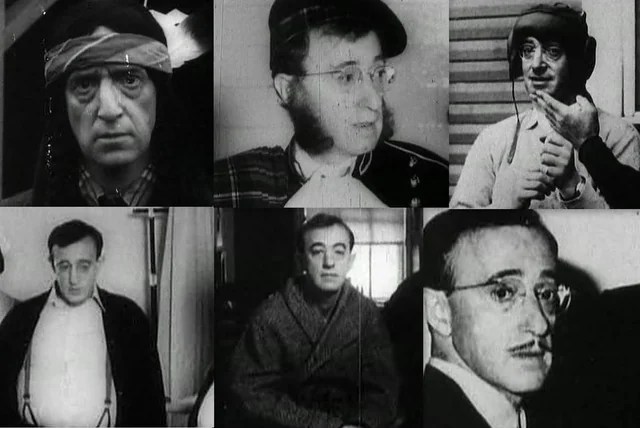
ZELIG, Leonard Zelig. The introduction doesn’t have the same cachet as “Bond, James Bond” yet if the suave secret agent has at least nine lives then shvindl serial imposter Zelig outdrew him when it came to half-lives. Woody Allen’s 12th film as a director (he also wrote it and plays the title phantom, a ‘famous nonentity’) wasn’t one of his most popular with fans—ranking 57th place in 1983, 20th among his five dozen features—but critics give it high marks. Like his early hit Take The Money And Run, it’s a mockumentary, though done with considerably more skill and with a serious underside beneath the cleverness and expected neuroses.
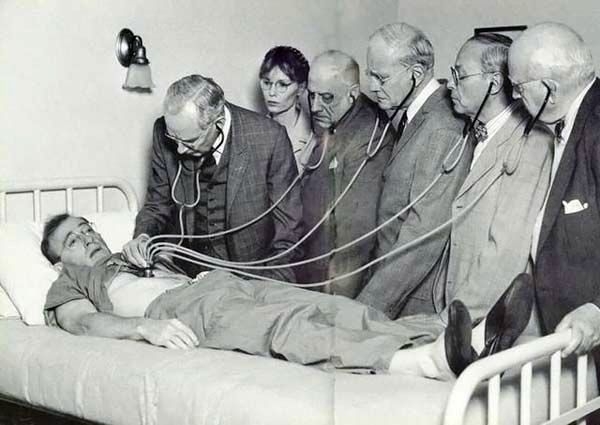
During the 1920s and 30s nebbish nobody Leonard Zelig becomes a one man cause célèbre with his boggling ability to transform his appearance and adapt his otherwise blank-slate personality and become an intimate of famous people in all walks of life, imposing his chameleon coup into medicine, sports, popular entertainment and culture, crime and politics. He also attracts the attention of psychiatrist ‘Eudora Fletcher’ (Mia Farrow) who thinks she can cure his one-fits-all malady.
The laughs in this Woody escapade are mainly of the quiet chuckle and nodding grin variety, musing over the cleverness of the project without being really caught up in, as it were, the case at hand. Beneath the humor there’s an undercoat of lament over how too many people can fuse themselves to stronger personalities or be swayed by fads and causes, losing their own identity and sense of proportion. The underlying themes of loneliness, separation and susceptibility sneak up on you after viewing, while the one-joke gag quotient hook runs out of steam a good while before the trim 79 minute running time wraps. Most engaging is the interpolation of footage of a host of historical figures from the 1920s and 30s, and the textural look of the visual format. It took so long to finish the photographic effects that in the interim Allen completed A Midsummer Night’s Sex Comedy and Broadway Danny Rose. *
“My deepest apology goes to the Trochman family in Detroit. I… I never delivered a baby before in my life, and I… I just thought that ice tongs was the way to do it.”
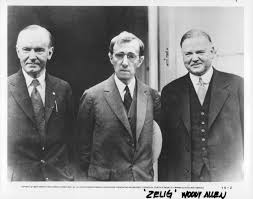
The gross in North America topped out at $11,799,000. Oscar nominations were given for Cinematography and Costume Design. Narrated by Patrick Horgan. With Ellen Garrison and John Rothman. Deadpan cameos (as themselves) are present from Susan Sontag, Bruno Bettelheim, and Saul Bellow. The real-life personalities Zelig appears with include William Randolph Hearst, Babe Ruth, James Cagney, Carole Lombard, Adolph Hitler (and a gallery of his underlings), Lou Gehrig, Pope Pius XI, Tom Mix, Jack Dempsey, Al Capone, Calvin Coolidge, Charlie Chaplin, Josephine Baker and Charles Lindbergh.

* Gordon Willis, the cinematographer: “There was a point when I thought we were never going to finish, a point when I thought I was going to go nuts. I have never worked so hard at making something difficult look so simple”.
Allen: “Zelig got a very positive response here critically, but the content of the film has not even to this day been evaluated properly in the United States, because everyone was so focused on the technical aspects; that was what they talked about all the time. All the nice things they said about the film were in reference to the technique.”
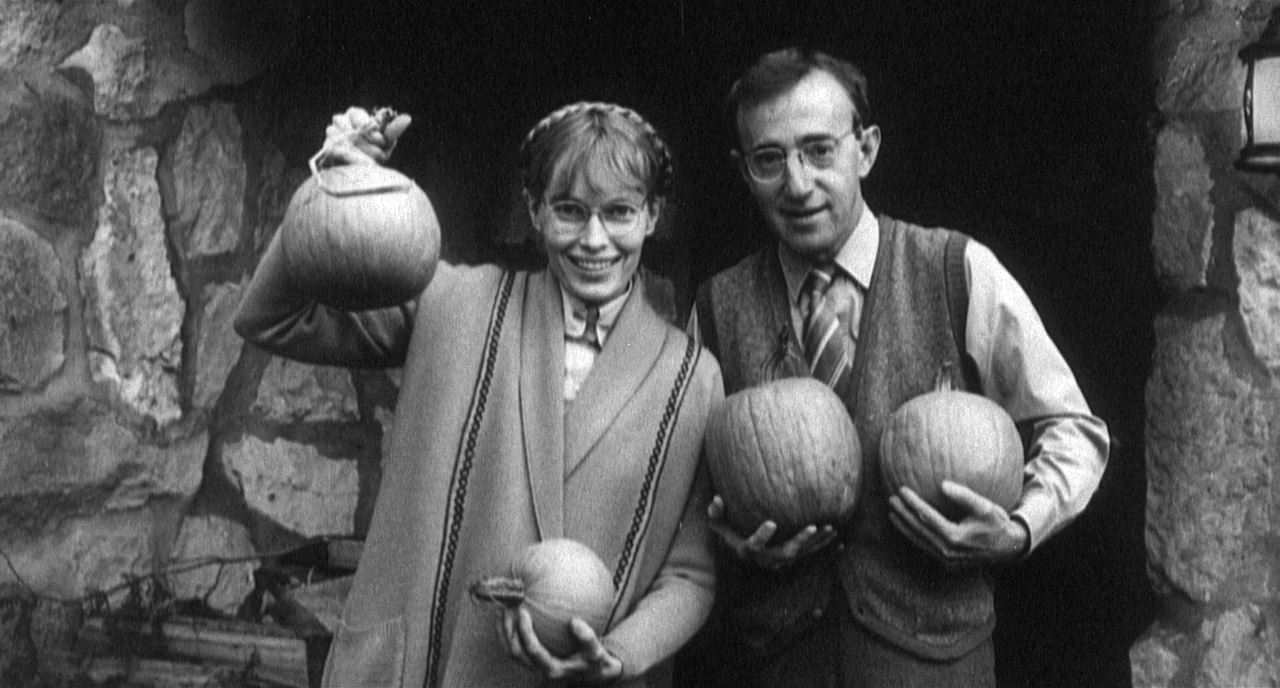
“Happy days were here again…”
 Movies ala Mark