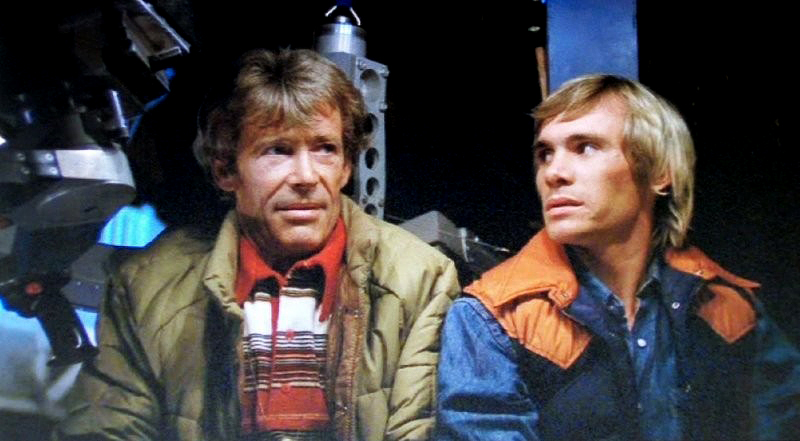
THE STUNT MAN began as a 1970 novel written by Paul Brodeur. A decade of gestation in the care of director Richard Rush (writing a screenplay with Lawrence B. Marcus, securing interested actors, fighting disinterested studios) finally found its way onto screens in 1980. Star Peter O’Toole commented “It wasn’t released. It escaped.” Despite high-heaven praise from some critics, and notice from the Academy Awards, the public didn’t flock to its 131 minutes of fanciful action-satire-drama: 88th place in ’80 had a gross of $7,069,000 barely covering the $3,500,000 worth of energetic showoff nonsense Rush & Co. concocted. Cult appeal ensued.
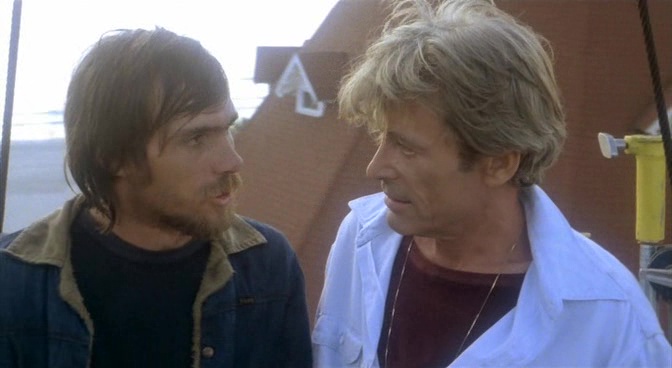
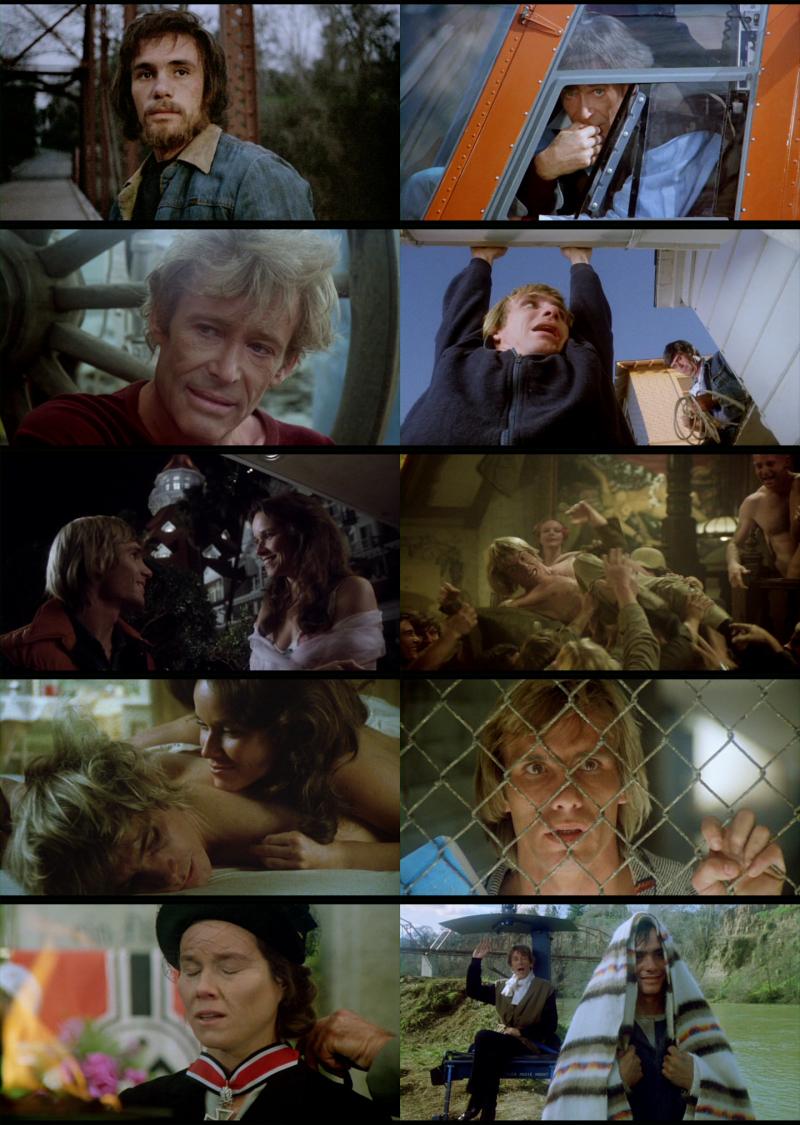
On the run from the law, Vietnam vet ‘Cameron’ (Steve Railsback) happens upon the set of a movie being shot (a WW1 aviation adventure) and the tyro director ‘Eli Cross’ (Peter O’Toole) offers the young fugitive a job as stuntman. During his learn-or-burn experience of the alternate make-believe world of Hollywood on location, the crazy-eyed wild-eyed newby falls for ‘Nina Franklin’ (Barbara Hershey), the leading lady. Meantime, the show must go on, and the stunt tasks that imperious Eli demands become not just increasingly perilous, possibly even murderous.
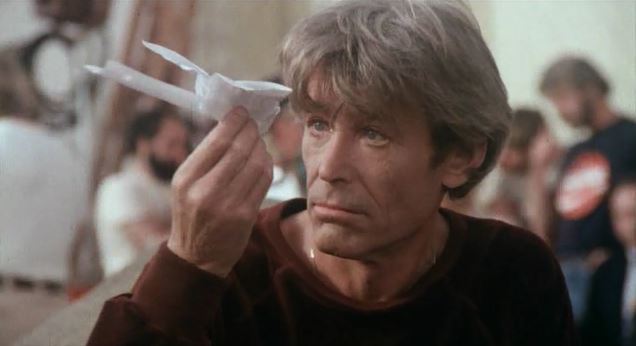
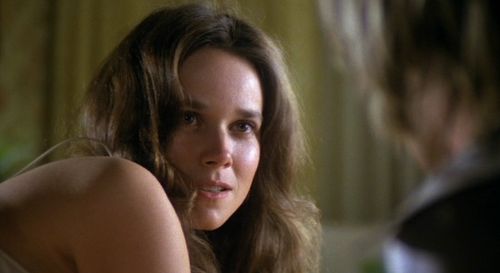
The script cleverly juggles reality vs. illusion, Rush’s direction displays flair, the stunt crew gets a workout, O’Toole merrily glides into his artist-as-madman role and at 30 Hershey shines in her first “grown-up” part. Unsung, the real star of the show is helicopter pilot Ross Reynolds.
But Railsback, 32, memorably unsettling as Charles Manson in the 1976 TV production Helter Skelter, is way too odd a duck (charming and creepy tend to be at odds) to comfortably fit as a lead into satire, sympathy or spirited action: he and Hershey click about as well as a spider on a cupcake. The in-joke about zany moviemaking, besides repeating until exhaustion, doesn’t play fair even within its subjective distortion of reality: the assorted stunt scenarios are elaborate but patently unbelievable, especially the utterly ridiculous orgy scene. The stuff meant to be funny isn’t, that meant to be dramatic is hollow, leaving only style, disguised as ‘something deep’ to say about as Rush put it “our universal panic and paranoia over controlling our own destinies.” Sure.
It seemed fresh enough at the time to dope a slate of critics who sputtered praise like they’d never seen a movie before (usually a good bet for taking a right turn into another theater), with silly Pauline Kael honking the herd. You’d think they’d discovered the next Orson Welles: in revealing genius they ingeniously managed to avoid looking at Rust’s ten previous projects. The Academy lemmings chimed in nominations for Actor (O’Toole), Director and Screenplay. *
With Allen Goorwitz (Garfield), Alex Rocco, Sharon Farrell, Charles Bail, Adam Roarke, Philip Bruns, the historic Hotel del Coronado, Dominic Frontiere’s insistently repetitive score and two dozen bonkers stuntmen.
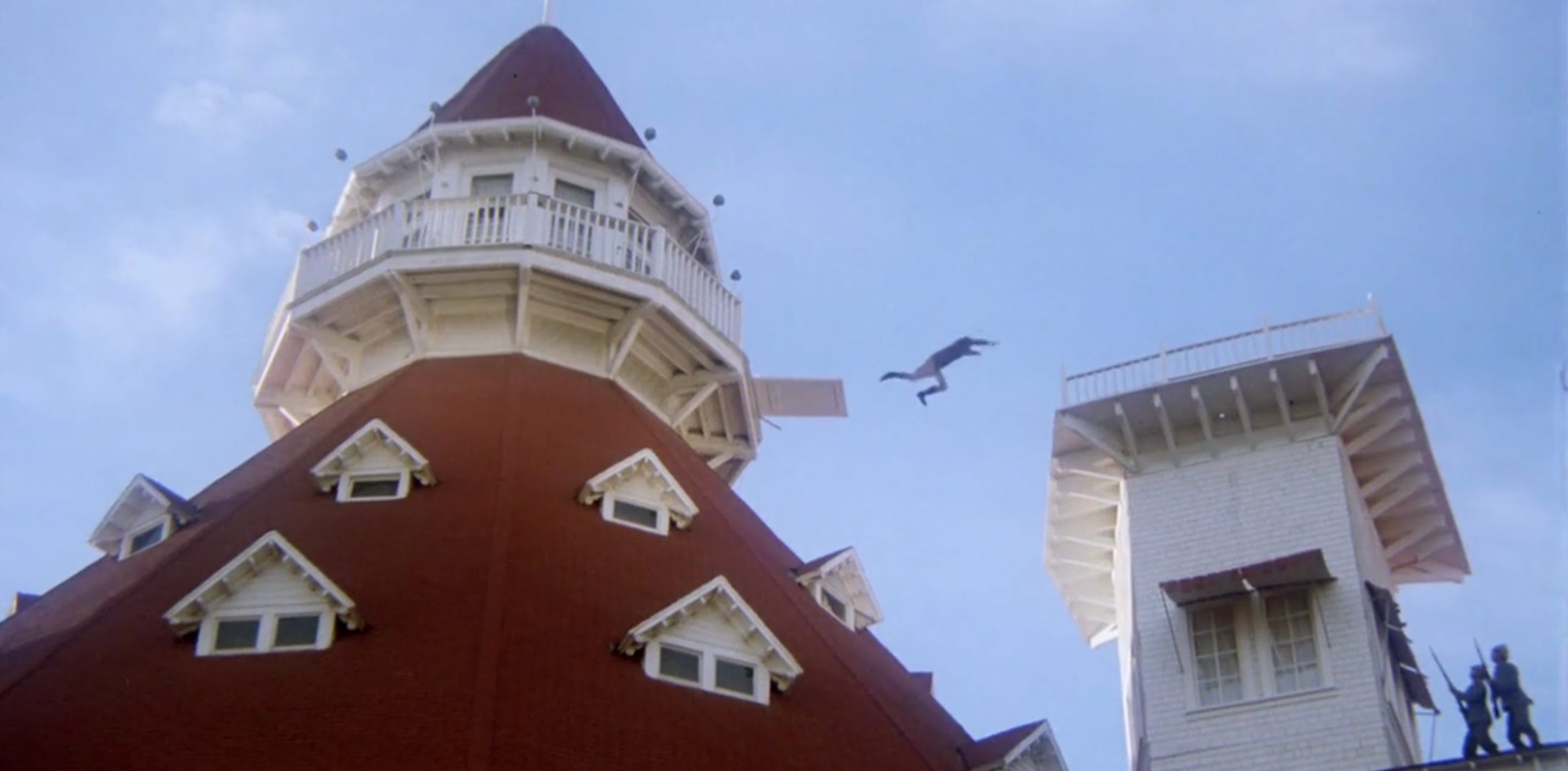
* Between the time Rush started the project (with studios telling him no-one cared about movies about stuntmen) and its eventual release there had been no less than eleven movies dealing with stuntmen, the most successful being 1971s Evel Knievel (ranking 27th) and 1978s Hooper (#6 that year).
Stunt & Stunted. This manic critics-confounder amounted to a one-off for Rush. Apart from the box office success of 1974’s Freebie And The Bean, (which critics hated), his previous pictures were exploitation schlock like Hell’s Angels On Wheels, Psych-Out and Getting Straight. After The Stunt Man another 14 years went by before his next and final outing, 1994’s universally reviled dud Color Of Night.
Oscar schmoskar—O’Toole’s nomination, his sixth of eight that were always passed over, seems more like his rote nod for Goodbye, Mr. Chips. He’s in fine fettle (it’s Peter O’Toole, after all), but he could play this sort of flamboyant rascal in his sleep. We’d replace him (and Jack Lemmon’s Tribute) in the ’80 lineup with, let’s see, Robert Foxworth in The Black Marble, Edward Woodward in Breaker Morant, Tommy Lee Jones in Coal Miner’s Daughter or Paul Le Mat in Melvin and Howard. End of rant.
 Movies ala Mark