
MEAN STREETS are prowled by some high-energy young bloods who’d become familiar—ultimately iconic—figures in the post-modern cinema pantheon, gritty urban division. In 1973, nobody other than a few keen critics and scattered film festival attendees knew Martin Scorsese, Robert De Niro and Harvey Keitel from Moe, Curly or Larry. “What’s a mook?”

New York City’s Little Italy, the 1960’s. ‘Charlie Cappa’ (Keitel, 33) is torn four ways from Sunday mass. He’s a devout Catholic. He’s working for his uncle, the local Mafia boss. He feels responsible for watching out for addled younger paisan ‘Johnny Boy’ (De Niro, 29), a reckless thug in debt to everyone in the neighborhood. And he’s having a furtive affair with Johnny’s epileptic cousin. Simmer. Boil. Scald.

Scorsese, 30, had directed two low-budget efforts (1967s Who’s That Knocking At My Door? featuring newcomer Keitel and the 1972 exploitation meller Boxcar Bertha) but this time out he mined his own background, characters he knew, philosophical-spiritual crosses he bore. Directing on a $500,000 budget (possibly half of that going to royalty rights for the eighteen 1960s pop songs used), with Mardik Martin he co-wrote the profane, funny and furious script and sans credit, edited what cinematographer Kent L. Wakeford captured. Over eight years De Niro had appeared in 11 little-seen films: this was his first collaboration with ‘Marty’. A star was borne.
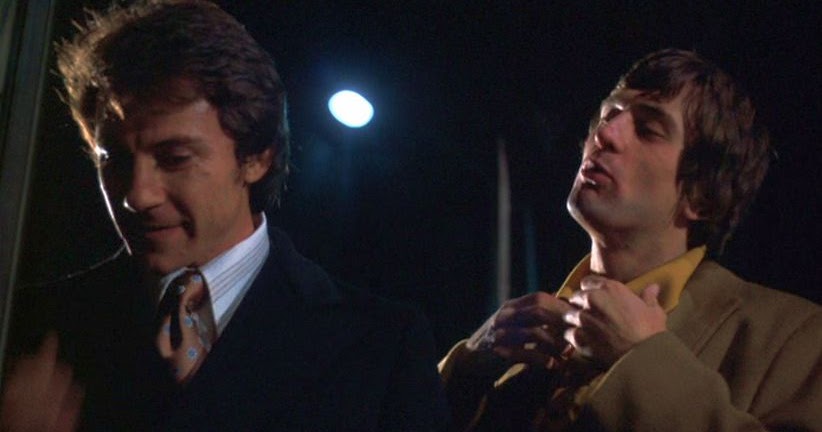
Making scratch at the national boxoffice ($1,200,000, 146th place), the searing look at a seamy side of the Big Apple’s melted pot, festooned with aggressively unsympathetic (splendidly portrayed) characters nonetheless had startled critics sit up and blink: there were some new outlaws in town. These fellas may not have been good, but their peerless bada-bing! improv, uncorked ferocity and psyche-stripping reveals were hard to dismiss.

Heyyy, like 110 minutes, capisce? With David Proval, Amy Robinson, Victor Argo, Richard Romanus, Cesare Danova (suave as ever), David Carradine (a terrific drunk scene), Harry Northrup, Murray Moston and Robert Carradine.

 Movies ala Mark