
IF IT’S TUESDAY, THIS MUST BE BELGIUM served up some scenery, a slew of actors and an array of tepid jokes in 1969, generating enough “aren’t they/aren’t we funny” situations to come in 31st ($8,600,000) among the year’s wildly varied output. Along with fixed eye candy (European landmarks and vistas), a scattering of star turns and a nice showcase for leading lady Suzanne Pleshette, it has diminished luster as a period piece.
“It’s so, sort of, foreign looking.”

A swinging Brit tour guide (Ian McShane) leads a Bedraggled Dozen clichéd middle-class American tourists on a European bus epic, inflicting themselves upon nine countries in 18 days. While tiresome McShane wolfhounds pretty Pleshette, and the scenery whirls by, you’re supposed to be tickled pink by the rest of the gaggle. Unfortunately, for the most part it’s not who you’ll be delighted by but whom you’ll find most grating—a tough choice between Murray Hamilton (the constant carper), Marty Ingels (unctuous horn dog–did anyone ever really think this guy was funny?), Michael Constantine (reliving the swell days of WW2), Sandy Baron (the Catskills are calling: they want their schtick back), Peggy Cass (wasted) and Norman Fell (shouting nonstop, because when a joke is a dog make it bark louder). **
To prop up the small-c celebrities, there are eleven puff-job cameos that offer teasing looks at six beautiful European actresses, shrugs over few American actors who happened to be there, indulgence of one ‘happening’ pop star, and one famous director.
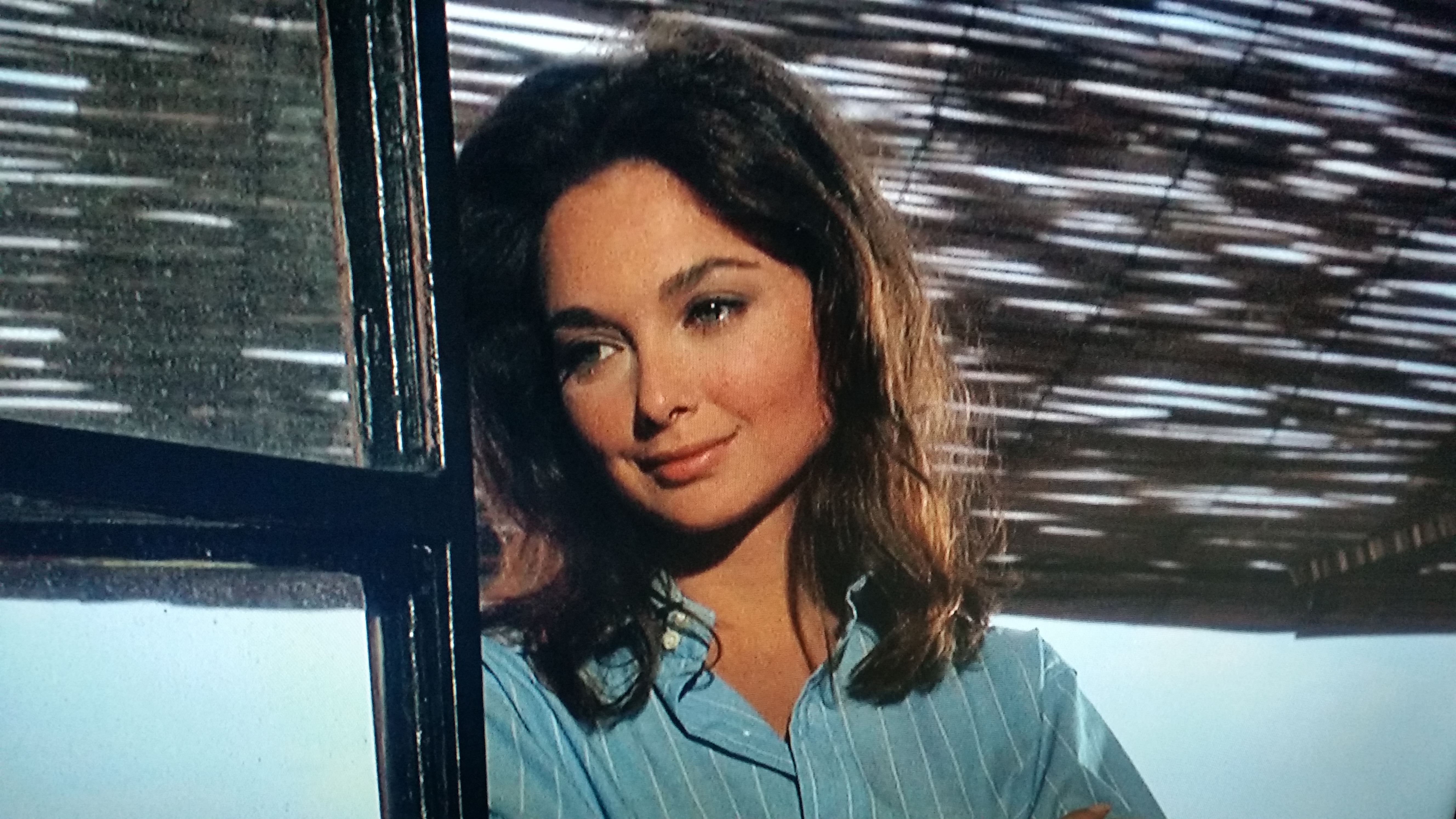
“Luxembourg. For most American tourists, this tiny duchy exists mainly as a lunch stop between Belgium and Germany. Matter of fact I heard some women from Kentucky call this Luncheonburg.”
Locations: London, Amsterdam, Brussels and Bastogne, Luxembourg, the Rhine in Germany, Switzerland, Venice and Rome.
Cameos: the worst is an awful hippies-in-a-hostel gig with Donovan warbling “Lord of the Reedy River”, a sublimely trying song about a swan. The others: Vittorio De Sica, Joan Collins, Senta Berger, Anita Ekberg, Elsa Martinelli, Ben Gazzara, John Cassavetes, Robert Vaughan, Catherine Spaak, Virna Lisi.
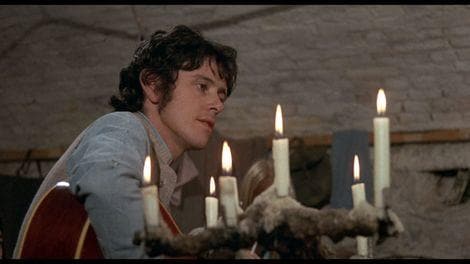
Candidate for inspiring Belushi’s guitar smash in “Animal House”
To be fair, Donovan did write the plaintive title tune, sung by Douglas Cox (under the name J.P. Rags).
“Have you ever thought what you get for so few of your almighty dollars? You get all of this. The art, the tradition, the history, the people, the food, the whole bloody magic of it! The biggest bargain that ever was, but all you can see is the price tag!”
Lamely written by David Shaw, better directed by Mel Stuart. With Hilarie Thompson, Luke Halpin, Aubrey Morris, Reva Rose, Mildred Natwick (a touch of past class), Pamela Britton, Patricia Routledge, Mario Carotenuto, Marina Berti (of Quo Vadis glory) and Paul Esser (in a tasteless WW2 joke). 99 minutes.
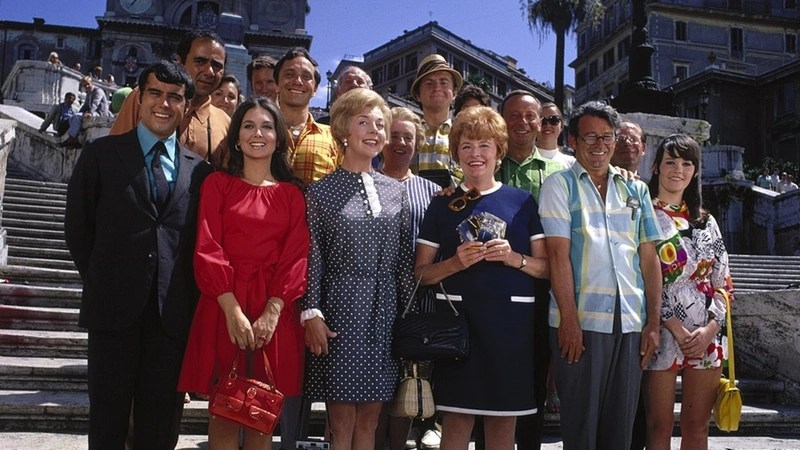
* Beyond the couch-travelogue aspect, Pleshette’s smile, fleeting glimpses of the pretty actresses, and a handful of amusing gags among a host of stale ones, it’s another example of a movie from the period vainly trying to show how “with it” it was by making fun of the young generation and their whole ‘silly’ protest thing. All those gen-gap comedy garbles managed to leave out one pesky Big Thing that fired much of the rebellion: the extended taxpayer-paid touring from a lot of young Americans into SE Asia. Oh, that far-out bummer…If it’s Tet-day, this must be the Mekong Delta.
Mismatched leads Pleshette and McShane don’t spark sufficient chemistry here (plus his character is unsympathetic to start with), and are both instances of performers who got better (and were better placed) as they aged. McShane’s early roles pegged him, like David Hemmings, on the sharky shallow side, but like Hemmings he emerged masterfully later in life. Pleshette was poorly used early on, her sex appeal wasted on lousy scripts (A Distant Trumpet, A Rage To Live) and her humor spark barely flicked. Years on, she displayed superior comic skills (and was a hoot on live TV), which made her even more desirable. Go figure.

 Movies ala Mark