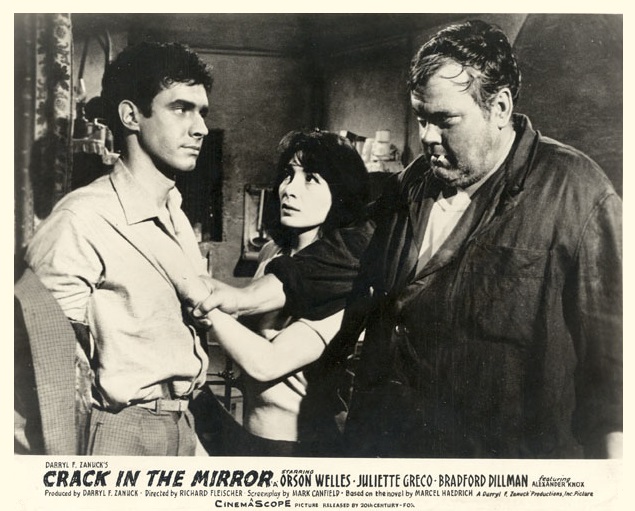
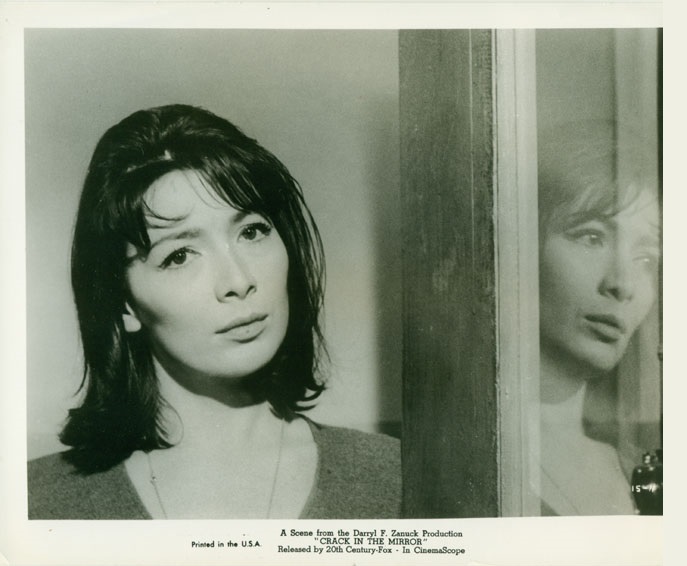
CRACK IN THE MIRROR, an offbeat ‘gimmick’ drama from 1960, saw some of the cast and crew from the previous year’s Compulsion (actors Orson Welles and Bradford Dillman, director Richard Fleischer, producer Darryl F. Zanuck) reunited for another story of murder and courtroom theatrics, this time set and shot in Paris and spiced up with the more overt sexuality quotient of European films. The hook has the three leads—Welles, Dillman and Juliette Gréco—each play double roles, often in the same scene. *

Paris may be made to order for romance, but when two love triangles intersect you can be sure more than a couple of the six passion players won’t come out smiling. Fed up with ‘Hagolin’ (Welles), her boorish, gluttonous husband, low-rent housewife ‘Eponine’ (Gréco) conspires with randy stud ‘Lanier’ (Dillman) to clear a path for freedom. Their drastic methods bring in glory-bent lawyer ‘Claude’ (Dillman), who not only wants to show up celebrated, arrogant mentor ‘Lamerciere’ (Welles) but ice the cake by stealing ‘Florence’ (Gréco), the older man’s elegant, dissatisfied wife. A carnal carnage consommé.
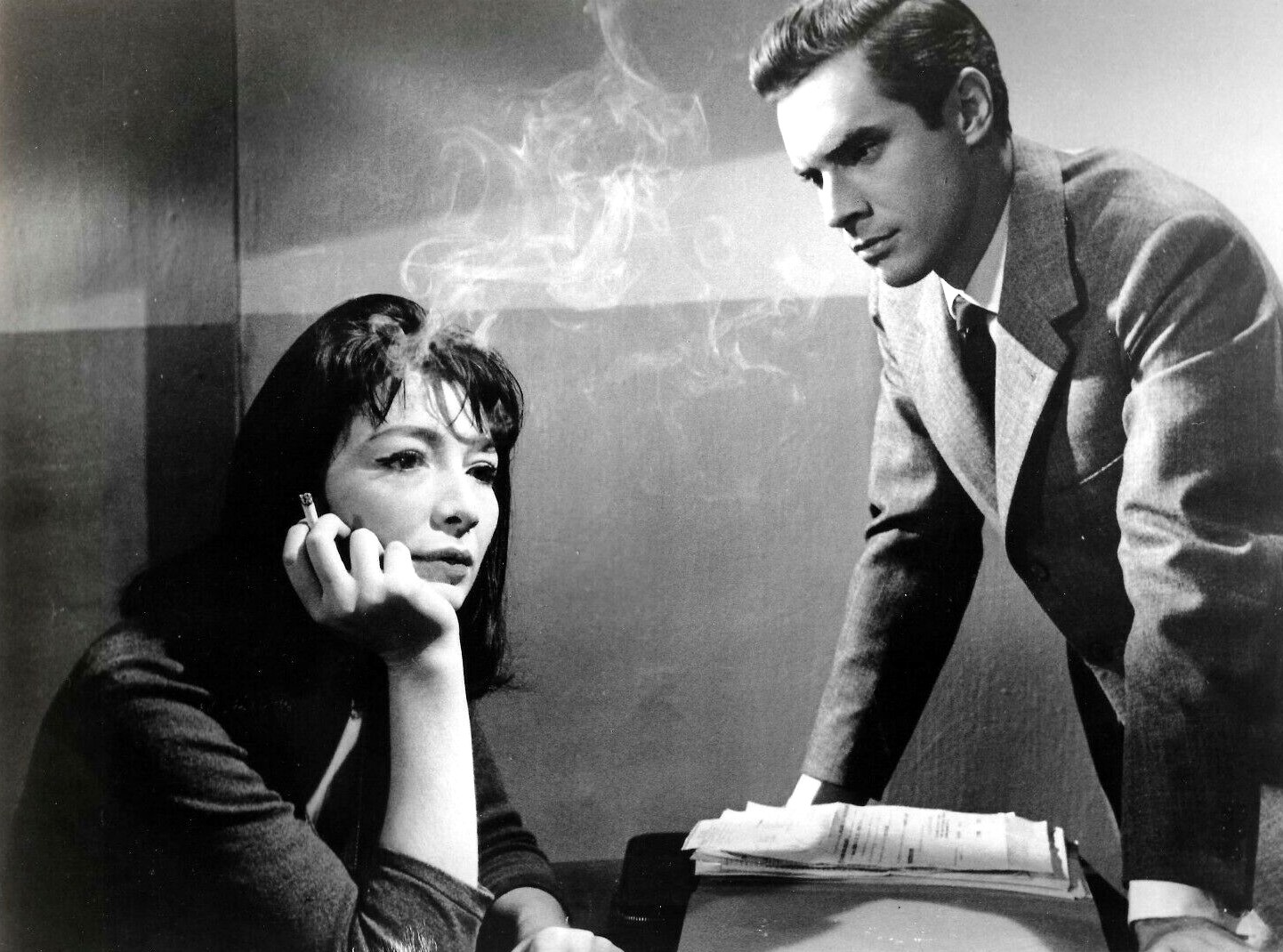
Though the script is credited to ‘Mark Canfield’ (a pseudonym Zanuck often used), in his autobio Fleischer says it was actually written by blacklisted Jules Dassin (the same year he made Never On Sunday); it was supposed to “based” on the novel by French journalist Marcel Haedrich but since the movie was filmed before it was published, it seems likely the book was just whipped up to push the film.
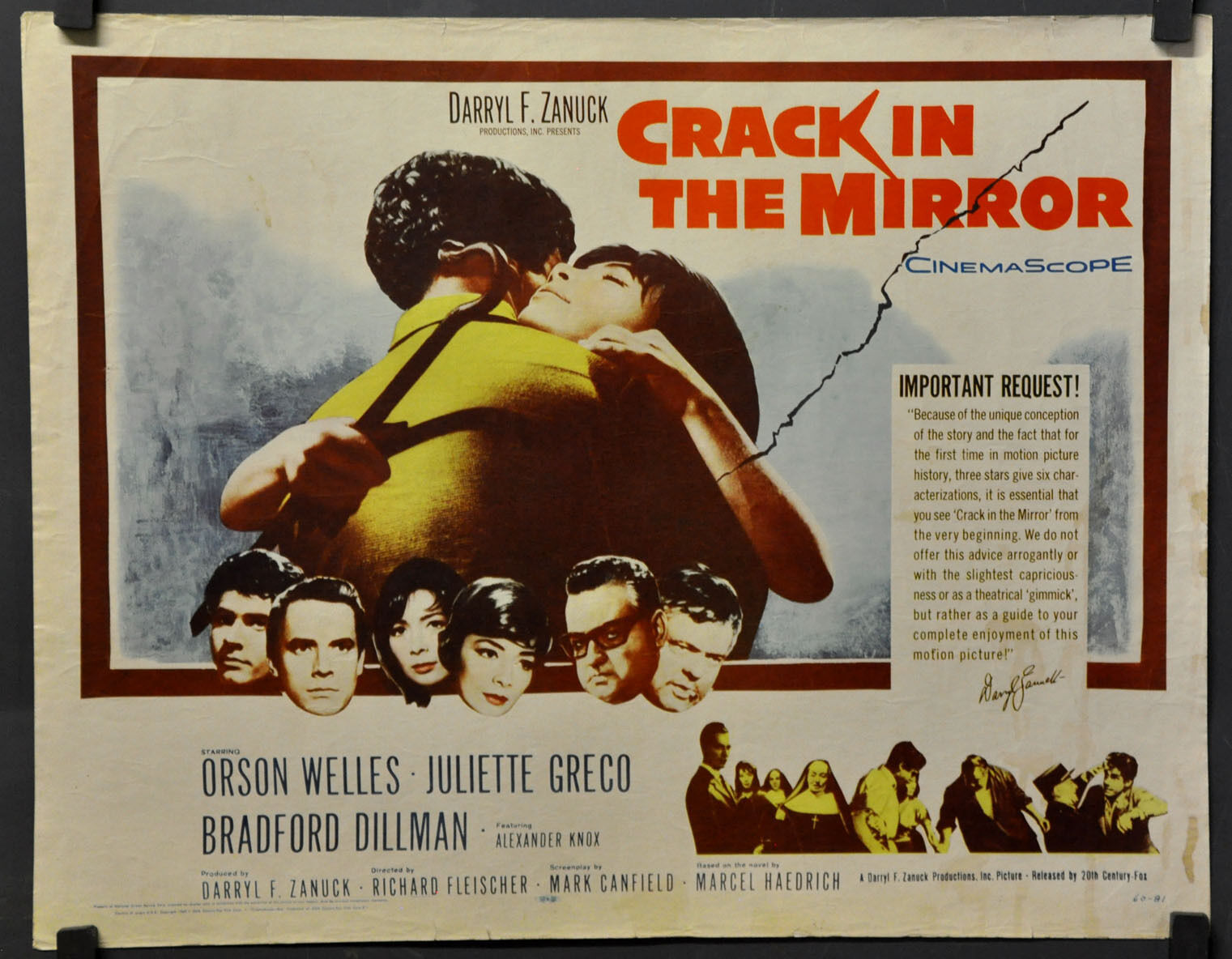
The advertisement’s reflected (or ‘mirrored’) those used for Psycho, in this instance ‘requesting’ (see below pic, click to enlarge) audiences not to miss the first part of the movie; a good idea in general, and fairly crucial for this one.
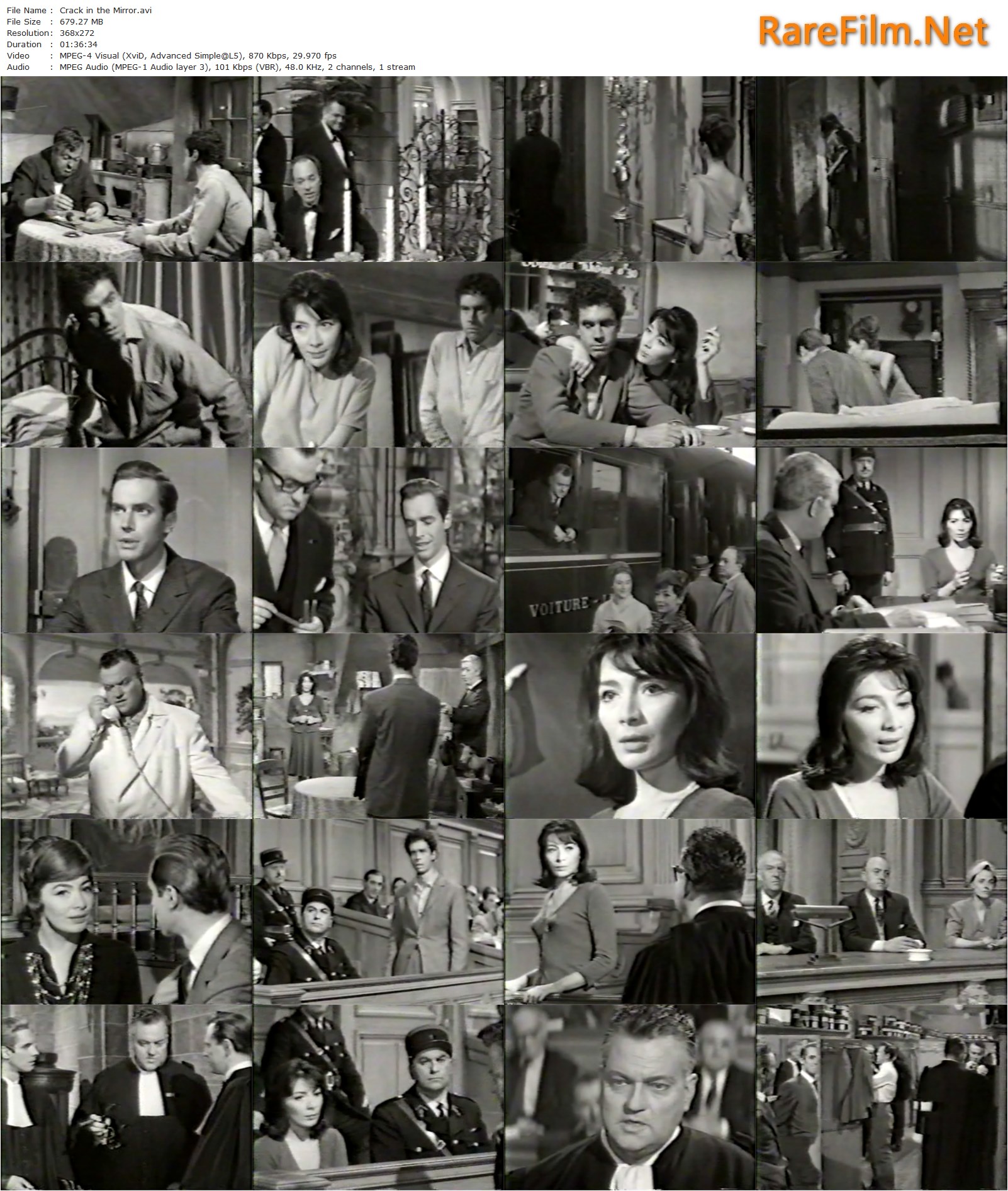
Finding a decent print of this (to me, engaging) picture, another that’s slipped through the cracks (insert weak mirror joke) is a test for the committed (or those who should be) but we offer it’s worth it for the strong performances and the effective progression to a suitably dispassionate payoff.
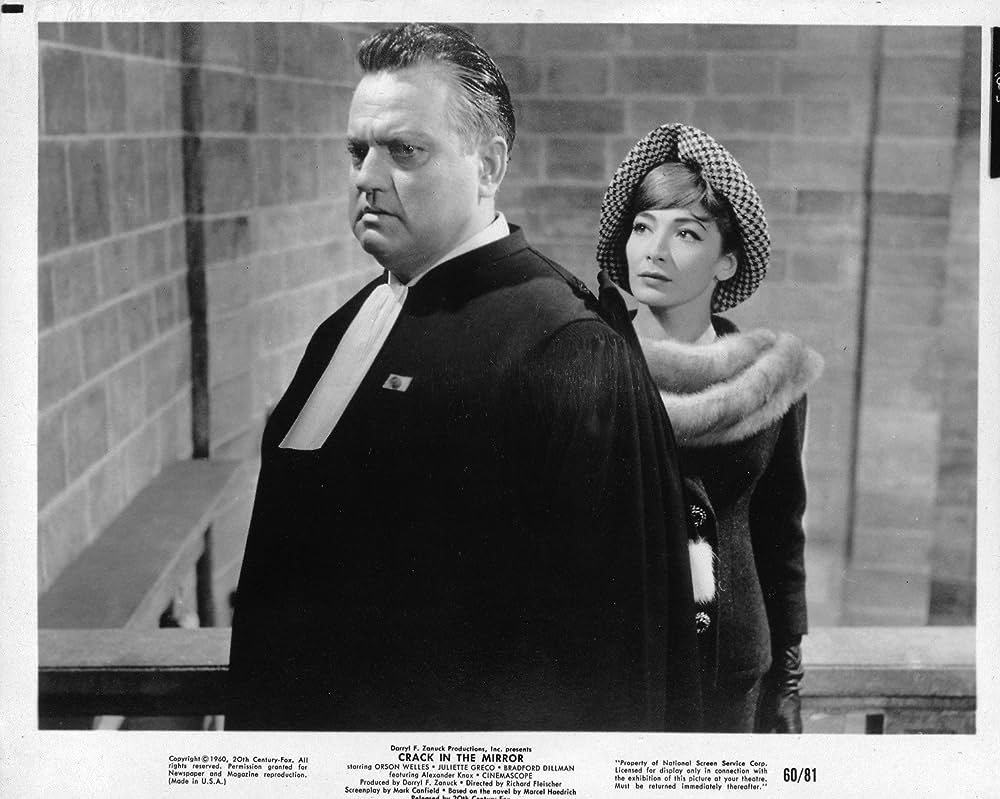
Welles gets to revel in being gross and repulsive as Hagolin, and as the smarter but similarly cuckolded Lamerciere is allowed a summation speech that’s more fun than his showoff sally in the better-known Compulsion. Dillman covers his disparate and desperate strivers to good effect. Mostly, it’s a fine showcase for stylish, savvy and sexy Gréco, 32, the feverish melodrama one of four pictures in which producer Zanuck placed the sultry chanteuse, his then-current extra-marital amour. Between his bold fancies, first with Bella Darvi (The Egyptian, Hell And High Water) and later with Irina Demick (The Longest Day, Up From The Beach), the tireless studio czar went understandably gaga over Gréco, by far the most interesting, talented and alluring of the three: besides this property, she featured in The Sun Also Rises, The Roots Of Heaven and The Big Gamble.
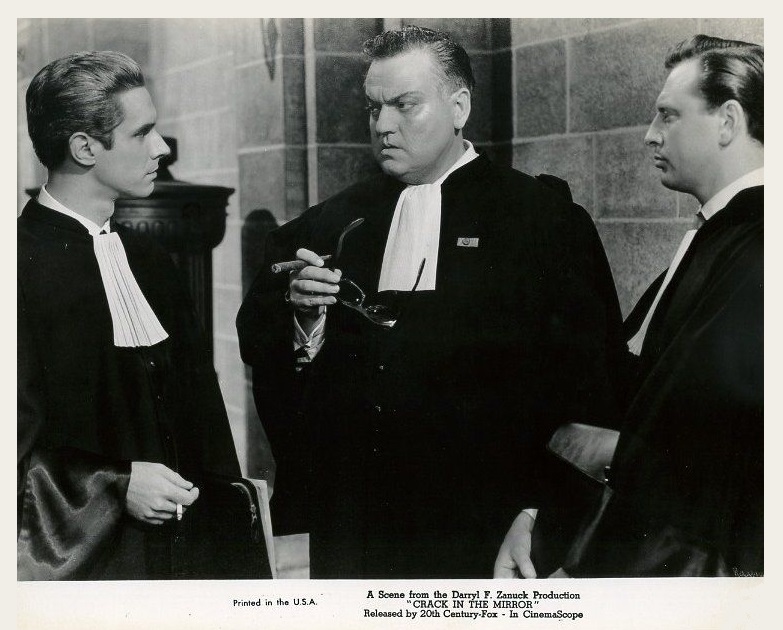
Apparently neither Welles, Zanuck or Fleischer were happy with it, despite it taking a trio of prizes at the Cannes Film Festival. Box office in the States came to $2,900,000, 77th place. At any rate, the timing was right, given the sex-tinged year saw foreign frolicking in La Dolce Vita, Never On Sunday, La Verite (a terrific trial story, with a stellar Brigitte Bardot) and Breathless, and the US-made propriety teasers The Apartment, BUtterfield 8, The World Of Suzie Wong, Strangers When We Meet and Private Property.
Maurice Jarre gave it a commendably dramatic score. With Alexander Knox, Catherine Lacey, Jacques Marin, Austin Willis and Eugene Deckers. Sally Kirkland, 19, debuts in an uncredited bit part. 97 minutes.

Actors daring double roles wasn’t new. A selective pre-1960 sampling alone: Don Ameche (That Night In Rio), Abbott & Costello (The Time Of Their Lives), Charlie Chaplin (The Great Dictator), Bette Davis (A Stolen Life), Ronald Colman (The Prisoner Of Zenda), Stewart Granger (The Prisoner Of Zenda), Olivia de Havilland (The Dark Mirror), Danny Kaye (On The Riviera, Wonder Man, On The Double), Elsa Lanchester (The Bride Of Frankenstein), Fredric March (I Married A Witch), Frank Morgan, Bert Lahr, Jack Haley, Ray Bolger and Margaret Hamilton (The Wizard Of Oz), and trumping everyone, Alec Guinness as eight characters in Kind Hearts And Coronets.
 Movies ala Mark