
THE LONG WALK HOME, released in 1990, puts fictional characters into the real-life drama of the 1955-56 bus boycott in Montgomery, Alabama, a crystalizing event that spurred the Civil Rights Movement. Directed by the underrated Richard Pearce, who has a knack for eliciting unaffected work from his casts (Heartland, Country, Leap Of Faith), written by John Cork, it’s a testimony to the quality of the work that it holds up beautifully a third of a century later, and at the same time it’s a tonic that the underlying divisions the story portrays, while greatly reduced, are nonetheless still present seven decades after Rosa Parks said “no, sir”.

When one woman’s (Rosa Parks, 1913-2005) quiet defiance of racial segregation, specifically concerning public transportation, becomes a rallying point for a citywide bus boycott, the citizens of Montgomery, Alabama come to a crisis and decision point over equality, tradition, decency and common sense. One of those boycotting the bus lines is ‘Odessa Carter’ (Whoopi Goldberg), African-American wife and mother of three, who works as a maid for the comfortably well-off ‘Miriam Thompson’ (Sissy Spacek), married with a young daughter. When Miriam extends sympathetic (and practical) assistance to the overburdened Odessa by offering her rides to work, it deepens their cordial but socially constricted relationship. Yet taking that step strains Miriam’s ‘position’ with her husband (Dwight Schultz), who isn’t ready to concede outside change or a challenge to his authority. His brother, a virulent bigot (Dylan Baker, adroitly hateful) takes a more militant stance.

Shot on location in Montgomery, the 97 minute period piece delivers its sisterhood message with a good deal more subtlety than the entertaining crassness of The Help and it’s bonding- through-compassion theme is much more effective than the cloying preciousness of the overrated Driving Miss Daisy. The script, production design and direction, and the subtle yet substantial characterizations and performances are not marred by prettified artifice or speechifying out of context for the times, too often done as a sop to history-deprived modern audiences. The people feel real, their entwined situations and choices complex.
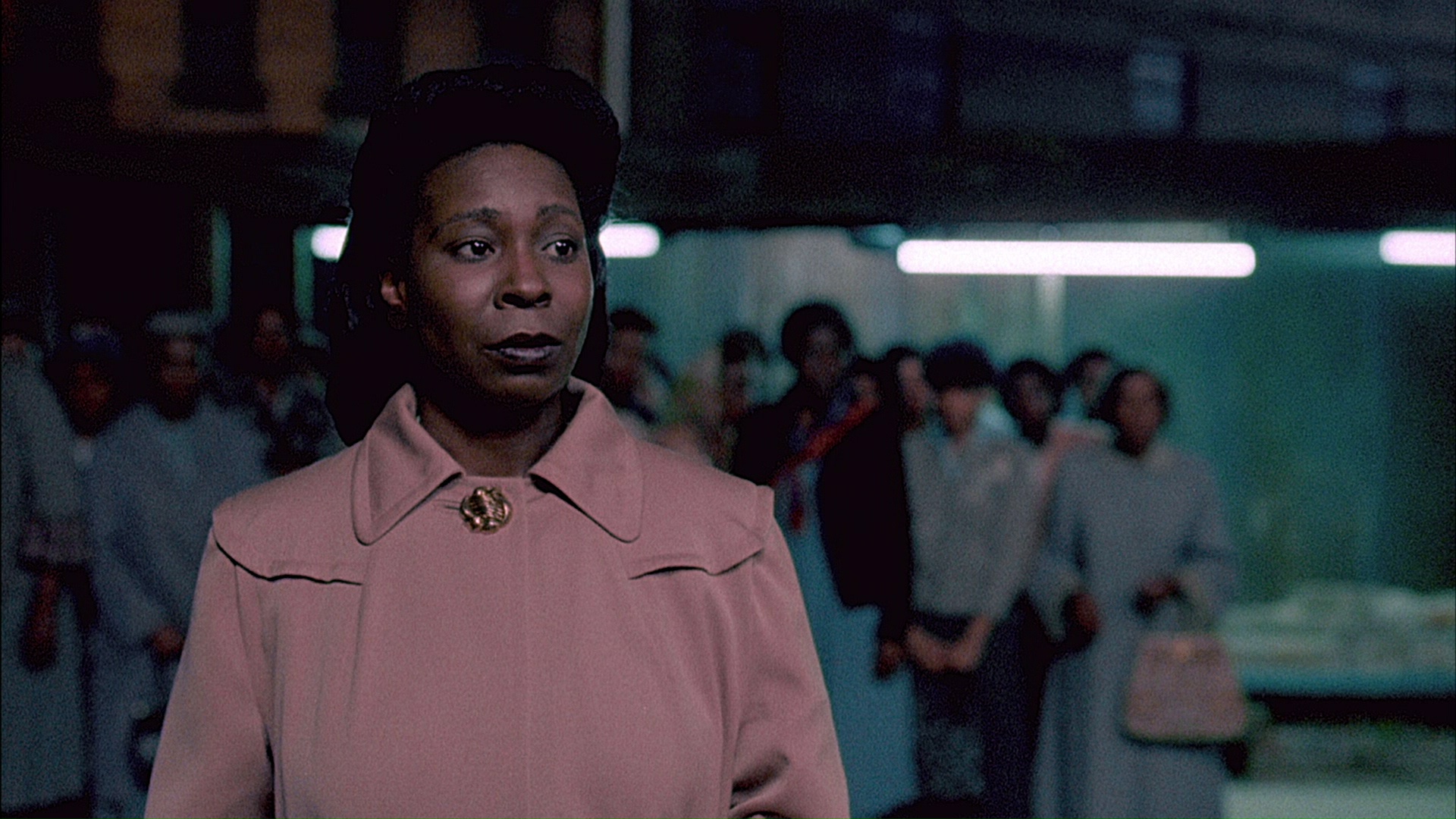
Goldberg, 34 and on a roll (knocking down an Oscar for Ghost, the year’s #2 smash) and the glowing Spacek, 39, back on screen after a four-year absence (gal’s got a family to raise) share simpatico chemistry; it’s an excellent movie that deserved more attention than it received from audiences who placed it 121st in the 1990 roll call.

With Erika Alexander (fine as Odessa’s impulsive teenage daughter), Lexi Randall (as the Thompson’s young girl, providing unnecessary narration via the ‘grownup’ voice of Mary Steenburgen), Richard Parnell Habersham, Jason Weaver, Norman Matlock (a brief outstanding scene as a preacher), Dan Butler, Chelcie Ross (intense as a foaming racist) and Cherine Snow. Grosses came to $4,874,000.

 Movies ala Mark