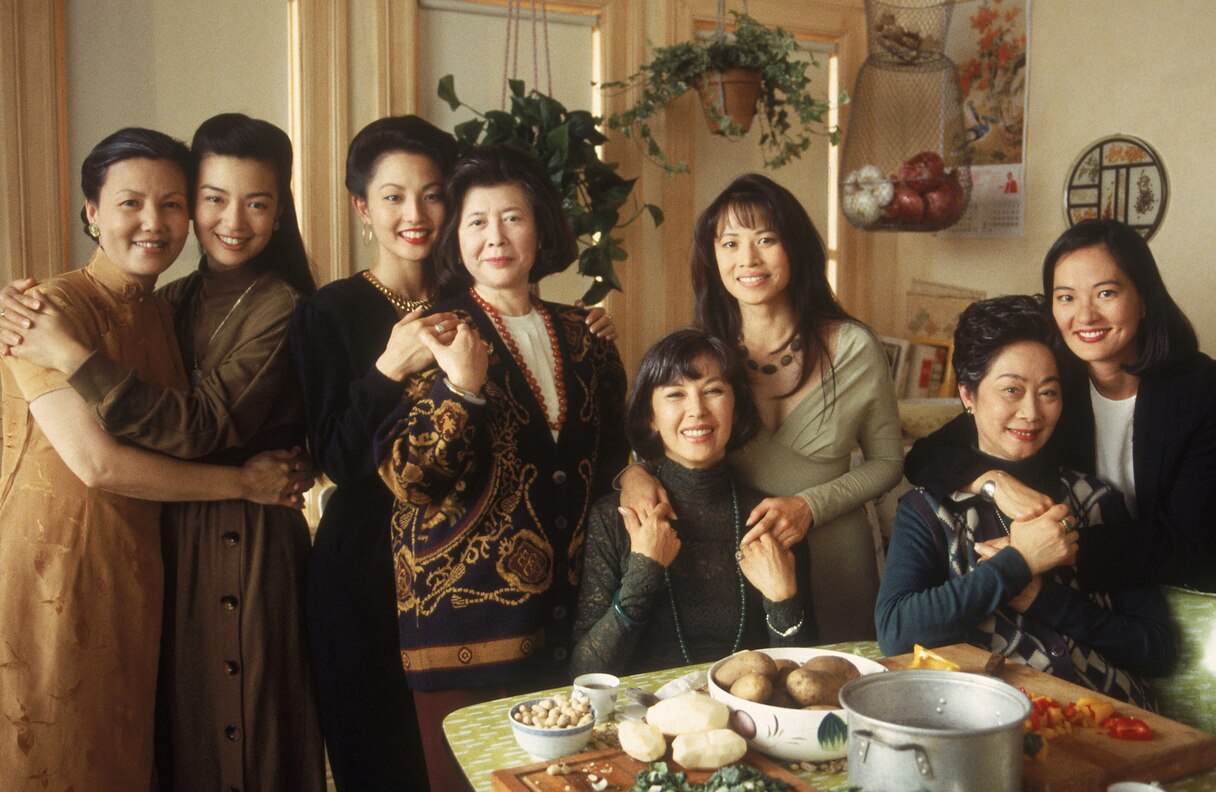
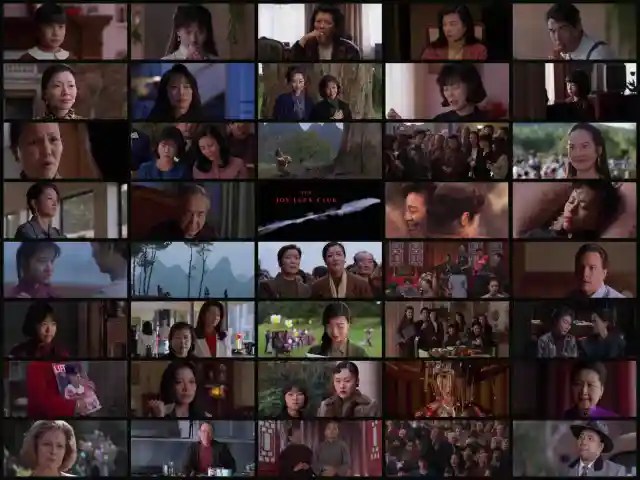
THE JOY LUCK CLUB —“I like being tragic, Ma. I learned it from you.” Those two lines capsule summarize the 139-minutes of this 1993 multi-family/generational/cross cultural saga. Directed by Wayne Wang, taken from Amy Tan’s 288-page best-seller, the author co-writing the screenplay with Ronald Bass. Tan helped produce the $10,500,000 drama, which found a receptive audience and a gross of $32,901,000. Reviews were mostly positive with some dissenters whose disappointment we regrettably share. As with the book, the film has an ardent fan base. *

Four Chinese-American mothers (Tsai Chin as ‘Lindo’, France Nuyen as ‘Ying-Ying’, Lisa Lu as ‘An-Mei’, Kieu Chinh as ‘Suyuan’) and their grown daughters (Tamlyn Tomita as ‘Waverly’, Ming-Na Wen as ‘June’, Rosalind Chao as ‘Rose’, Lauren Tom as ‘Lena’) reflect on their histories in China and America spanning the 1920s to 80s, their circumstances and choices, issues with men, with each other.
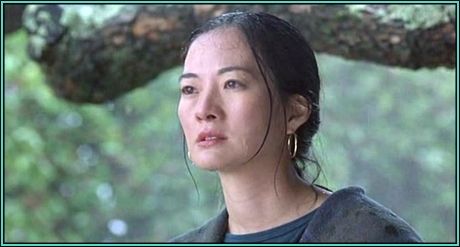
A sucker for stories about survivors and the immigrant experience (in my country and anywhere, really), I was predisposed to like this movie, up for the subject matter, settings and the cast. For sure there is a good deal to applaud: the acting’s solid (special tip to Tsai Chin, Lauren Tom, Tamlyn Tomita and the assorted children), the telling closeups in Amir Mokri’s fine cinematography, Rachel Portmans suitably sensitive score and the excellent costume design from Lydia Tanji. You’d have to be made of stone not to be moved by the finale.
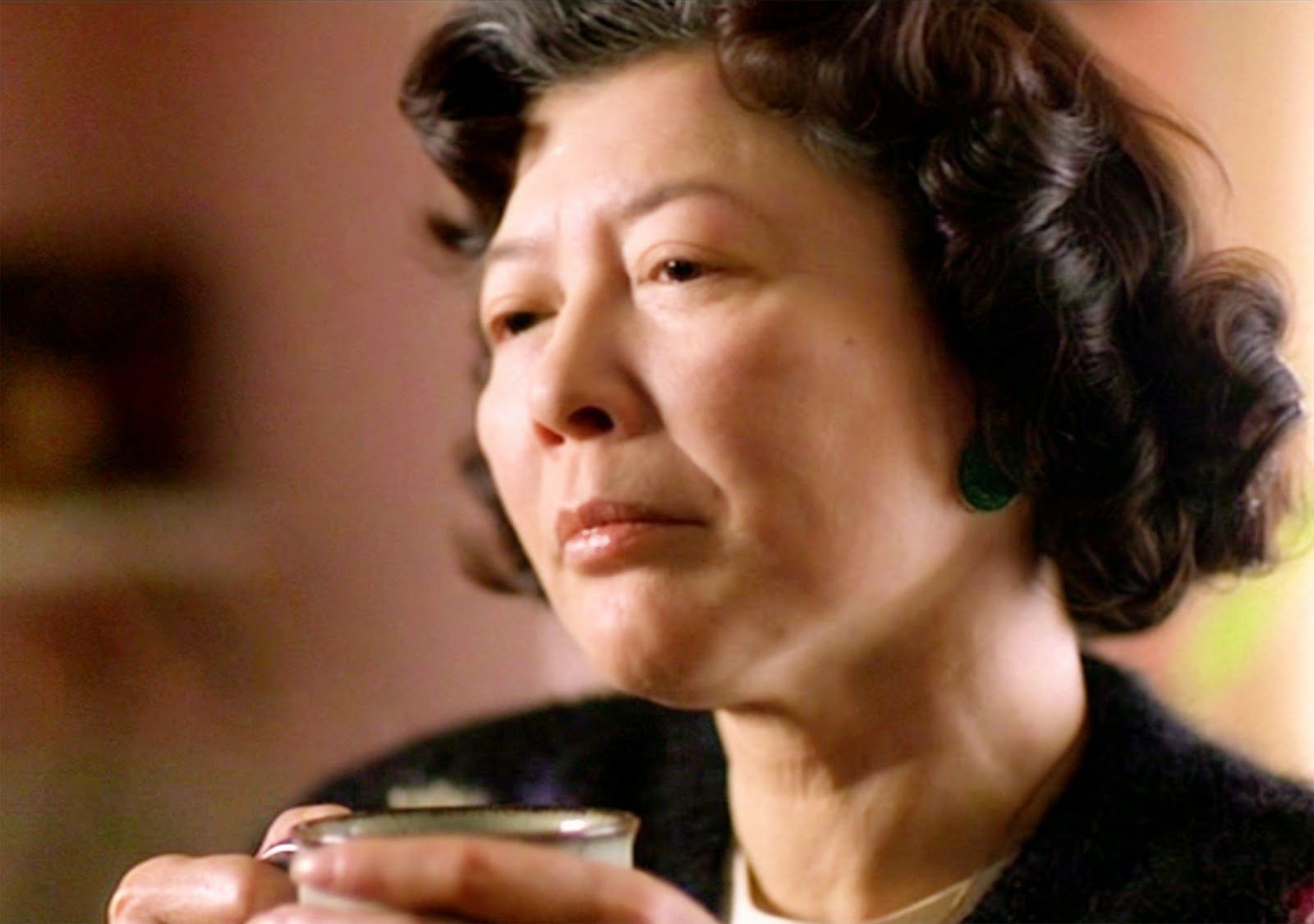
But the journey to the finish line is so overladen with episodes of woe and misery that by the time the last third gets underway with its fresh additions to the relentless sadness it feels like punishment. Each main character has endured awful personal trauma, the mothers passing bleakness onto their daughters. Not having read the book we can’t speak to its styling or impact, but the screenplay and direction seem calculated to try and wring enough tears to dam the Yangtze: this isn’t a three-hankie weepie, it’s practically a stock dividend for tissue manufacturers. The small moments of grief-relief aren’t sufficient to counter the tsunami of sorrows. Added to the overkill is too-convenient deck-stacking that feels blunt and synthetic: nearly all the men are fools, dips or brutes, and all the daughters are gifted with photogenic looks: if you’re gonna suffer it probably helps to look like a model while doing so. Manipulation.

With Andrew McCarthy (Rose’s bored & boring husband), Michael Paul Chan (Lena’s jerk husband), Chao Li Chi, Victor Wong, Irene Ng, Vu Mai, Diane Baker (wealthy WASP witch), Elizabeth Sung (icy ‘2nd wife’), Russell Wong (Ying Ying’s utter bastard husband), Christopher Rich (Waverly’s dork husband).
* Ignore no more—notably it was the first predominately Asian-cast Hollywood production since Flower Drum Song, 32 years earlier. Yet it would be another 25 years before Crazy Rich Asians used laughter rather than tears to push the door open further, paving way for Everything Everywhere All At Once in 2022.
 Movies ala Mark