
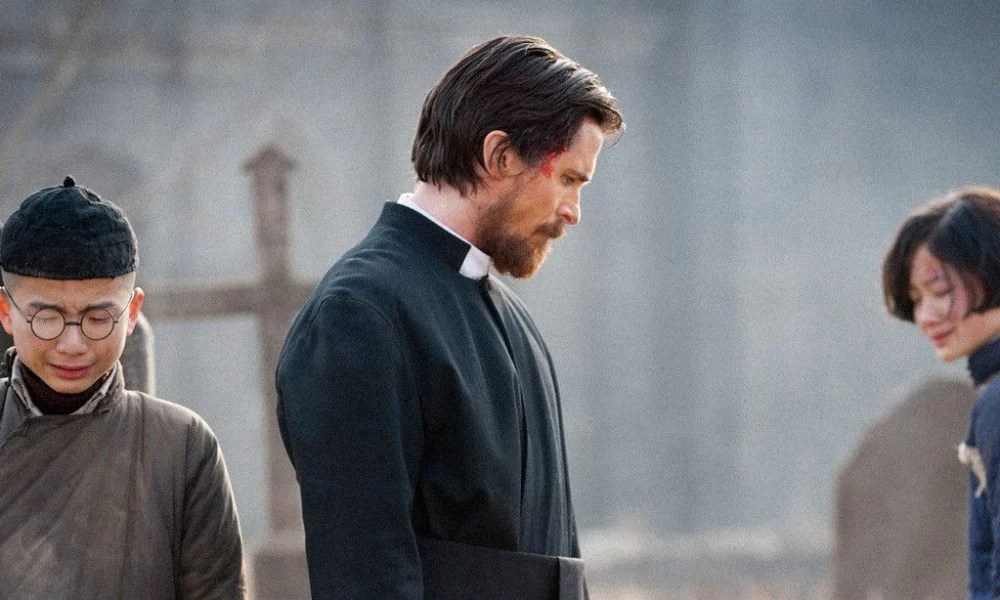
THE FLOWERS OF WAR, directed by renowned stylist Zhang Yimou and released late in 2011 was at the time the most expensive movie ever made in China. A whopping $94,000,000 was spent inserting a wrenching fictional piece into a real-life historical horror story, the 1937 “Rape of Nanking”. Liu Heng’s screenplay was based on the novel “13 Flowers of Nanjing” by Geling Yan. The star presence of Christian Bale in the lead wasn’t enough to draw audiences past the regrettably unfamiliar and intrinsically disturbing subject matter and the box office attendance was mostly confined to the host country that Nanking’s ghastly terror was set in. *
Nanking, China, December, 1937. With the city prostate at their feet, the invading Japanese army indulges in six weeks of rape and slaughter. Assigned to bury the head priest of a convent, American mortician ‘John Miller’ (Bale) is caught in the maelstrom, donning the dead man’s garb and identity to save himself. The cynical Westerner has company in the temporarily spared convent: its terrified teenage schoolgirls and a band of spirited prostitutes using the place as a refuge. In Miller’s case, agony evolves into altruism, and levels of sacrifice from his ‘flock’ are humbling. There’s no easy way out of Nanking’s fate.
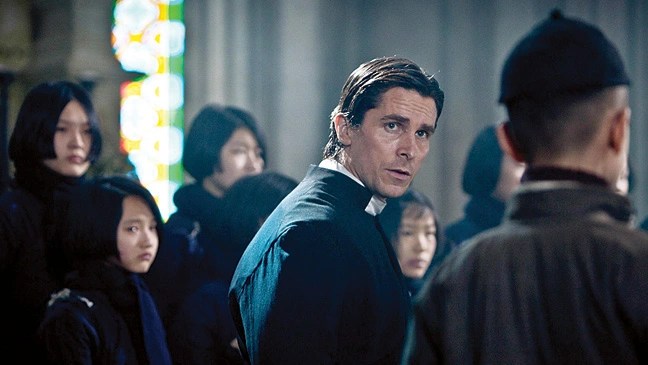
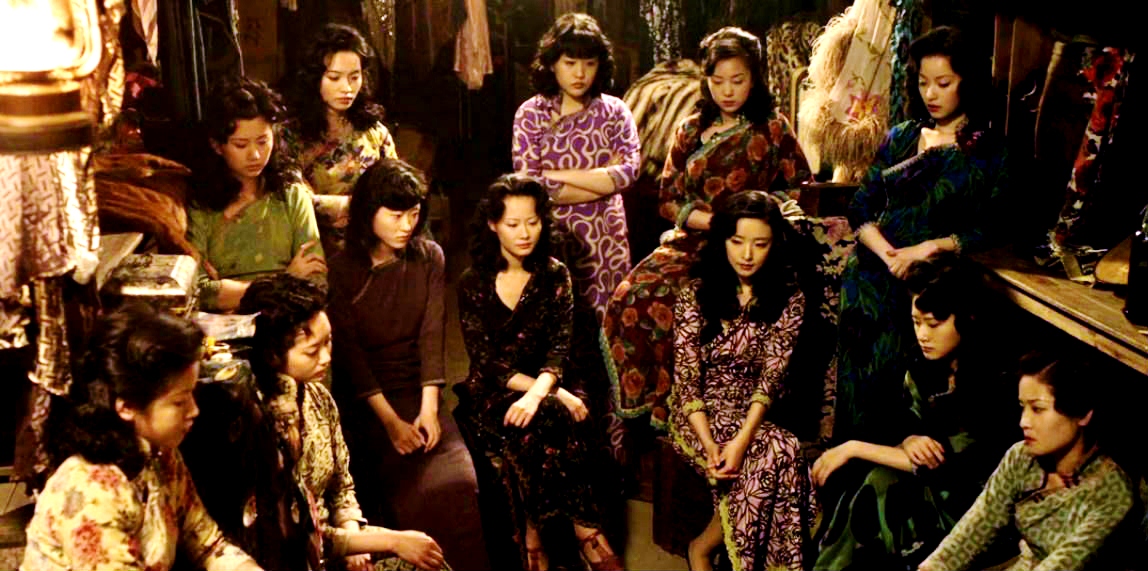
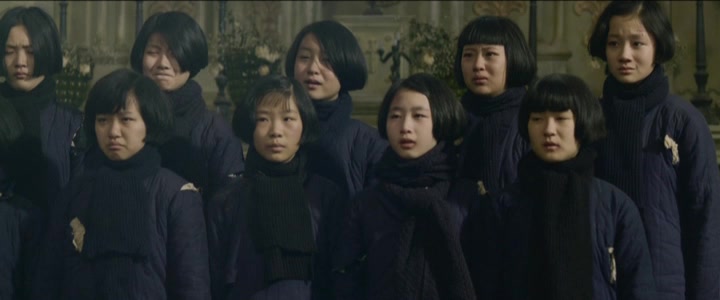
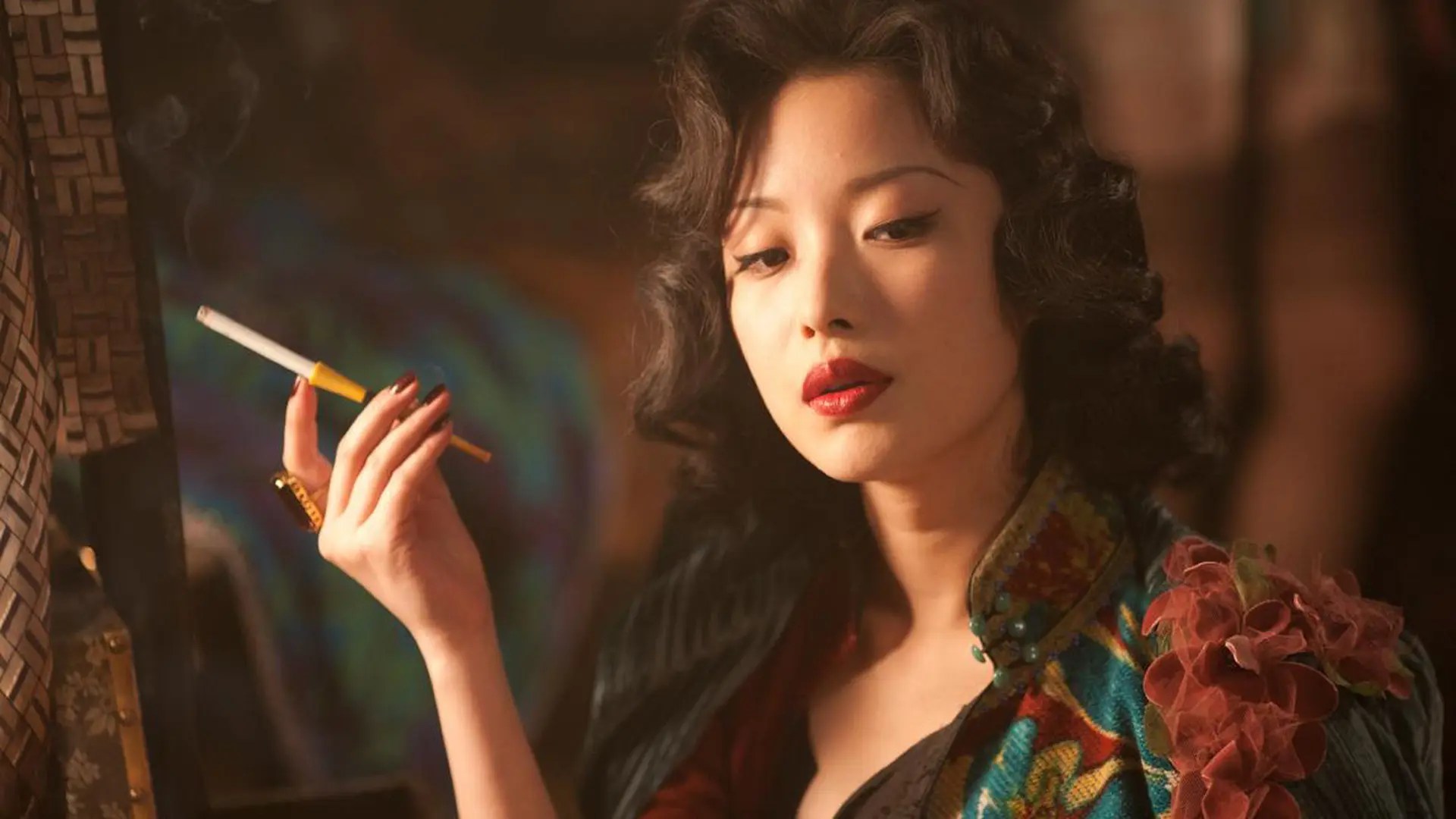
Bale’s fine, making Miller’s extremis-exacted character arc from dastard to defender acceptable, but more telling is the excellent work from the two dozen young women (and one boy) playing the captives; the girls and young ladies were all inexperienced; they deliver remarkably assured performances, individually and ensemble. Particularly keen are Ni Ni as ‘Yu Mo’, the de facto leader of the prostitutes, Xinyi Zhang as ‘Shu’, her counterpart among the schoolgirls, and Huang Tinyaun as ‘George’, the teenage boy, the dead priest’s adopted son. The ultimate choices made by all are powerfully affecting.
Lavish sets recreate a section of the ravaged city, the action scenes are exciting, the costuming, props, camerawork, sound and scoring all in concert under director Yimou’s guiding hand.
Unsurprisingly, China provided almost all the worldwide take of $98,227,000. The bare US release contributed a paltry $311,434 (209th for the year, further shaming our pathetic history acumen, it may as well have been an insult), though upon the US disc release it earned nearly eight times that; it’s not much of a cultural stretch to assume most of that came from Chinese-Americans, at the time around 38% of the Asian-American demographic. Across the pond, as a matter of course, unrepentant Japan banned it. So much for ‘honor’.
With stirring support from Atsuro Watabe, Doudou Zhang, Kefan Cao and Tong Dewai. Cinematography from Zhao Xiaoding, music score by Qigang Chen. Running time is 146 minutes.
* The prodigious budget for this was eclipsed by the same director for his 2016 fantasy epic The Great Wall. Other non-documentary features about the Nanking atrocity: The Children Of Huang Shi, Black Sun, John Rabe, City Of Life And Death. Right-wing nationalists in Japan need to bow down and man the hell up. Good luck with that. You may as well hope foaming MAGA dupes will stop waving their made-in-China flags and admit they’ve been played like suckers at a strip club.
 Movies ala Mark