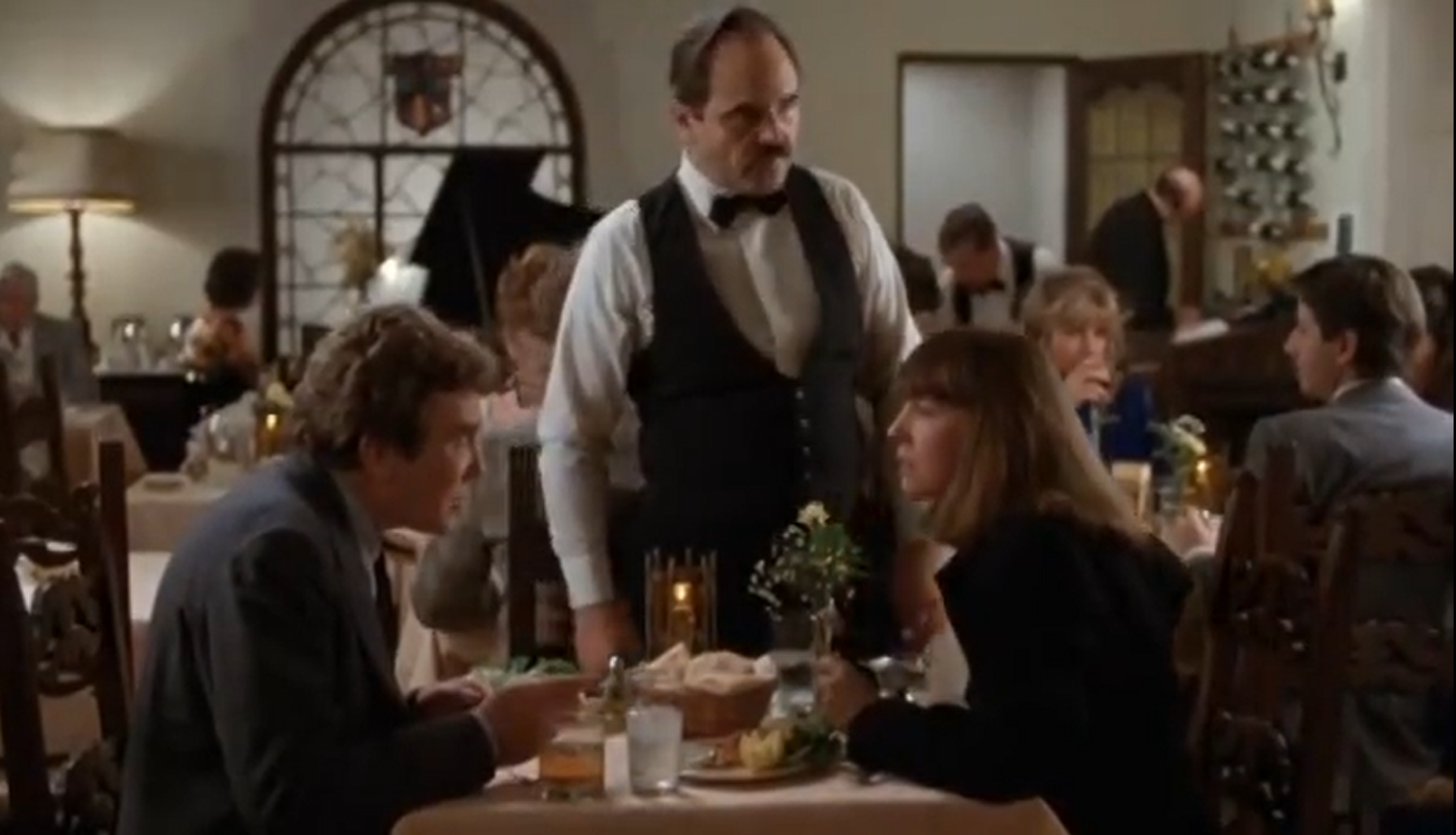
SHOOT THE MOON knife twists the champagne giddiness of “lived happily ever after” into the blinding hangover of ‘living after the happiness’. Beyond being impressed by the lacerating script, fluid direction, deceptively comfortable settings and above all the nakedly honest acting, if nothing else this 1982 drama may remind you to “Thank every twinkle in the Milky Way that I didn’t marry____.”
GEORGE: “I’m not kind anymore.” FAITH: “Me either.” GEORGE: “You’re kind to strangers.” FAITH: “Strangers are easy.”
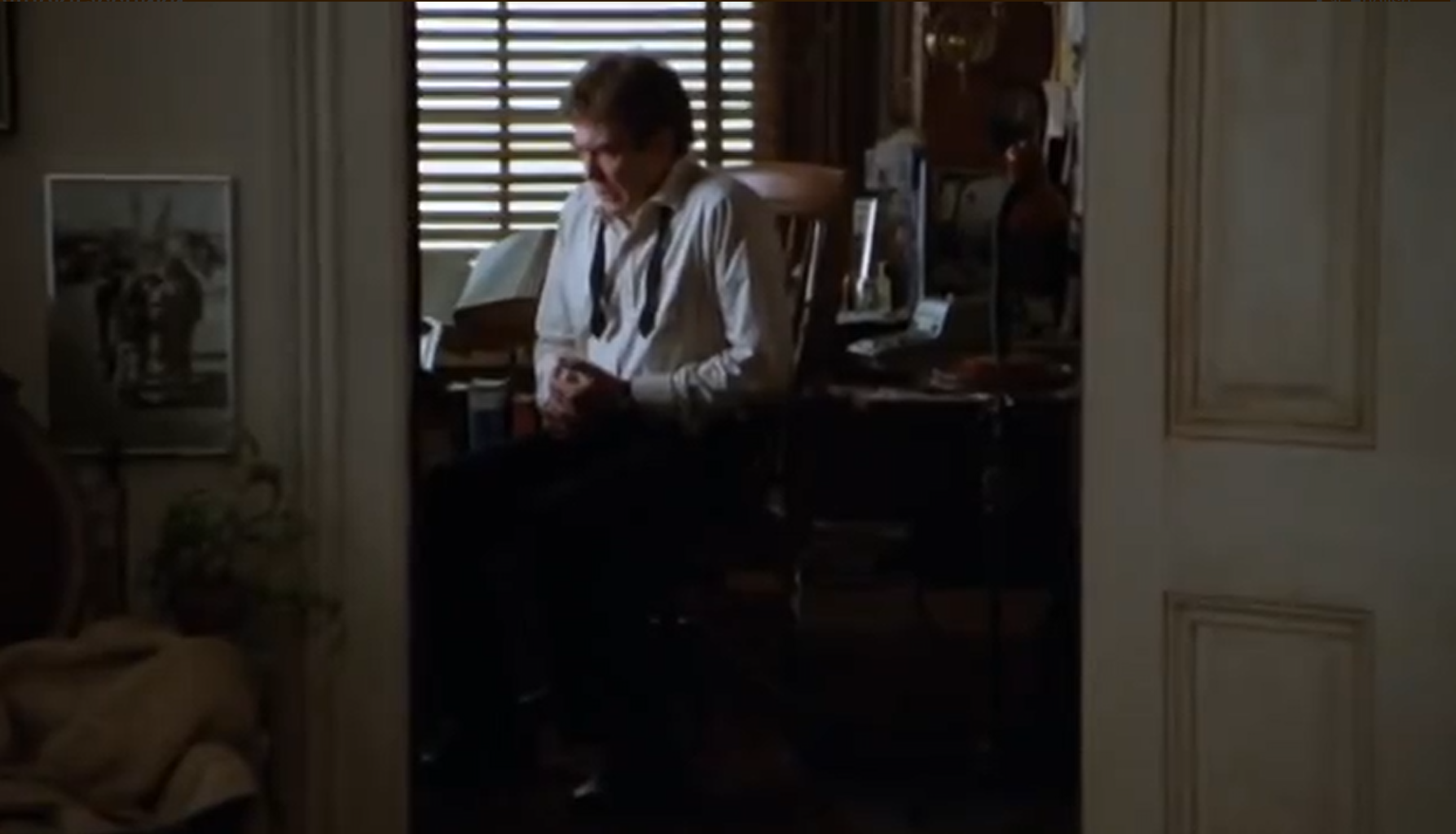
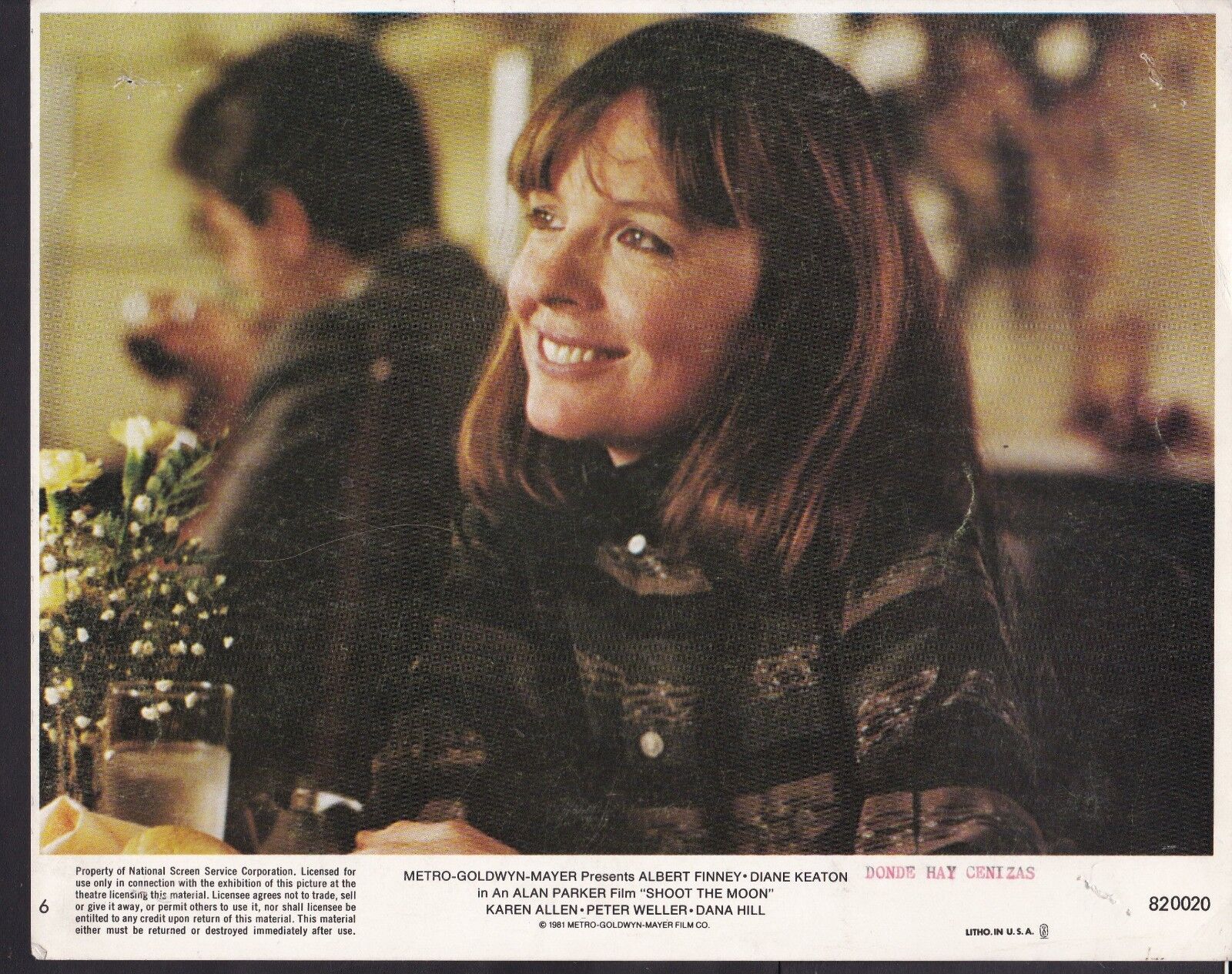
Lovely wife, adoring daughters, dream house, lauded career—writer ‘George Dunlap’ (Albert Finney) selfishly puts it all in jeopardy when he leaves ‘Faith’ (Diane Keaton) for ‘Sandy’ (Karen Allen), a younger single mom. With the confused kids caught in the whirlpool, Faith defends her sundered sense of self by starting a playful game of Californian Roulette with ‘Frank’ (Peter Weller) her rangy tennis court contractor. Serve, volley.
In gestation for a decade, Bo Goldman’s script (conceived after watching numerous friends marriages collapse) became his calling card to usher in winning assignments on One Flew Over The Cuckoo’s Nest, Melvin And Howard and The Rose. Finally, director Alan Parker, flush from success with Midnight Express and Fame, convinced studio brass to green light a $13,000,000 production, with luxuriant settings in Marin County north of San Francisco. Though critical acclaim resulted, Keaton’s restrictive contract with former lover Warren Beatty on his epic Reds forced the release date into the dead zone of late January, missing awards season deadline and a larger audience: the box office gross of $9,218,000 saw the long-delayed, carefully wrought project languish at 1982’s 63rd place. *

Except for a few missteps—the restaurant brouhaha scene is amusing but synthetic, a piece of script’s jigsaw that doesn’t fit—the film rings painfully true, especially in the bitter arguments between bluff and explosive Finney and outwardly genial yet inwardly steely Keaton. The stunner finale ends in a hush of hurt with the ultimate resolution left to the individual viewer’s projections. The loyalties-torn children—happy then hapless—are played, beautifully and without movie-kid artifice, by Dana Hill (14, excellent), Viveca Davis, 12, Tracey Gold,11, and Tina Yothers, 7.

Poised against the domestic dilemma of settling down vs. settling for, caught between the killer smiles of Keaton & Allen, any guy with a pulse would be a moose in the headlights. There’s always the Golden Gate Bridge solution…
With George Murdock, Leora Dana, Robert Costanzo, David Landsberg. 123 minutes.

* Parker on Goldman: “I must say the collaboration between us was one of the best I’ve ever experienced with another writer…My sessions with Bo were a delight. Both married, with ten kids between us, we poured our hearts out to one another like a couple of shrinks lying on couches at opposite ends of the room.”

Goldman: “It was ready for release in October of 1981…but Keaton was contractually prohibited from releasing another movie in the same calendar year as Reds. So we had to release Shoot the Moon in January 1982, right after New Year’s, the worst possible time for a tough movie like this. The Alans—director Alan Parker and producer Alan Marshall—begged Beatty to release her from the obligation. His answer was, ‘Nope, nope, nope.’ It died as a result of the release date he had screwed us on.”

Dana Hill, 1964-1996
 Movies ala Mark