
GLADIATOR throws down a challenge to the 180 AD arena crowd’s bloodlust with its burly hero’s mocking dare “Are you not entertained?” Eighteen ‘enlightened’ centuries later, a worldwide audience thundered back in the affirmative, cheering this 2000 epic as an epochal action spectacle. While the older Romans among us know its road to gory glory was paved by earlier movie titans, for a modern generation (carbon date ’em post 1980 AD) it has secured “strength and honor” as a building block blockbuster. “At my signal, unleash hell.”
After the army of Roman general ‘Maximus’ (Russell Crowe) defeats ‘barbarian’ tribes in Germania, aging Emperor Marcus Aurelius (Richard Harris) wants the victorious, level-headed officer to succeed him and see that the tottering Republic endures. Instead, Aurelius’ ruthless, morally weak son Commodus (Joaquin Phoenix) seizes power. Maximus is cruelly demoted to carnival combat as a gladiator, but his success in the arena brings fame and following that pose a threat to the unhinged and vengeful Commodus, and presents a difficult choice for Lucilla (Connie Nielsen), the tyrant’s ensnared sister.
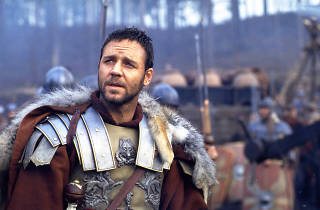
“My name is Maximus Decimus Meridius, commander of the Armies of the North, General of the Felix Legions and loyal servant to the TRUE emperor, Marcus Aurelius. Father to a murdered son, husband to a murdered wife. And I will have my vengeance, in this life or the next.”

Written by David Franzoni (Amistad), John Logan (Skyfall) and William Nicholson (Shadowlands), the script borrows plot points from The Fall Of The Roman Empire, and like that 1964 epic it’s fiction with a few historical characters (Aurelius, Commodus, Lucilla) to frame its righteous revenge saga around. Ridley Scott directed the massive $103,000,000 revisit to the bad old days, marshalling teeming mobs of extras (augmented by CGI when needed) in exciting action scenes on evocative locations in England, Morocco and Malta. Superb cinematography, lavish art direction and vibrant costume design are detailed hallmarks, and the vast scope and personal intensity are further garlanded with a surging music score from Hans Zimmer and Lisa Gerrard. A small carp would be that in one of the fight sequences (the arena recreation of the immortal Carthage ruckus at Zama) the editing plays some havoc with discernment. Otherwise the big forest melee at the beginning and assorted following Maximus bouts are ancient mayhem made vivid and compelling. Scott had already shown skill with historical subjects (The Duellists, 1492:Conquest Of Paradise), let alone his sci-fi thrillers, but Gladiator would make way for his later grand-scale journeys back in time with Kingdom Of Heaven, Robin Hood, Exodus: Gods and Kings and The Last Duel. Sir Ridley is the master of the epic. His visual panache would count for less if he wasn’t also gifted with dealing with actors and the up-close emotional import of the drama. Everyone comes off in style.
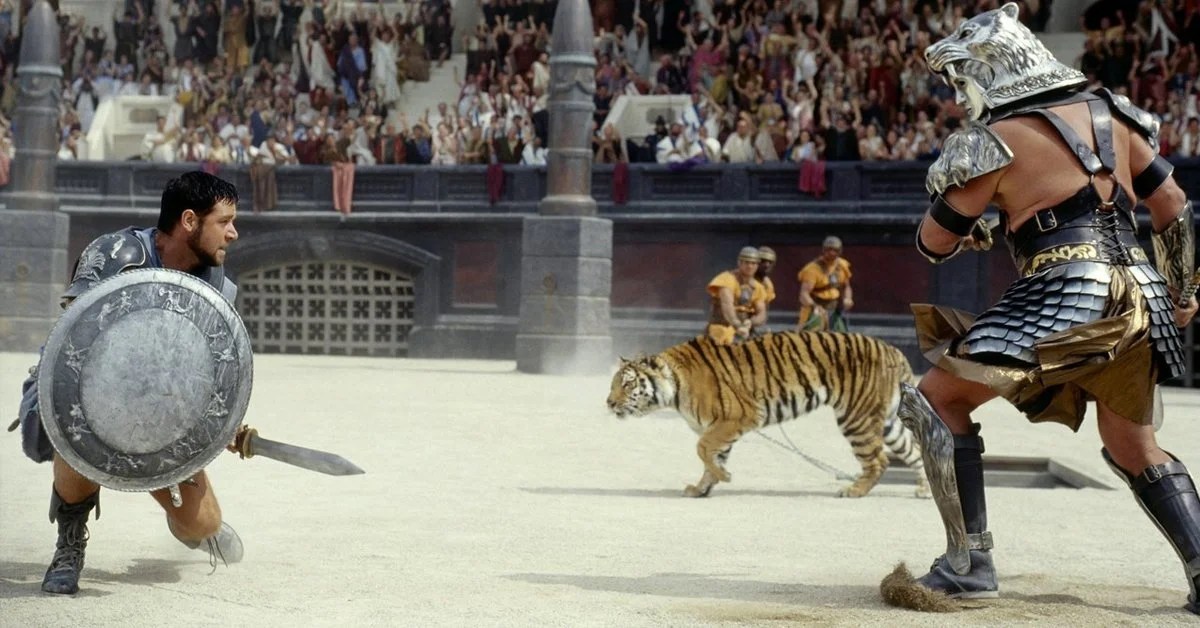
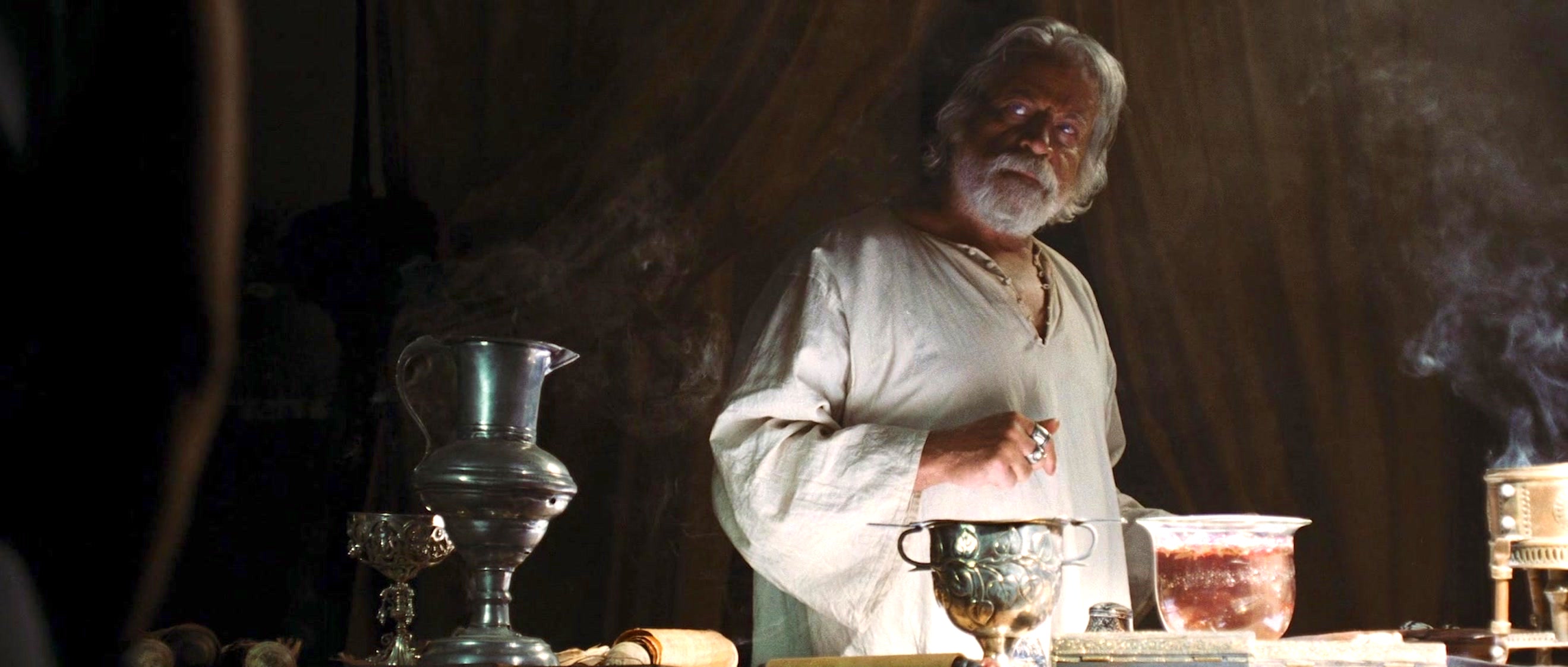
Phoenix, 25, had earned plaudits for his fine work in Parenthood and To Die For, but his tremulously creepy pathological man-child Commodus made him a star. Wild boyo Oliver Reed, 61, died of a heart attack during the shoot, so they worked it out with doubles and a few more millions; he went out with a flourish as ‘Proximo’, the gladiatorial trainer. David Hemmings nicks his preciously weird moments as the Colosseum’s gaudy master of ceremonies. But start to finish the enterprise rests on the shoulders of Russell Crowe, whose intelligence, passion, bravado and commanding presence anchor the story in old-school movie star charisma with keenly-honed technique. A role like this requires someone who can not merely issue declarative statements with conviction but has the physical-mental gravitas in bearing and focus to make you believe they could command loyalty, could readily clean your clock if need be and still can have you like as well as respect them. The first of five collaborations with Scott, this crucial part—even with his stellar work in L.A. Confidential, The Insider, A Beautiful Mind, Cinderella Man and Master And Commander—remains his signature role.
Oscars went to Best Picture, Actor (Crowe), Costume Design, Sound and Visual Effects, with nominations going to Director, Screenplay, Supporting Actor (Phoenix), Cinematography, Music, Art Direction and Film Editing. In North America a gross of $187,700,000 placed it #4 for the Millennium year, with the foreign take pushing that up to $460,600,000 (2nd place). This was followed by millions of DVDs. *

With Spencer Treat Clark, Djimon Hounsou, Derek Jacobi, David Schofield, Tomas Arana, Ralf Moeller, John Shrapnel, Tommy Flanagan, Tony Curran. Maximus’ battle-handy pet wolf is actually a Turveren Belgian Shepherd. Make sure to have one at your side next time you plunge across the Rhine without an invitation. 155 minutes.

* Critics, usually perched too far up in the bleachers to clearly make out the show, have always derided “costume pictures”, and when they do descend from Mt. Pretentious to enlighten the masses and offer faint praise (Ben-Hur, Spartacus, this film) it’s usually qualified by reminding us mere slaves/serfs/saps with a paternal wink that it’s “sword & sandals” toga time. Part of this sneerjerk reaction dates to the DeMille fests of antiquity, which, granted, were pretty ripe in the non-action area (uh, like writing, acting, direction) but were certainly a good time for a buck-fifty. Back in 1964 AD, primed by pyramid-sized costs and publicity barrage of Cleopatra, they dutifully slagged off the beautifully wrought The Fall Of The Roman Empire, which is now, a few emperors down the pike, regarded with respect. Yellow jackets at a picnic. Where are those damned lions?

 Movies ala Mark