
THEY WERE EXPENDABLE, one of the most well-regarded of the WW2 movies made during the conflict, was also one of the last, coming out in mid-December 1945, four months after Japan surrendered. Set in the Philippines in the months following the 1941 Japanese invasion, it was based on war correspondent William L. White’s 1942 book chronicling the exploits of a PT-boat squadron’s vain but valiant efforts to buy some time against imminent defeat. When filming started in February of ’45, the battle to retake the islands was in full swing. With a few elaborations and name changes, Frank Wead’s script sticks close to the record. The poignant ‘last stand’ saga was director John Ford’s return to feature films. After finishing 1941s How Green Was My Valley he devoted his talents to service in the Navy, documenting myriad parts of the conflict in Europe, North Africa and the Pacific.

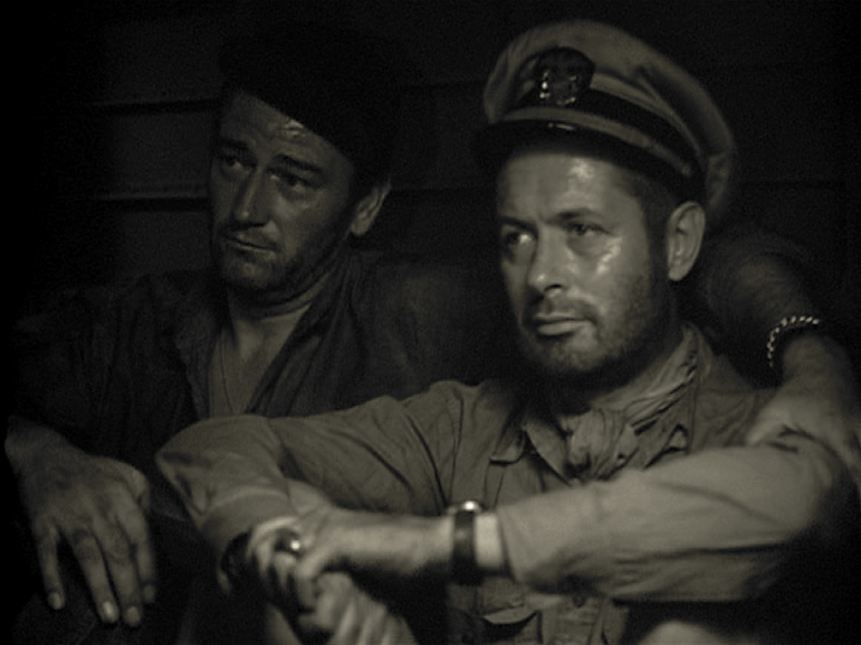
Japan’s assault on the Philippines results in a doomed holding action by US and Filipino forces. Previously dismissed by the brass, the handful of PT-boats on hand prove their value, both in harassing the enemy, and by eventually evacuating Gen. MacArthur. Led by calm ‘Lt. John Brickley’ (Robert Montgomery) and more volatile ‘Lt. Rusty Ryan’ (John Wayne), Motor Torpedo Boat Squadron 3 is gradually whittled down. As their crafts and crews are decimated, they also lose contact with ‘Lt. Sandy Davyss’ (Donna Reed) a nurse they’ve befriended.
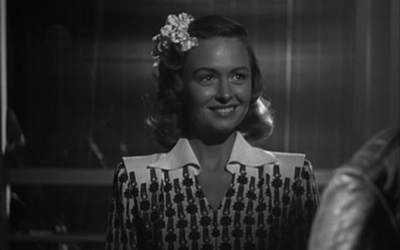
Like Ford, Montgomery returned to Hollywood for this picture. He’d servined with distinction since 1940, including a stint under his character’s real-life counterpart, Medal of Honor winner John Bulkeley, who Ford got to know well, tagging along on missions that included D-Day. Montgomery’s steady demeanor—honed by his actual command experience—and Wayne’s audience-pleasing impetuousness play well off the other. Lovely Reed, 24, is a warm presence in an otherwise all-male cast. Other young actresses may have “mushed” it up, but Donna proves her skill matches her appeal. At a cost of $2,900,000, filming was done in the Florida Keys, those beaches and palm trees a suitable substitute for the less-welcoming islands on the other side of the globe. Throughout, Ford viciously baited Wayne for his lack of service, so much so that Montgomery was compelled to intervene and tell him to can it.
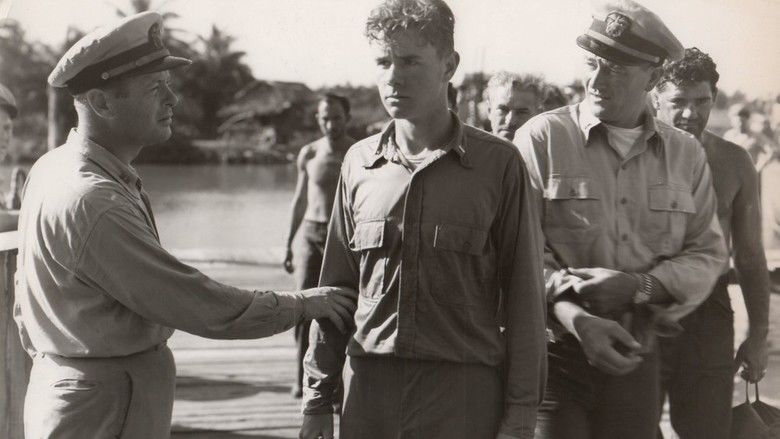
Its elegiac emotional texture captured in Joseph H. August’s beautiful black & white cinematography, the downbeat yet inspiring story is stoked with Fordian grace notes captured in faces, attitudes, rituals and duties. There’s sentiment, but it isn’t sloppy’; humor but not resorting to farce; gallantry is put across without any grandstanding. Unlike other Pacific-set pictures of the time, the movie doesn’t stoop to race-baiting the Japanese (shown only by their ships and planes), unusual and mature restraint given the rising pitch of revenge being raised to a frenzy after P.O.W. atrocities were revealed. The subtext isn’t hatred, but sacrifice.

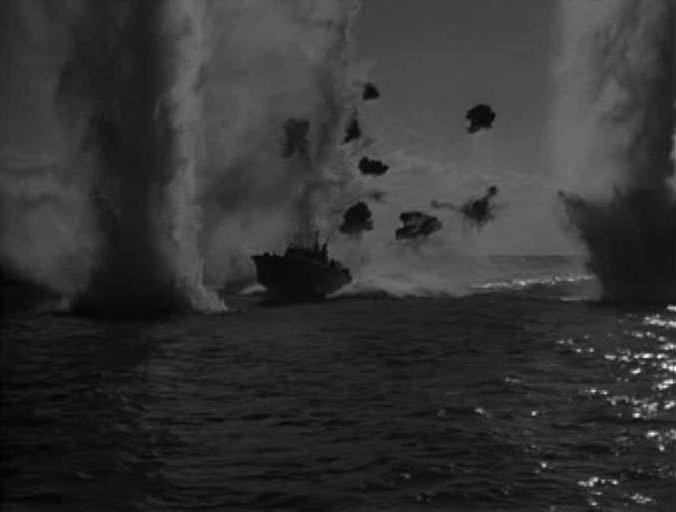
The war’s end pinched off some of the expected box-office, yet even at 24th place, it still earned $8,900,000. Oscar nominations went up for Sound and Special Effects. The latter are superb, although overdone for the sake of extra-excitement: the PT’s dodge enough miraculous near-misses for an entire fleet and the torpedoed Japanese ships erupt as though from bow to stern they contained nothing else but nitroglycerine. It looks cool, and audiences of the day were no doubt thrilled, but it pushes the likelihood element across the line. The treatment afforded MacArthur is reverential, which was de rigueur at the time: retrospect isn’t as flattering. *

Well scored by Herbert Stothart. With Ward Bond (sturdy as ever), Marshall Thompson (just 19), Jack Holt, Cameron Mitchell (debut year), Charles Trowbridge, Louis Jean Heydt, Paul Langton (quite good), Russell Simpson (recalling his ‘Pa Joad’ from The Grapes Of Wrath), Leon James, Jack Pennick, Jeff York, Murray Alper, Tom Tyler, Frank McGrath. Future director Blake Edwards is in there somewhere. 135 minutes.

* I like the movie (it carries resonance that deepens with each viewing), but I’m no fan of the egomaniac Douglas MacArthur, on any number of accounts. Leaving lambasting “Dugout Doug” for another day, we note that a squad of the era’s best war pictures came out in ’45, but the battle-weary public showed just marginal interest. The honor role included A Bell For Adano, The Story Of G.I. Joe, Blood On The Sun, Objective Burma!, Back To Bataan, A Walk In The Sun and Pride Of The Marines.
Of the 531 PT-boats employed during the war, 99 were lost. Nearly all the rest were scrapped after V-J-Day. One of the daring young men John Buckley recruited for what the Japanese nicknamed “devil boats” would become forever linked with the most famous of them all—PT-109, skippered by John F. Kennedy.
 Movies ala Mark
At the start of the war, Montgomery was in charge of FDR’s map room in the White House. During production of this film, when he defended Duke after Ford’s usual sadism, Ford got weepy. Ford was perhaps our greatest director and a profound poet of the cinema, AND he was also a malicious shape-shifting drunk.