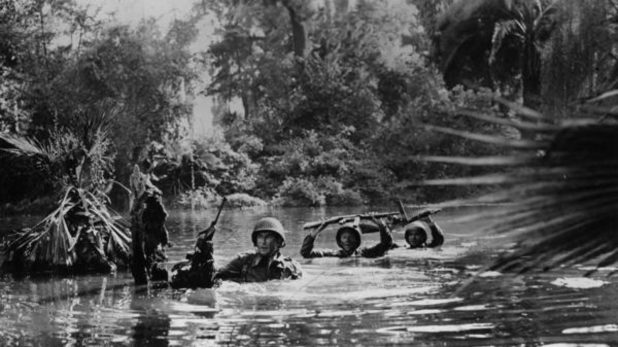
OBJECTIVE, BURMA! ironically reflected the behind-enemy-lines saga of its plot: succeeding admirably as a mission, but at considerable cost. The success was due to its skillful handlin: the acting, writing, direction, camera, editing and scoring are all high caliber. The casualty count was in its reception in 1945 from a war-weary public and a diplomatic wounding by unfriendly fire from an affronted ally. *

Mimicking on a smaller scale the publicized exploits of ‘Merrill’s Marauders’, and borrowing some ammo from the 1940 French & Indian War adventure Northwest Passage, the excellent script (“So much for Mrs. Hollis’ nine months of pain and twenty years of hope“) has a platoon of US troops parachute into the jungle to take out a Japanese radio station. They endure pursuit during a 200-mile march over mountains and through swamps to hopeful rescue. Lengthy at 142 minutes yet directed with such skill by Raoul Walsh that pacing doesn’t lag, with action scenes superbly photographed and edited. The sober-minded drama is launched and sustained by Franz Waxman’s exciting music score.

The steamy Burmese settings were effectively recreated at the Los Angeles County Arboretum & Botanic Garden, with James Wong Howe’s fine cinematography helping a superior Warner’s sound crew suggest a semblance of tropical peril, replete with great use of your favorite requisite bird, bug and monkey noises. Rather than play up phony heroics Walsh’s direction highlights the tension and exhaustion of the trek. In a generally solid cast, stereotypes are kept to a relative few; George Tobias playing another windy wiseacre from the Bronx, Richard Erdman as a kid dubbed ‘Nebraska’. Henry Hull gets to vent audience spleen on the Japanese, completely understandable given a flood of atrocity news coming in from the Pacific, uncomfortably prescient given that our annihilating firebomb raids were about to commence. “But this… this is different! This was done in cold blood… by people who… who claim to be civilized. Civilized? They’re degenerate immoral idiots! Stinkin’ little savages! Wipe ’em out, I say! Wipe ’em out! Wipe ’em off the face of the Earth! Wipe ’em off the face of the earth!” Yikes.
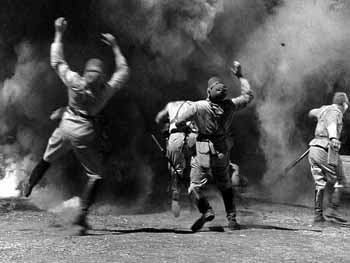
Leading the raid is Errol Flynn, in one of his best performances. Dropping the bravado angle used to puff up ridiculous escapism like Desperate Journey, Flynn’s serious, restrained and believable. It’s grim business this time out, he plays it accordingly. He was proud of this film and his work in it. **
Oscar nominated for Story, Film Editing and Music Score. With James Brown, William Prince, Warner Anderson, Anthony Caruso, Mark Stevens and Hugh Beaumont. My pick for best combat film made during the war.
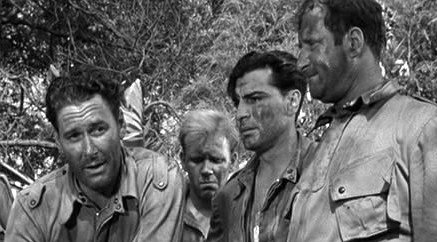
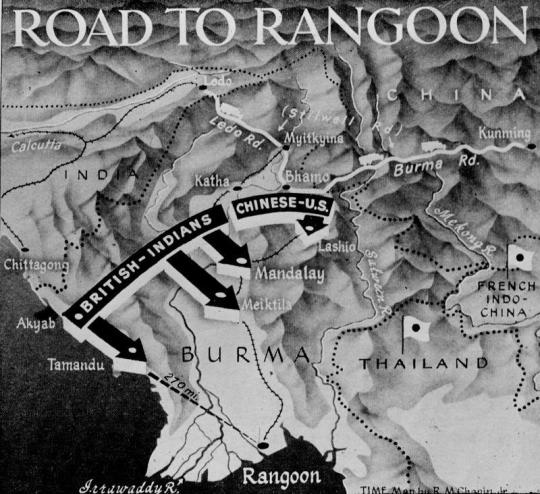
* A number of the best war films made during the conflict came out in 1945, but none of them made it into the year’s top 20 box-office rankings: despite a worldwide gross of $5,880,000 this movie languished at #45. Troubled Burma may be a fascinating country for modern tourists to visit, but no-one found it so endearing during the 40s, when it could lay claim to being one of the planets most hellish battlegrounds. With escalating slaughter across both oceans, the prospect of much worse to come had audiences turn away from explosions and gunfire. Pride had them resolutely turned off in Britain and associated reaches of their beset Empire when angry editorials slammed the movie for having the cheek (perceived, not intended) to focus on American soldiers in a region where the preponderance of troops were from England, Australia and India. The release timing coincided with already strained relations between Yanks and Brits in Europe. As it was, from start to finish, the entire China-Burma-India Theater was a nightmare of futility and waste for all concerned.
** Flynn tried to enlist in every branch of the service but was turned down for his health issues: recurrent malaria, TB and a cocktail, if you will, of STD’s. Carousing pal David Niven remarked: “I went off to the war in 1939, and I really think Errol suffered because he didn’t. He’d done a lot of films about war and these were sometimes laughed at, especially in England. He was parodied as a man who should have been in it, and he was most unfairly pilloried because of it. This ate into him. This, compounded with the fact that there was a great place—the war itself—for heroics at that time.”


 Movies ala Mark