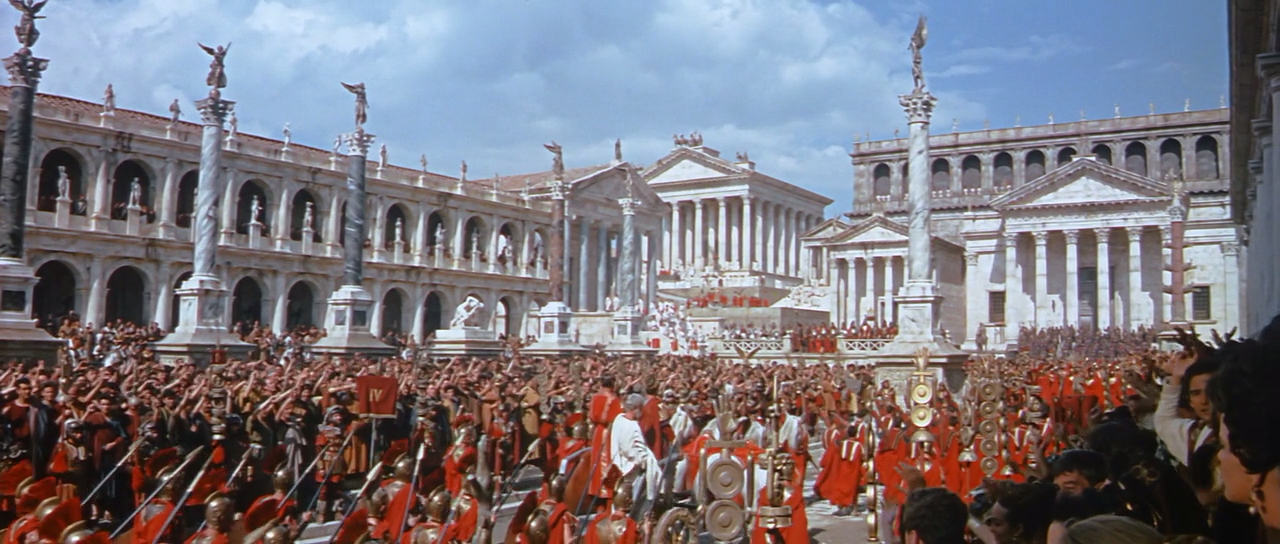
THE FALL OF THE ROMAN EMPIRE suffered a fate common enough in movieland’s realm: it ‘fell’ at the wrong time. By the date of its release in 1964, the public, after the ballyhoo over Cleopatra, had enough of ancient epics to hold them for a spell. The cheapo silliness of Muscleman Epics pouring in from Italy added too much garlic to the feast and highbrow New York critics were busy elevating their clout by denigrating the reputations of older film-makers and mocking genre entries.
This smart, stupendously produced giant also suffered from being too long, had weakly designed romantic elements and it just plain cost too darn much—$18,500,000. Bringing back only $4,500,000 in the States (61st place) and not much more elsewhere, it collapsed the personal empire of its legendary producer, Samuel Bronston, and put a serious dent in the career of leading man Stephen Boyd.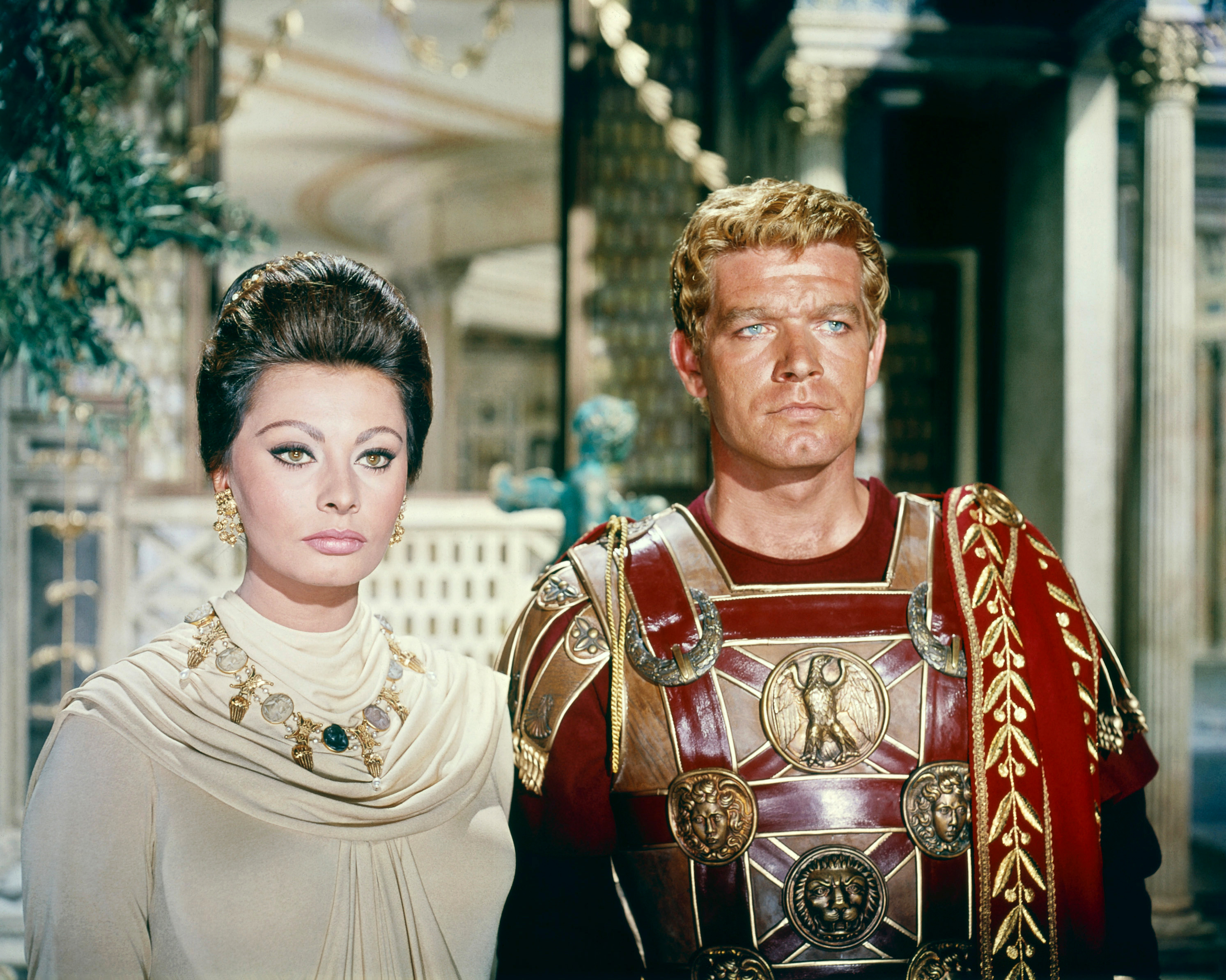
Boyd plays ‘Livius’, a decent Roman general in 180 AD, in love with Lucilla, the daughter of wise, ailing Emperor Marcus Aurelius (Alec Guinness). Lucilla is Sophia Loren, looking like a million bucks, the record amount that the actress was paid for appearing. Her power-mad brother, Commodus, is Christopher Plummer. Gladiator took this story and remixed it to great success 36 years later, when the public was ready to try on togas again.
The Boyd-Loren chemistry doesn’t mix, their scenes not written well; when they’re on, your concentration drifts to the costumes, lighting,etc. Boyd made a fine villain in Ben-Hur, but here he’s just too serious to rouse sympathy. It’s not her finest hour either: she put three times the gusto into her native Italian films that bracketed this—Yesterday Today and Tomorrow and Marriage Italian Style.
Plummer has fun jumping into crazy-Roman-leader mode (kind of a win-win category for actors), plus there’s James Mason, Anthony Quayle, Mel Ferrer, John Ireland and Omar Sharif; a rich music score from Dimitri Tiomkin; a couple of massive battles expertly arrayed (one of them involving 8,000 extras and 1,200 horses), great costumes, beautiful photography—plenty to admire over 188 stately minutes. The stilted love scenes apart, director Anthony Mann gets a lot of bang for his denarius.
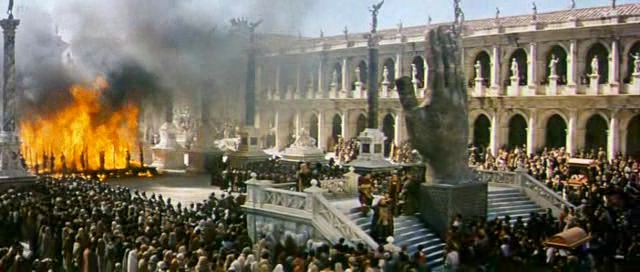
The most outstanding element within the stunning overall production design are the fabulous sets, done on as grand a scale as was ever laid out for a movie, 55 acres worth, including the largest single outdoor set ever built, recreating the Roman Forum. Bronston’s expense account soared to Caesarean heights, as the sets were not the usual false fronts, but instead were three-dimensional and fully outfitted with mosaic tiles and enough statuary to placate Jupiter and Juno. The crowd scenes in these constructions are jaw-dropping.
Tiomkin’s mass-orchestra score seized the films only Oscar nomination. Criminal indeed that the Art Direction wasn’t even on the roster, ripped off by My Fair Lady‘s fakey backdrops. That wildly over-awarded musical elephant also grabbed Cinematography and Costume Design, and this Roman saga was left in B.C. Mars!
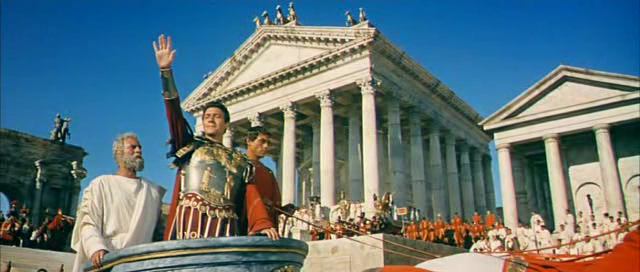
In retrospect, beyond the flaws in the scripts love angle, it’s hard to see how they thought this generally intelligent, but downbeat story (no Savior to uplift, no sex orgies to titillate) could surmount its outlay enough to bring in crowds. Time healed a battered reputation. With Eric Porter, Finlay Currie, Andrew Keir, Douglas Wilmer.

 Movies ala Mark